
Unbiased headlines. Facts, not spin.
Unbiased Headlines is an independently owned news organization. We bring you the facts, not opinions, written fresh from 110+ named sources. Sources linked so you can verify it yourself.
 health
Notable (6/10)
A Third of Surveyed U.S. ICUs Use Telemedicine as a Nurse and a Family Raise Safety Questions
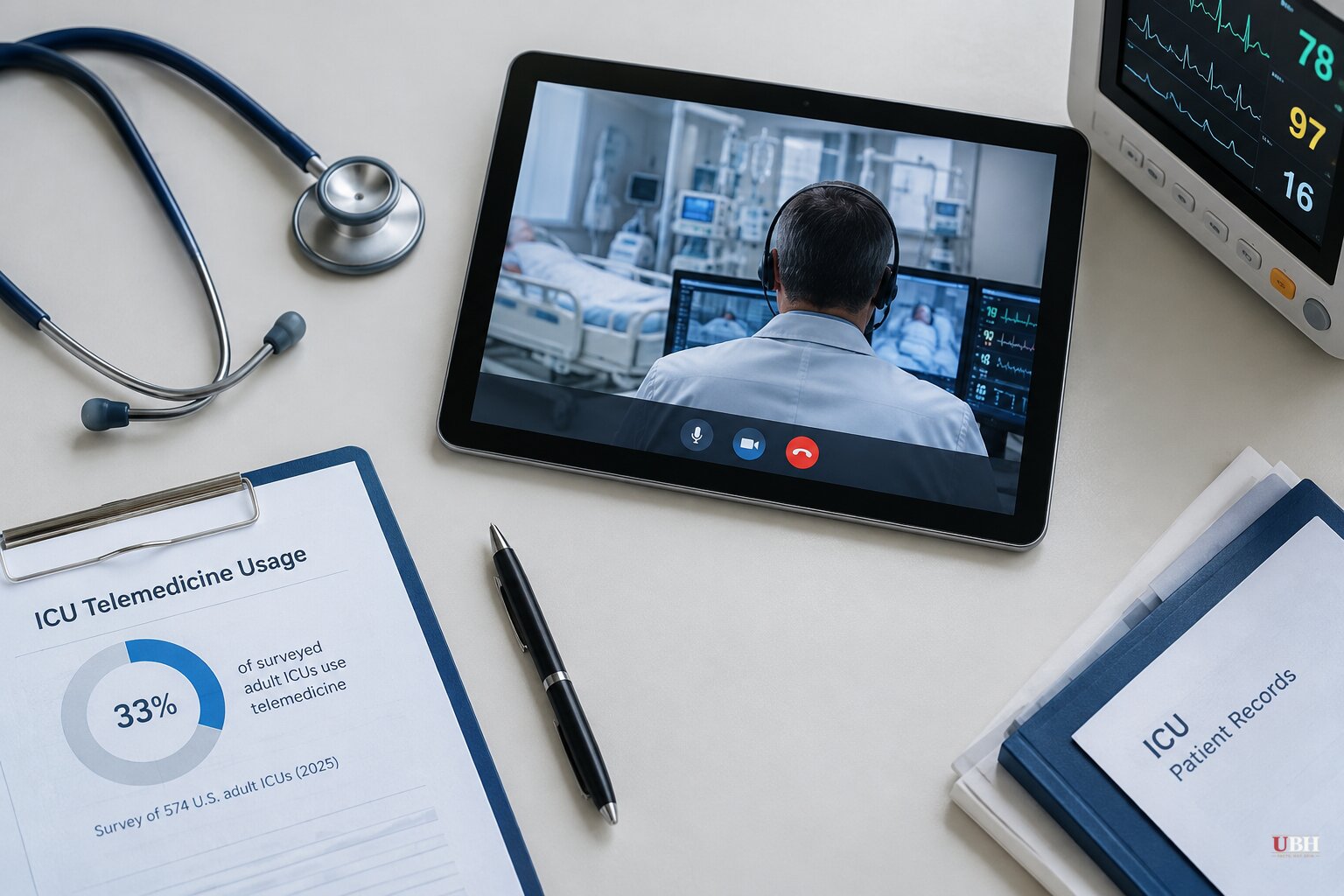
The teleICU model is spreading, and the people who work inside it are not all comfortable with what they are seeing.
In a teleICU, a physician monitors critically ill patients through a screen and cameras instead of standing at the bedside. Many hospitals now use the setup overnight, when finding an in-person doctor is hardest. One 2025 paper surveyed 574 adult ICUs across the country and found about one third used some form of telemedicine.
A night in Anacortes
Joyce Selph, a nurse with more than 30 years of experience, describes one such night at Island Hospital in Anacortes, Wash. Doctors staffed the ICU during the day. Overnight, only remote doctors were available.
A patient was hallucinating and withdrawing from alcohol. The Ativan he had been given was not bringing his heart rate down. Selph says she and other nurses tried to reach the teleICU doctor, and no one answered.
Protocol called for the attending physician. There was no one else to ask, she says, and the patient was getting worse. So she started him on Precedex, a sedating medication, without a doctor's order. Selph says she knew that put her license at risk. The patient survived.
She complained to nursing supervisors and hospital administrators that a doctor on a screen was bad policy. They kept the program, she says, for financial reasons. Selph says she later quit because she believed the setup endangered patients and pushed her to practice outside her scope.
"They did it as a cost-saving measure because they were having trouble getting hospitalists to want to be there," Selph says. "But I felt very strongly that it was unsafe."
The hospital's response
Island Health disputes none of the basic structure, but it frames the program differently. In a statement, a spokeswoman said the system launched its teleICU program in 2021 to strengthen the level of critical care in its rural community.
The hospital uses an outside vendor to run the program. According to the spokeswoman, "any technical challenges that have arisen have been addressed directly with [the vendor] to ensure continued safe, effective patient care."
The statement does not address whether the unanswered overnight calls Selph describes took place.
The Connecticut lawsuit
The model has drawn wider attention after the death of Conor Hylton, a 26-year-old dental student. He died in 2024 after being transferred to a teleICU at the Milford Campus of Bridgeport Hospital in Connecticut, part of Yale New Haven Health.
His family filed a lawsuit over his treatment in March 2026. That case is pending. The claims in the complaint are allegations, and no court has ruled on them.
Why hospitals are doing it
The economics are plain. A remote physician can cover several hospitals' ICUs at once. That keeps units open and billing even as the doctor shortage continues.
The model was first pitched as a way for rural systems to bring specialists in around the clock. It is now common in urban and suburban hospitals too, which means the rationale has moved well beyond places with no other option.
There is a fair argument for the approach. A rural hospital that cannot recruit an overnight intensivist may have to choose between a remote physician and no physician at all, or between a remote physician and closing the unit. Island Health's own account points to that logic.
The question raised by Selph's account is narrower and practical: what happens when the screen goes dark or the call goes unanswered. In a unit where minutes matter, a nurse who cannot reach a doctor has two choices. She can wait, or she can act without authority.
What is still unsettled
The survey figure shows how common the model has become. It does not show how often teleICUs perform better or worse than bedside coverage, and the notes available here include no outcome data comparing the two.
Hospitals using the model have a financial interest in it working. Nurses who leave over it have their own views, and a family suing after a death has its own. Each account is partial.
The Hylton lawsuit will test how a teleICU handled one patient's care. Whether any court or regulator takes up the broader question of how much remote coverage is enough remains open.
Sources used for this briefing
4 links from 3 independent newsrooms (syndicated copies of the same report count once)
These are the sources it draws on, linked so you can verify.


