
Unbiased headlines. Facts, not spin.
Unbiased Headlines is an independently owned news organization. We bring you the facts, not opinions, written fresh from 110+ named sources. Sources linked so you can verify it yourself.
 health
Notable (5/10)
Event date: September 28, 2026 ·
California Will Require Age Checks for Weight-Loss and Muscle-Building Supplements Starting Jan. 1
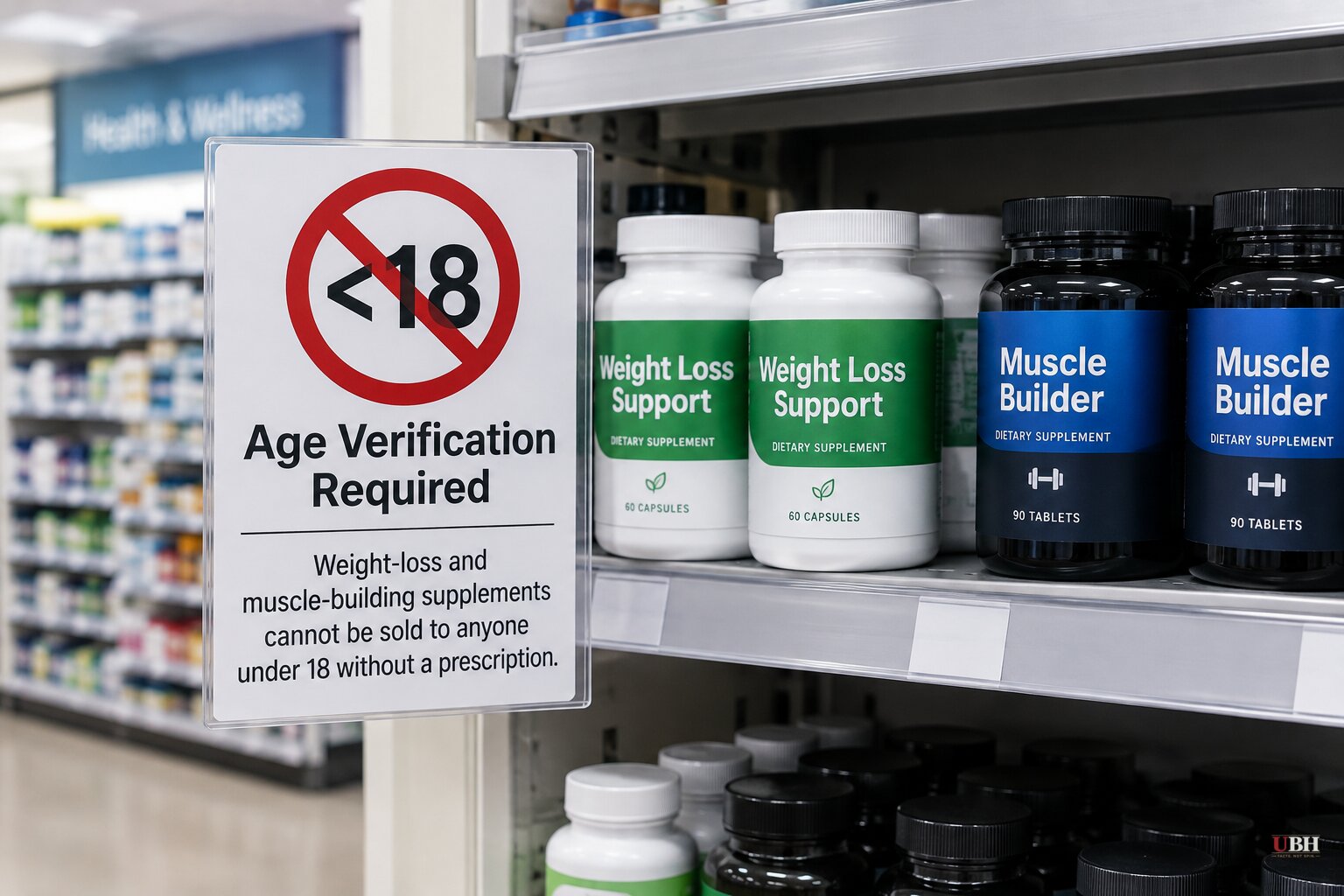
California will start carding some supplement buyers in less than two months. Assembly Bill 2030, signed by Gov. Gavin Newsom on Sept. 28, takes effect Jan. 1, 2027. It bars the sale of over-the-counter weight-loss and muscle-building supplements to anyone under 18 unless the minor has a prescription.
The law does not ban creatine, and it does not stop adults from buying anything. It puts the burden on sellers.
What the law requires
Retailers cannot sell, offer to sell, or give away covered products to a minor. Under the law, stores must ask for ID from customers whose age they cannot tell is at least 18. A 40-year-old with gray hair is not getting carded. A 19-year-old at the GNC counter might be.
Each violation carries a civil penalty of up to $500. The state attorney general, a county counsel, or a city attorney can sue, and any of them can ask a court to order sales stopped.
Online sellers face their own rules. Before shipping into California, they must check a buyer's name, birthdate and address against government-sourced data, or use a delivery method that requires an adult signature.
The only exception is a prescription. There is no parental-permission carve-out, so a parent cannot simply sign off on a teenager's purchase.
Which products count
The bill covers any supplement marketed or represented as a way to lose weight or build muscle. Creatine is named in the text, as are green tea extract, raspberry ketone, garcinia cambogia and green coffee bean extract.
In a close case, a court can weigh label claims about appetite, metabolism or strength, and how a retailer categorizes and shelves the product. That is spelled out in Section 109030(e) of the new Health and Safety Code provision.
The law has no express exemption for protein products. Whether a given protein powder is covered depends on how it is labeled and sold.
Why Sacramento did it
Assemblymember Josh Lowenthal, a Long Beach Democrat, wrote the bill. He tied it to social media marketing aimed at teenagers, including what his office calls the "looksmaxxing" trend. Influencer Clavicular, who promotes the movement, urges followers to "bonesmash," striking their own facial bones to change their shape.
"Kids are at a fragile developmental period where unsafe supplements can have far-ranging impacts on their lives and development," Lowenthal said. He called AB 2030 "a clear line in the sand that children's health is not something companies can gamble with for a profit."
The legislative analysis cites a 2024 study in JAMA Network Open finding that nearly one in 10 adolescents had used nonprescription weight-loss products. Researchers warned of a higher risk of eating disorders and unhealthy weight gain later in life. Lawmakers also pointed to research that muscle-building products, including protein powders and pills, can contain harmful substances not listed on labels.
Dietary supplements generally do not need FDA approval for safety or effectiveness before reaching shelves.
This is also not Newsom's first look at the issue. He vetoed a similar bill, AB 1341, in 2022 but ordered the California Department of Public Health to convene medical and academic experts. That workgroup's February 2024 recommendations included restricting certain supplements to adults and strengthening enforcement.
The industry's objections
The Consumer Healthcare Products Association and the Council for Responsible Nutrition both objected to how far the bill's criteria reach. Steve Mister of the nutrition council said the group's position was to identify the actual risk and address it directly. The council's veto request warned the standard could capture fiber, protein, multivitamins and general wellness products.
The American Herbal Products Association argued that protein, vitamin D and creatine all touch on muscle development or metabolism, so products nobody considers diet pills could be covered on ingredients alone. It also warned the rules would raise costs for businesses that ship to California customers and create confusion over which supplements are included.
Local reaction to the underlying problem is mixed. Dean Riley, a fitness enthusiast in Bakersfield, told Eyewitness News: "Ain't no teenage kids coming to the vitamin store or GNC." Lucia Clevenger, who owns a supplement shop there, said the question comes down to parents.
Other states and a voter ID footnote
New York enacted the first such restriction in 2023, and it took effect in April 2024. The Council for Responsible Nutrition has asked the U.S. Supreme Court to review the New York law on First Amendment grounds.
California's new ID rule also lands in a state where photo ID is generally not required at the polls for voters who are not casting a ballot for the first time. In 2024, Newsom signed a law barring local governments from requiring photo identification to vote.
What remains unresolved is how courts will draw the line. Nothing in the law lists which protein powders or multivitamins are in or out, and the first enforcement suits after Jan. 1 will start answering that. The Supreme Court's decision on whether to take up the New York case could also determine whether a California-style law survives a First Amendment challenge.
Sources used for this briefing
7 links from 5 independent newsrooms (syndicated copies of the same report count once)
These are the sources it draws on, linked so you can verify.


