
Unbiased headlines. Facts, not spin.
Every story is an unbiased news briefing written from 110+ sources across the spectrum — sources linked so you can verify it yourself.
 economy
Notable (6/10)
August 4, 2026 at 10:00 AM
economy
Notable (6/10)
August 4, 2026 at 10:00 AM
Goldman Sachs Building $700 Million Dallas Campus as Wall Street Firms Expand Texas Footprint
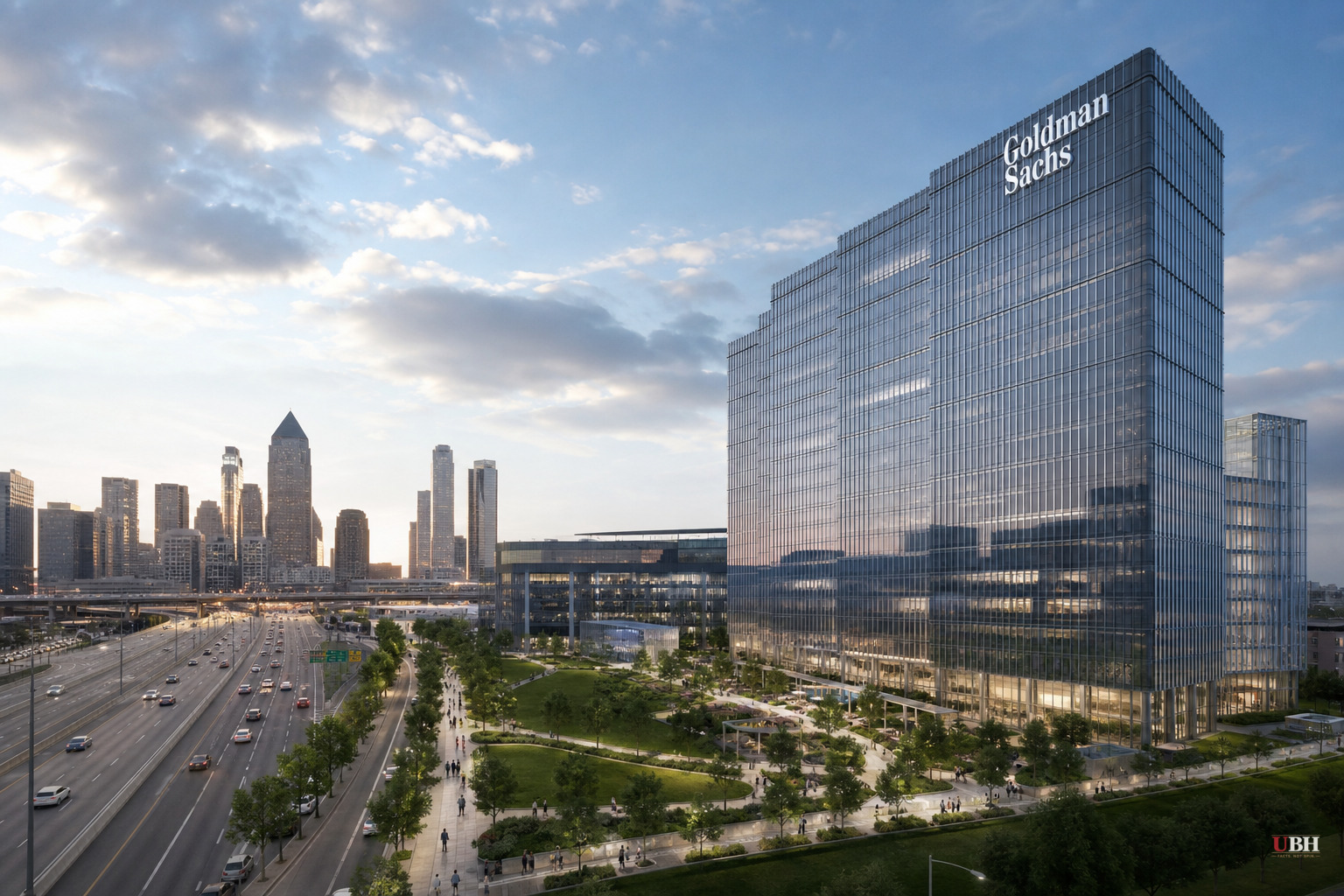
Goldman Sachs is pouring about $700 million into a new campus in Dallas, according to NPR. The 800,000-square-foot project is scheduled to open in 2028 and could eventually house more than 5,000 workers, making it a bigger footprint than almost anywhere the bank operates outside its Manhattan headquarters.
Dallas already hosts Goldman's second-largest U.S. office. The new campus, which NPR describes as under construction near downtown highways, office towers and a sports arena, will supersize that presence considerably.
Aasem Khalil, the Goldman Sachs partner who runs the Dallas office, told NPR the new campus sits in "the beating heart of Y'all Street." That's the nickname local boosters and bank executives have started using for the city's growing financial sector, a not-so-subtle jab at Wall Street. Khalil, a lifelong New Yorker who relocated to Dallas a decade ago, said the city's "business climate far surpassed any expectation" he had when he arrived.
He's not alone in making that bet. NPR reports that other major banks headquartered in New York, including JPMorgan Chase and Morgan Stanley, either already have Dallas offices or are considering expanding there. Goldman itself isn't new to Texas. The bank first opened a Dallas office back in 1968 and has used it for decades to handle back-office and support functions at lower cost than New York.
What's changed is the scale of the bet. Firms aren't just parking support staff in Texas anymore. They're building flagship-level campuses and shifting real decision-making weight south.
The underlying math is straightforward. Texas has no state income tax, and companies have long liked the state's lower taxes and lighter regulations. Commercial real estate and labor costs run well below Manhattan's. And the Dallas-Fort Worth region is growing fast: NPR reports Texas is the fastest-growing state in the nation, with the wealthy suburbs of Dallas and the rest of the North Texas region on track to reach 9 million people by next year. That's a deep labor pool for banks that need to staff up without New York-sized wage bills.
There's a reasonable question buried in all this cheerleading: is this really "Wall Street moving to Texas," or is it Wall Street doing what it's always done, chasing cheaper labor and friendlier regulation wherever it can find it? Banks have shipped back-office work to lower-cost cities for decades. Dallas has been part of that pattern since 1968, as Goldman's own history shows.
What's genuinely new is the scale and visibility. A $700 million flagship campus designed for 5,000-plus workers is a different animal than a satellite processing center. NPR notes banks now see more incentive to place senior, high-profile bankers in Dallas as well, to be closer to the wealthy individuals and big companies moving to Texas — a state that, per NPR, now boasts more Fortune 500 companies than California or New York, including recent arrivals like Tesla, SpaceX, Oracle, Charles Schwab and McKesson.
NPR's framing leans heavily on the enthusiasm of the executives and boosters pushing the "Y'all Street" brand, including Dallas Mayor Eric Johnson, who told NPR that Dallas views corporations "as partners" and job creators, and called the city "a sanctuary city from socialism." The piece includes little scrutiny of whether Texas's lack of income tax and lighter regulatory footprint might eventually create the kind of financial-sector concentration risk that critics have long worried about in New York. Lower taxes and looser rules cut costs today; whether they create the same systemic backstops New York regulators have built over decades is an open question the piece doesn't address.
There's also no mention in the source of what this means for New York's tax base or job market if this trend continues. New York City and State depend heavily on financial-sector income and payroll taxes. A sustained shift of high-paying finance jobs to Texas would eventually show up in New York's budget numbers, not just in press releases about Dallas construction sites.
For now, the numbers on the table are concrete: $700 million, 800,000 square feet, a 2028 opening date, and a target workforce north of 5,000. Whether that target gets hit, and whether other banks follow Goldman's lead at the same scale, will be the real test of whether "Y'all Street" becomes more than a marketing line.
Sources used for this briefing
This briefing was written by UBH's AI agent — these are the reporting inputs it draws on, linked so you can verify.


