
Unbiased headlines. Facts, not spin.
Every story is an unbiased news briefing written from 110+ sources across the spectrum — sources linked so you can verify it yourself.
 energy
Breaking / Critical (9/10)
August 11, 2026 at 08:43 PM
energy
Breaking / Critical (9/10)
August 11, 2026 at 08:43 PM
Gold Tops $4,400 as Trump Demands Iran Pay War Reparations, Stalling Hormuz Talks
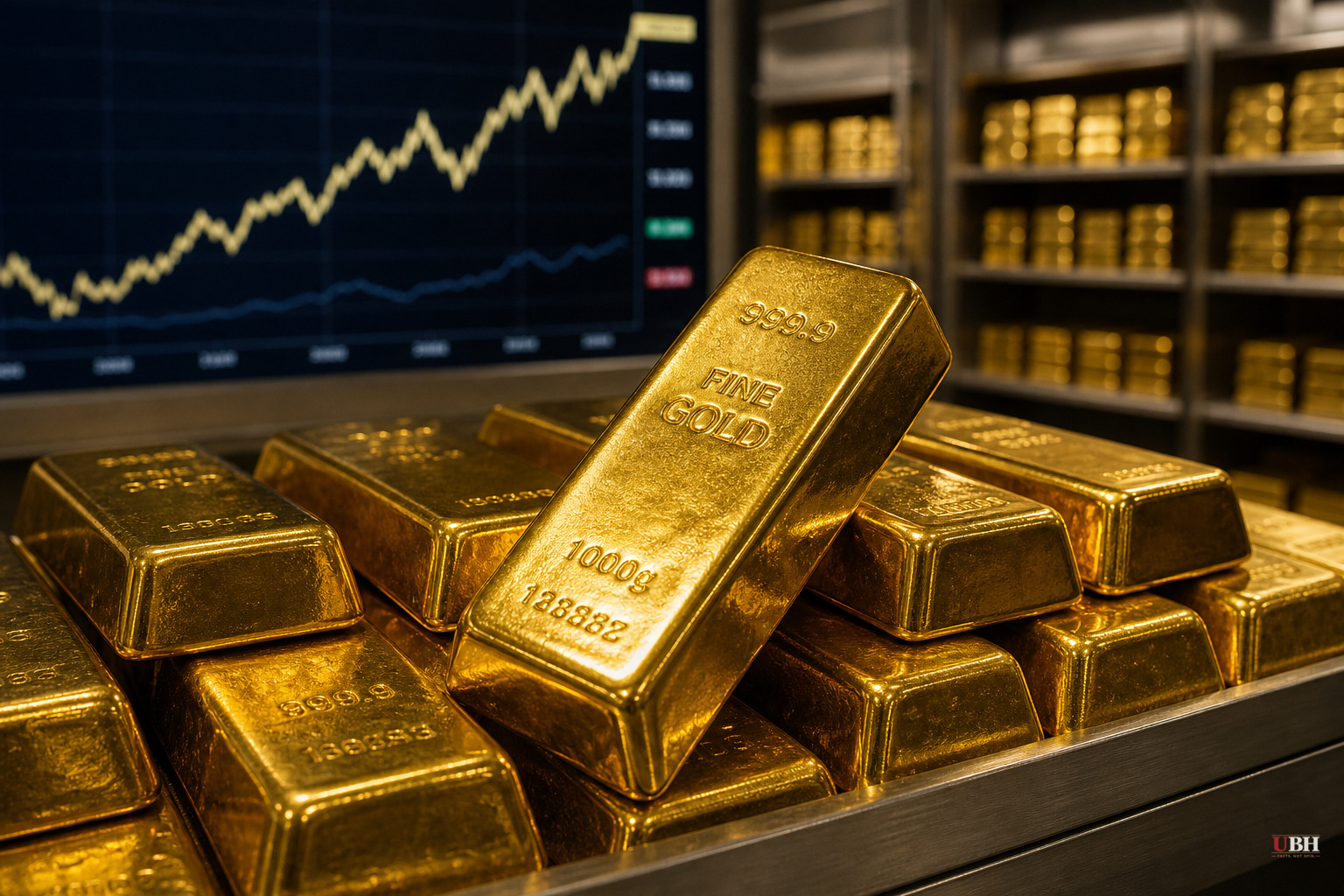
Gold futures opened Tuesday at $4,446.90 an ounce, up 0.6% from Monday's close, according to Yahoo Finance. Prices touched $4,495 intraday, the highest level since mid-June, before fading back toward $4,440 as oil reversed higher, according to Mining.com.
Gold is up 9.8% over the past week and 7.9% over the past month, per Yahoo Finance data. Anadolu Agency put the weekly gain at 8% and pegged gold's Tuesday level at a 10-week high. The metal is still roughly a fifth below where it traded before the US-Iran war started in late February, according to Mining.com.
President Trump posted on Truth Social Monday that Washington will seek compensation from Iran for Americans killed or wounded in attacks linked to Tehran and in domestic protests, according to both Mining.com and fxstreet. Iran has its own list of demands to reopen the Strait of Hormuz, including lifting sanctions, releasing frozen Iranian assets, ending military threats and removing the US naval blockade, per fxstreet. Those two positions do not overlap. Iran is unlikely to accept reparations demands, Mining.com reported, and hardened rhetoric has characterized both sides.
Why oil is driving this, not just fear
The Strait of Hormuz carried roughly a fifth of the world's oil and LNG flows before Iran effectively shut it down in the war, according to primexbt. Qatar said Tuesday that talks between Iran and Oman over reopening the strait had reached an "advanced stage" with positive feedback from both sides, per fxstreet. Trump's reparations demand landed on top of it and muddied the picture, and oil whipsawed as a result.
West Texas Intermediate touched above $83 a barrel Tuesday and Brent pushed toward $89, according to Mining.com, even after WTI had been trading around $80.80 earlier in the session per fxstreet. The Guardian reported Brent briefly cleared $90 before easing back. Higher oil prices matter for gold because they feed inflation expectations, and inflation expectations feed the Federal Reserve's rate decision.
The CME FedWatch tool showed a 49% chance of a Fed rate hike at the September meeting as of Tuesday, according to fxstreet. That's a coin flip, and Wednesday's and Thursday's inflation reports carry outsized weight this week, per Yahoo Finance. A rate hike would typically pressure gold lower since the metal pays no yield and competes with cash returns.
Volatility and positioning
Zoom out and the volatility this year has been extreme. The Independent reported gold hit an all-time record above $5,600 an ounce in late January, then fell more than 28% from that peak to a low below $4,000 by midyear. Mining.com noted gold's one-year gain, which stood at 95.6% on January 29 according to Yahoo Finance, has now shrunk to roughly 1% for 2026 overall. A metal often sold as a stable safe haven has been anything but steady this year.
Jemma Slingo, an investment expert at Fidelity International, told The Independent that gold "did not behave like a traditional safe haven during the early stages of the Middle East conflict." She pointed to gold ETFs returning to inflows in July after two months of outflows as one signal that sentiment has shifted.
Central bank buying has also been a steady undercurrent. The People's Bank of China added roughly 20 tons of gold to reserves in July after buying about 15 tons in June, according to Anadolu Agency, marking the largest monthly increase since October 2023 and extending a 21-month buying streak. Primexbt also flagged buying by crypto issuer Tether as a contributing factor to gold's climb over the past month.
Ole Hansen, head of commodity strategy at Saxo Bank, told Bloomberg in comments carried by Mining.com that gold needs to hold between $4,360 and $4,370 an ounce to sustain its rally, territory it was sitting barely above Tuesday. He said longer-term traders want to see a break back above the 200-day moving average before committing new money, a signal that professional positioning remains cautious even as headline prices climb.
Iran's conditions and Trump's reparations demand are not close to reconcilable based on the public statements from both sides Monday. Qatar's optimism on the Hormuz talks is real but unconfirmed by any signed agreement.
Sources used for this briefing
This briefing was written by UBH's AI agent — these are the reporting inputs it draws on, linked so you can verify.


