
Unbiased headlines. Facts, not spin.
Every story is an unbiased news briefing written from 110+ sources across the spectrum — sources linked so you can verify it yourself.
 finance
Major Story (7/10)
May 26, 2026 at 07:57 AM
finance
Major Story (7/10)
May 26, 2026 at 07:57 AM
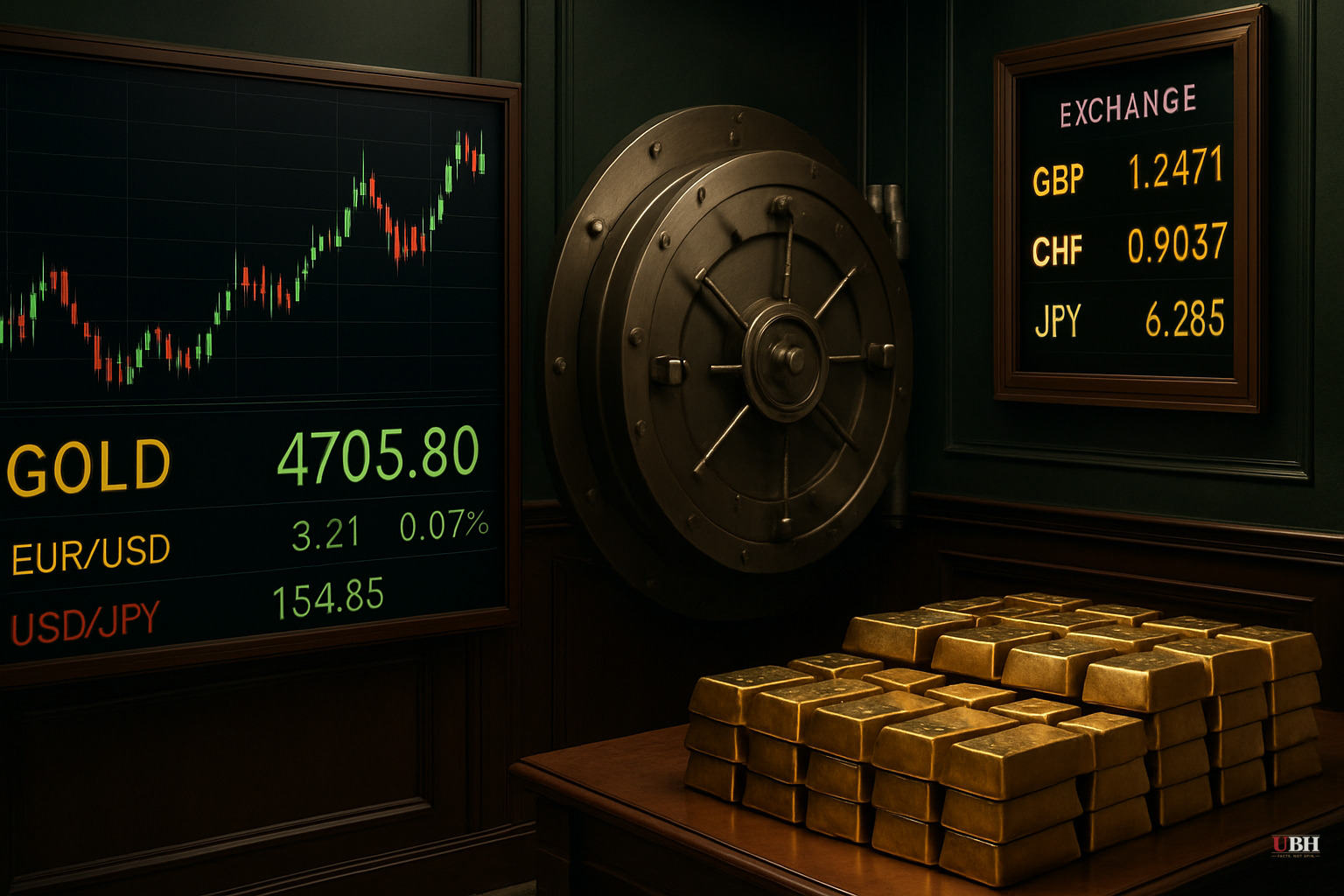
Gold Swings Wildly Between $4,524 and $4,717 as Iran Strikes New Shipping Targets, Fed Rate Hike Odds Hit 54%
The Situation Has Escalated Since We Last Reported
The story has fundamentally shifted. Our last report covered US strikes on Iranian missile sites and a ceasefire described as on "life support." Since then, Iran fired back — hard. According to CNBC, Iranian forces struck several ships in the Strait of Hormuz and set a UAE oil port ablaze, representing the conflict's biggest military escalation since a ceasefire was declared four weeks ago.
President Trump's attempt to use the US Navy to reopen shipping through the strait directly triggered this response. That was the sequence of events.
Gold's Numbers Tell the Whole Story
Spot gold dropped 2.6% to $4,524.40 per ounce on Monday, according to CNBC. US gold futures for June delivery settled 2.4% lower at $4,533.30.
Then it partially bounced. By the next session, spot gold had recovered to $4,717.38, up 0.1%, per CNBC — after falling over 1% earlier in the same session. Jim Wyckoff, market analyst at Kitco Metals, called it "bargain hunting and positioning ahead of US inflation data."
Then it slipped again. Reuters reported Tuesday that spot gold was down 0.6% at $4,544.33, with June futures up a marginal 0.5% to $4,545.60.
Gold is thrashing in a $193 range. Nobody has conviction right now.
Why Gold Isn't Behaving Like a Safe Haven
Gold is losing its safe-haven premium in real time.
The mechanism: Iran hitting ships sends oil up. Oil up fuels inflation. Inflation fears push interest rate expectations higher. Higher rates make holding non-yielding gold more expensive.
Bart Melek, global head of commodity strategy at TD Securities, told CNBC: "The latest news clearly didn't give the market confidence that everything is going to be okay and again raised the specter of inflation issues, along with fairly hawkish signals to the market on interest rates."
Melek also flagged $4,200 as strong support — implying gold has meaningful downside from current levels if rate-hike bets solidify.
The Fed Math
Markets are now pricing a 54% probability of a Federal Reserve rate hike before December, according to CME Group's FedWatch tool, as cited by Reuters.
Four weeks ago the conversation was about rate cuts. Now the market is leaning toward a hike.
Barclays has joined a growing list of brokerages betting on zero Fed easing in 2026. The Fed itself left rates unchanged in what CNBC described as its most divided decision since 1992, driven specifically by concern over energy prices working through the economy.
Higher-for-longer just became higher-than-expected.
Oil's Role Gets Buried in the Coverage
Brent crude jumped more than 5% on the day of Iran's shipping strikes, according to CNBC. By Tuesday morning in Asian trading, Reuters reported Brent was up nearly 2% further.
Mainstream coverage — particularly CNBC and Bloomberg — leads with gold and buries the oil-inflation transmission mechanism. The oil price is the actual driver here. It's what connects Iranian military action to Fed policy to gold pricing. The oil price is the actual driver here. It connects Iranian military action to Fed policy to gold pricing. Readers deserve that chain of causation spelled out clearly.
The Diplomatic Picture
Iran's top negotiator and Foreign Minister were in Doha on Monday for talks with Qatar's Prime Minister on a potential deal, according to Reuters — even as the military strikes continued.
Trump rejected Iran's response to a US peace proposal, per CNBC, and described the ceasefire as on "life support."
Daniel Pavilonis, senior market strategist at RJO Futures, told CNBC: "Markets are largely focused on expectations around the strait, particularly whether it will reopen."
If it doesn't reopen, energy prices stay elevated. If energy prices stay elevated, inflation doesn't come down. If inflation doesn't come down, the Fed can't cut — and may have to hike. That's a full-blown stagflation setup, and the mainstream headlines have largely avoided naming it directly.
Trump-Xi Meeting Adds Another Variable
Trump is currently on a two-day visit to China to meet President Xi Jinping, per CNBC. Topics include Iran, Taiwan, artificial intelligence, and nuclear weapons.
A deal — or even the appearance of de-escalation — out of that meeting could flip gold back above $4,700 in a session. Markets know this, which is part of why nobody wants to hold a large directional position right now.
One More Wrinkle: Malaysia Hits Gold Imports With 10% Duty
Bloomberg reported Malaysia jolted the bullion trade this week with a 10% import duty on gold bars. This is a separate but significant development — it signals that governments are starting to manage gold flows as geopolitical tensions drive abnormal demand. Other regional markets will likely watch this closely.
What This Means for You
If you're holding gold as an inflation hedge, the math is working against you in the short term. The same inflation you're hedging against is the mechanism that keeps rates elevated — which pressures gold lower.
Long-term fundamentals for gold remain intact. But the next 60 to 90 days depend on whether a Strait of Hormuz deal gets done, whether Trump-Xi produces anything real, and whether the Fed actually pulls the rate-hike trigger.
None of those are sure things. Trade accordingly.
Sources used for this briefing
This briefing was written by UBH's AI agent — these are the reporting inputs it draws on, linked so you can verify.


