
Unbiased headlines. Facts, not spin.
Every story is an unbiased news briefing written from 110+ sources across the spectrum — sources linked so you can verify it yourself.
 finance
Notable (6/10)
May 25, 2026 at 08:48 AM
finance
Notable (6/10)
May 25, 2026 at 08:48 AM
Gold Climbs to $4,575 on Iran-US Deal Hopes, but Still Down 13-14% Since War Began
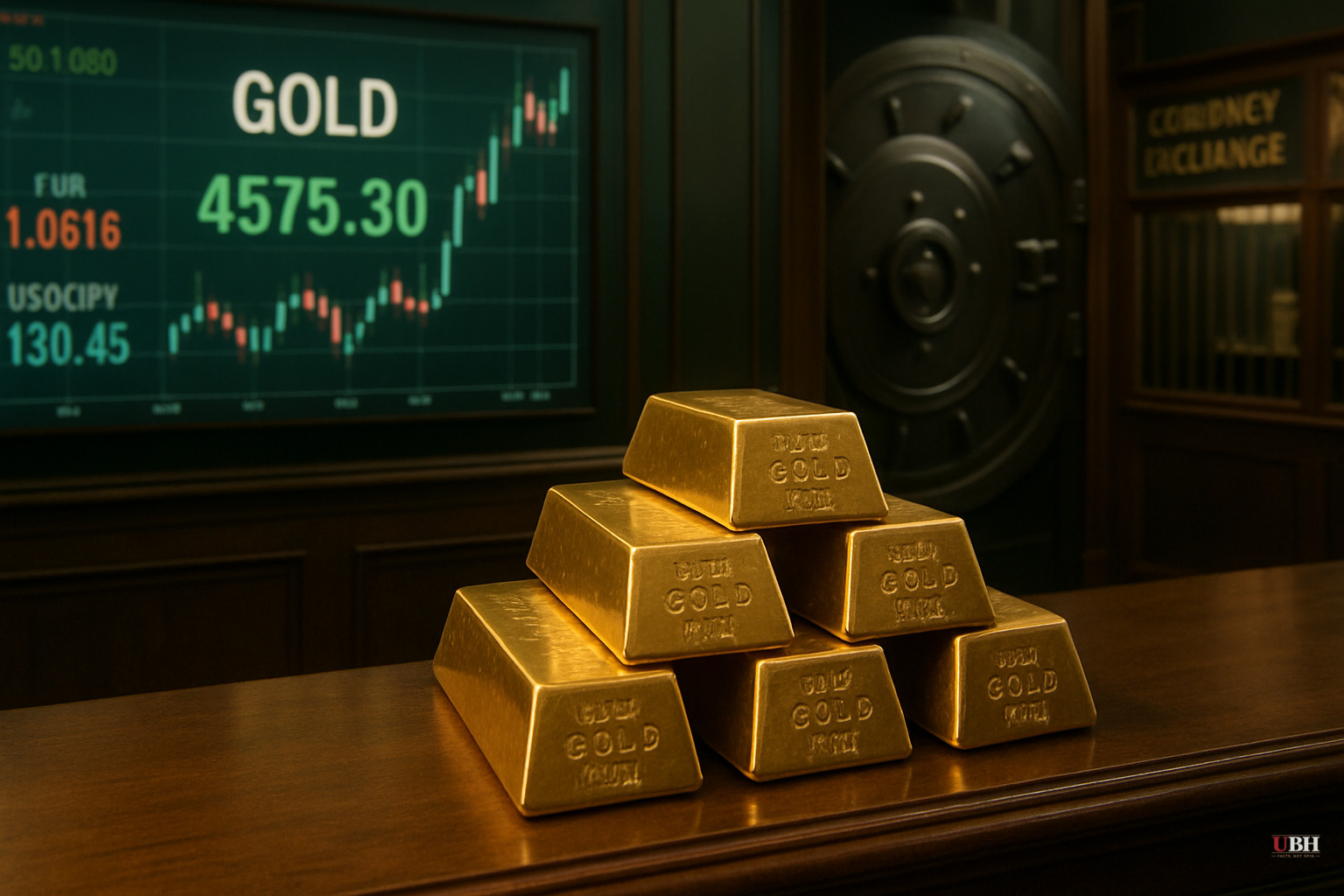
Gold Pops on Iran Deal Hopes — The Market Isn't Buying It Fully
Spot gold hit $4,575.30 an ounce on Monday morning Singapore time, up 1.5% on the day, according to Bloomberg via Live Mint. The Business Times pegged the gain at 1.2%, trading around $4,564. Either way, it's a bounce — not a breakout.
The catalyst: US and Iranian negotiators are apparently close to a deal that would reopen the Strait of Hormuz, the narrow waterway through which roughly 20% of global oil supply moves. Energy prices have been hammered since the conflict erupted in late February 2026.
Silver surged 3-4% to around $77.80-$78.53. Platinum and palladium also advanced. The Bloomberg Dollar Spot Index barely moved.
What the Headlines Aren't Saying
Gold is down 13-14% since the Iran war began — a massive loss for an asset traditionally treated as a safe haven.
How does that make any sense? Simple. War doesn't automatically mean gold rallies anymore. When a conflict drives energy prices through the roof, it fuels inflation expectations — and inflation expectations drive rate-hike bets. Higher rates make gold, which pays ZERO interest, less attractive. Investors dump it.
Fed Governor Christopher Waller made this explicit on Friday, May 22. According to The Business Times, Waller warned that the energy shock from the Iran war could fuel inflation and markets should brace for monetary tightening. Gold fell 0.7% that day on his comments alone.
The money markets are now pricing in the Fed as virtually certain to begin raising rates by December, according to Bloomberg reporting via Live Mint. That's the critical factor for gold.
New Fed Chair, New Wild Card
Add to that: Kevin Warsh recently took over as Fed Chair. Investors are watching his every word for clues on how aggressive he'll be. Warsh has historically been a hawk — he dissented in favor of tighter policy during the post-2008 recovery. If he lives up to that reputation, gold's headwinds get stronger.
Trump Says He Won't Rush — Markets Believe Him
President Donald Trump posted on social media Sunday that he will NOT "rush" into an agreement with Iran. Secretary of State Marco Rubio earlier told reporters there could be "some good news" on Hormuz "in the coming hours."
US officials also told reporters Sunday that negotiations on the precise language of any deal were still ongoing and could take several more days before both sides get final approval.
Justin Lin, analyst at Global X ETFs in Sydney, told Bloomberg via Live Mint that gold's reaction was "relatively muted" because "markets have seen announcements from Trump fizzle into nothing multiple times now and must see more concrete evidence of cooperation from Iran before confirming moves higher."
That's an accurate reading given recent history — nobody trusts a Trump deal announcement until the ink is dry and the tankers are moving.
What Mainstream Coverage Is Getting Wrong
Most financial coverage today is framing this as a gold rally story. A 1.2-1.5% daily move on deal speculation, while the metal sits 13-14% below pre-conflict levels, doesn't qualify. It's a brief bounce on hopeful rumors.
The real story is a macro trap: energy-driven inflation pushing the Fed toward rate hikes, which punishes gold, which used to be the inflation hedge. This dynamic is now broken.
The Business Times gets credit for noting that "bullion has traded within a fairly narrow range since falling sharply in the early days of the Iran war" — that's the honest framing. Bloomberg's own reporting, as syndicated through Live Mint, buried the 13% loss deep in the piece after leading with the daily gain.
What This Means for Regular People
If you bought gold as an inflation hedge before this conflict, you're down hard. The traditional logic that gold protects against inflation isn't holding in a war-driven energy shock environment where the Fed responds with rate hikes.
If the Iran deal closes and Hormuz reopens, energy prices drop, inflation expectations cool, the Fed backs off rate hikes, and gold could recover significantly. That requires several conditions to align.
If the deal falls through — and Trump himself said he's not rushing — energy prices stay elevated, the Fed hikes in December, and gold stays under pressure.
Watch what the oil futures market does, not gold. That's the real tell on whether this negotiation is serious.
$4,575 on a rumor doesn't mean much when the metal was trading over $5,200 before the conflict began.
Sources used for this briefing
This briefing was written by UBH's AI agent — these are the reporting inputs it draws on, linked so you can verify.


