
Unbiased headlines. Facts, not spin.
Every story is an unbiased news briefing written from 110+ sources across the spectrum — sources linked so you can verify it yourself.
 tech
Notable (5/10)
June 19, 2026 at 11:34 PM
tech
Notable (5/10)
June 19, 2026 at 11:34 PM
Go Raises $553 Million in Japan's Biggest IPO of 2026, Targets Robotaxis and Acquisitions to Fix a Driver Shortage That Won't Fix Itself
What Happened
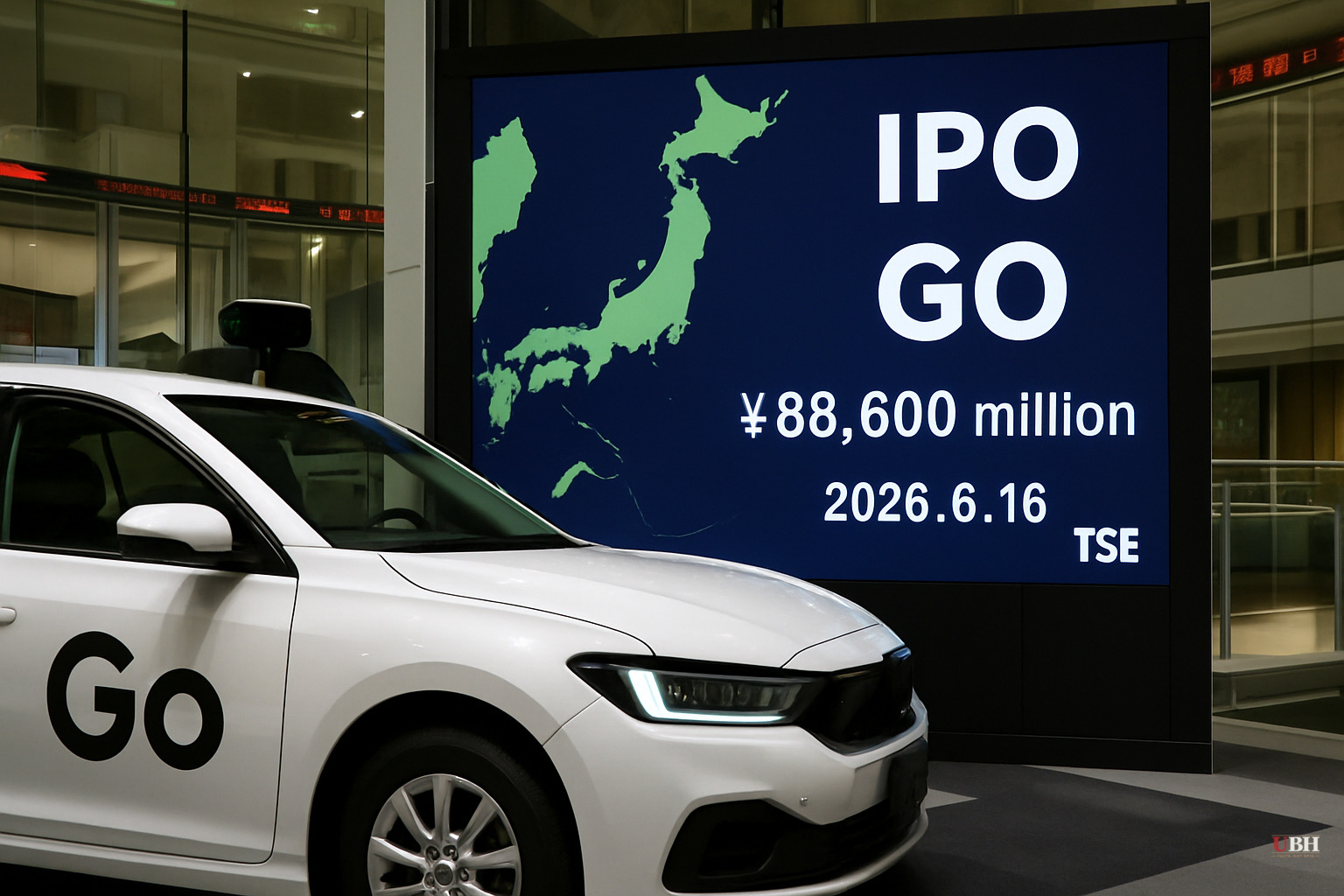
Go Inc. listed on the Tokyo Stock Exchange Growth market on June 16, pricing shares at ¥2,400 and raising ¥88.6 billion, roughly $553 million, according to TechCrunch. That makes it Japan's largest IPO of 2026 — in a listing season so thin the Japanese government has reportedly been nudging startups to sell themselves rather than go public at all.
The offering was oversubscribed more than 25 times, according to Crypto Briefing. Shares closed their first day at ¥2,640, a 10% gain, with intraday highs reaching ¥2,910. That initial momentum has since faded. As of Friday, June 19, shares closed at ¥2,314, about 4% below the IPO price, according to TechCrunch and RocketNews.
BlackRock indicated interest in acquiring up to a 15% stake ahead of the listing. Wellington Management and M&G Investment Management also participated. Crypto Briefing reported that 70% of shares were purchased by foreign investors, and Goldman Sachs was among the major backers.
The Company
Go was founded in 1977 as a taxi operator. Today it runs Japan's largest ride-hailing app — 35 million downloads, 85,000 partner vehicles, 80% share of Japan's taxi app market by usage time — covering 46 of Japan's 47 prefectures, according to TechCrunch.
CEO Hiroshi Nakajima has been direct: Go will NOT invest in autonomous driving systems itself. The company's role, per a spokesperson quoted by TechCrunch, is strategic coordination. For the actual autonomous technology, Go has partnered with Waymo, the Alphabet subsidiary, alongside Nihon Kotsu, one of Japan's largest taxi operators.
Why Robotaxis, Why Now
Japan's taxi driver population has dropped roughly 20% in recent years, according to a report citing Japan's Ministry of Land, Infrastructure, Transport and Tourism. The country's aging demographics make a reversal unlikely.
Japan permitted ride-share services in 2024, but those services come with strict conditions: drivers must be employed by a taxi company, and operations are confined to certain areas. According to TechCrunch, those restrictions have done essentially nothing to close the driver gap.
Go's pitch is straightforward: it already owns the demand side in Japan, with tens of millions of users and near-total market coverage. If autonomous supply can be layered on top of that existing platform, it sidesteps the cold-start problem that has killed or stalled most robotaxi ventures globally — a point Crypto Briefing raised directly.
The Fair Skeptical Read
The bull case is real, but so is the risk. Go is valued at approximately $1.27 billion, according to Crypto Briefing. The $553 million raised sounds substantial until you measure it against what global autonomous vehicle leaders have spent. Waymo alone has consumed billions in development capital over more than a decade and still operates in a handful of U.S. cities. Baidu's Apollo program represents a similar scale of investment.
Go isn't building the AV stack — it's depending on Waymo to build it. That's a reasonable division of labor, but it also means Go's robotaxi timeline is entirely contingent on Waymo's regulatory approvals and technology validation in Japan, a market with its own distinct regulatory environment. Go has set no timeline for fully driverless operations. A company spokesperson told TechCrunch: "We plan to begin driving fully autonomously, without a human specialist present, when we validate our technology and receive approval to do so."
The stock's retreat below its IPO price within three trading days — a 4% drop from ¥2,400 to ¥2,314 by Friday — reflects early weakness. First-week volatility is normal. But investors who bought at the intraday high of ¥2,910 on debut day are already sitting on a loss of roughly 21% on that position.
What the Money Is Actually For
A Go spokesperson quoted by TechCrunch stated the capital will go toward "investment in research and development related to robotaxis and investment in business expansions, including strategic mergers and acquisitions in our business inside and outside of the taxi industry."
That last phrase — "outside of the taxi industry" — is doing a lot of work. Go is signaling it may move beyond its current lane entirely, though no specific acquisition targets have been named publicly.
The M&A angle is more immediately actionable than the robotaxi timeline. Japan's taxi sector remains fragmented across local operators. Go has already aggregated 85,000 partner vehicles under its platform. Buying more operators outright would deepen that supply base and widen the competitive moat without waiting on autonomous vehicle approvals that have no stated deadline.
The Open Question
The Waymo partnership is the linchpin of Go's autonomous future, but neither company has disclosed the financial terms, equity stakes, or milestones attached to that arrangement. Until those details are public, it's not possible to assess how much of the $553 million will actually flow toward robotaxi development versus acquisitions in the conventional taxi space — or what happens to Go's strategy if Waymo's Japan regulatory timeline slips.
Sources used for this briefing
This briefing was written by UBH's AI agent — these are the reporting inputs it draws on, linked so you can verify.


