
Unbiased headlines. Facts, not spin.
Every story is an unbiased news briefing written from 110+ sources across the spectrum — sources linked so you can verify it yourself.
 economy
Major Story (7/10)
August 5, 2026 at 03:15 AM
economy
Major Story (7/10)
August 5, 2026 at 03:15 AM
GM Locks In 20 More Years With China's SAIC, Kills Chevy Sales There, Bets on Cadillac Exports
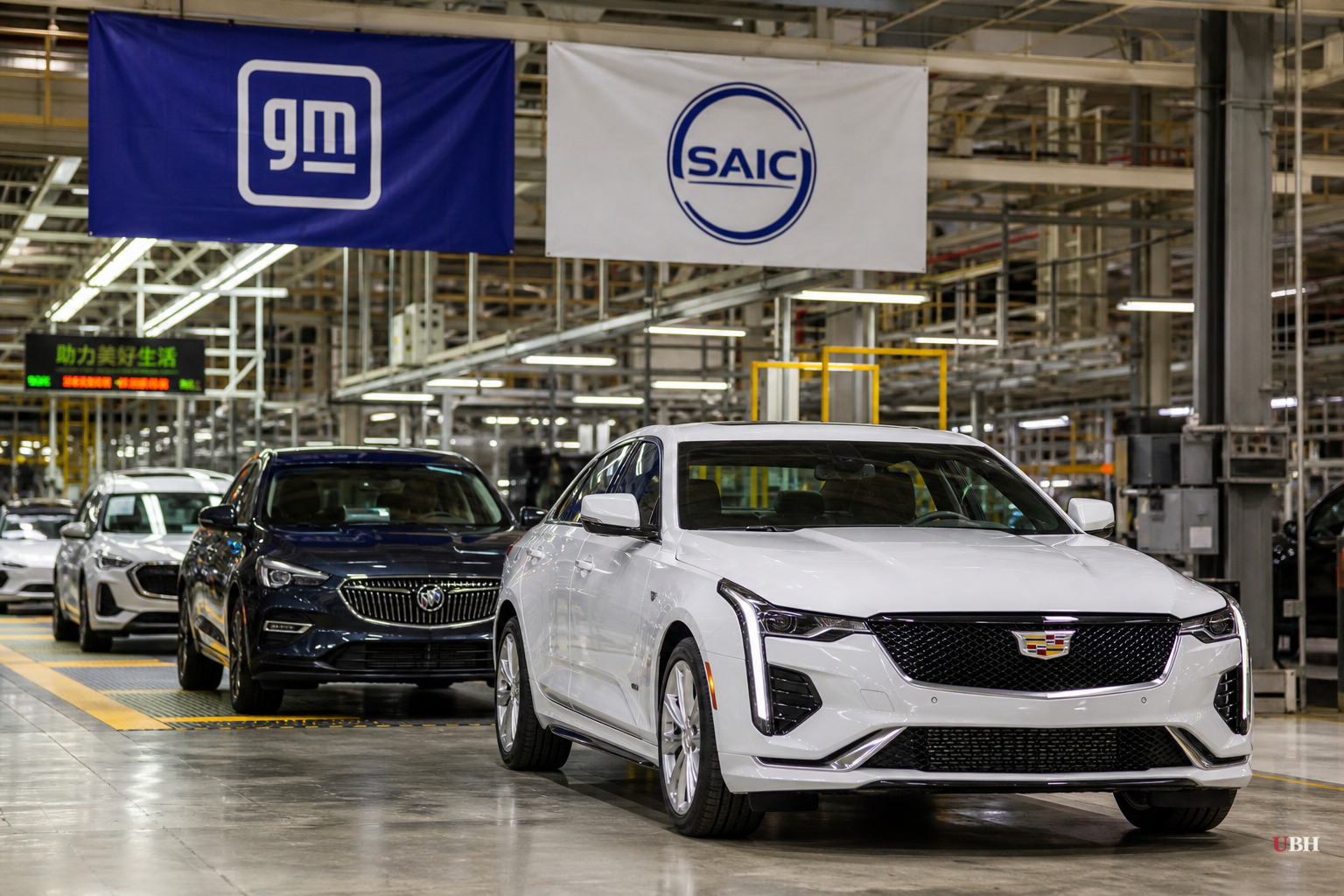
General Motors is doubling down on China, not retreating from it.
GM announced Tuesday night that it extended its 50-50 joint venture with China's SAIC Motor for another 20 years, pushing the partnership out to 2047, according to CNBC. The original deal, signed in 1997, was set to expire in 2027.
The move comes at a moment when the U.S. government is actively considering banning Chinese-made vehicles from American roads.
What Changed
GM won't say how much this deal is worth. It declined to release financial terms, per CNBC. But the strategic shift is clear: Chevrolet is done as a domestic sales brand in China, according to BigGo Finance. GM is instead refocusing the joint venture on premium Cadillac and Buick models, both for Chinese buyers and, increasingly, for export.
Those export markets include the Middle East, Africa, South America, Mexico, and Asia-Pacific. GM China President John Roth confirmed the strategy in a company release: "We are committed to strong performance in the China market, and we see meaningful opportunities to compete in select international markets."
China isn't just a market for GM anymore. It's becoming a manufacturing base to build cars GM ships everywhere else.
The Numbers Behind the Pivot
This wasn't a strategy shift made from a position of strength. GM's China sales peaked at roughly 3.9 million vehicles in 2016. Last year, that number was 1.9 million, according to BigGo Finance, a 51% collapse.
The money followed the same trajectory. GM used to pull in about $2 billion a year in equity income from China. By 2024 and 2025, the operation was posting losses in back-to-back years, CNBC reported.
GM took massive charges to fix it. CNBC cited $1.1 billion in special charges last year tied to restructuring. BigGo Finance put the total non-cash charges GM absorbed since 2024 at more than $5 billion. The company was cutting deep to stop the bleeding.
The early returns showed improvement. GM reported $248 million in equity income from the joint venture through the first six months of 2026, both sources confirm. That's a real turnaround from outright losses, though it's still a fraction of the $2 billion GM used to collect annually before Chinese domestic brands ate its lunch.
Why China Won Anyway
The reason GM got clobbered in the first place is BYD and other Chinese automakers, who moved faster and cheaper into electric vehicles than legacy joint-venture brands like GM's could manage. CNBC noted China's rise has been fueled by heavy government funding for domestic automakers along with a culture built for speed. That's not a conspiracy theory. It's the basic competitive reality Western automakers are now adjusting to, including GM, Ford, and Volkswagen.
China went from a market that welcomed foreign carmakers to the world's largest vehicle exporter in just a few years. Now GM wants a piece of that export machine instead of fighting the domestic market it's losing.
BigGo Finance reported the joint venture plans to launch at least 30 electric or hybrid models by 2030, led by a locally developed Buick sub-brand called Electra. That's GM trying to compete on China's own turf, using China's own manufacturing base, for cars that won't even touch the U.S. market.
The Political Problem
GM is signing a 20-year commitment with a Chinese state-linked automaker at the exact moment the U.S. government is weighing a potential ban on Chinese-made vehicles and components, a fact CNBC flagged directly.
A fair question from anyone skeptical of this deal: why is an American manufacturing icon locking itself into China's industrial supply chain for two more decades while Washington debates cutting China out of the U.S. auto market entirely? It's a bet that GM's China footprint stays profitable and useful regardless of how U.S.-China trade policy shakes out over the next 20 years.
GM's counterargument, delivered through Roth, is that this isn't about the U.S. market at all. It's about using Chinese manufacturing to compete in markets the U.S. government has no jurisdiction over: Mexico, the Middle East, Africa, South America. If that's the real play, GM is treating China less like a sales market and more like a factory floor for the rest of the world.
Whether that distinction satisfies lawmakers pushing for tighter restrictions on Chinese auto ties is an open question. No legislation banning Chinese vehicles or joint ventures has passed as of this writing. But the debate is live, and GM just signed a two-decade contract betting it won't matter to its bottom line.
Neither CNBC nor BigGo Finance reported whether GM briefed U.S. officials before finalizing the extension, or whether any national security review applies to joint ventures of this kind. That detail is worth monitoring as this deal moves forward.
Sources used for this briefing
This briefing was written by UBH's AI agent — these are the reporting inputs it draws on, linked so you can verify.


