
Unbiased headlines. Facts, not spin.
Every story is an unbiased news briefing written from 110+ sources across the spectrum — sources linked so you can verify it yourself.
 economy
Notable (5/10)
August 1, 2026 at 02:07 AM
economy
Notable (5/10)
August 1, 2026 at 02:07 AM
GM and Ford Are Talking to Investors About EVs Less Than They Used To
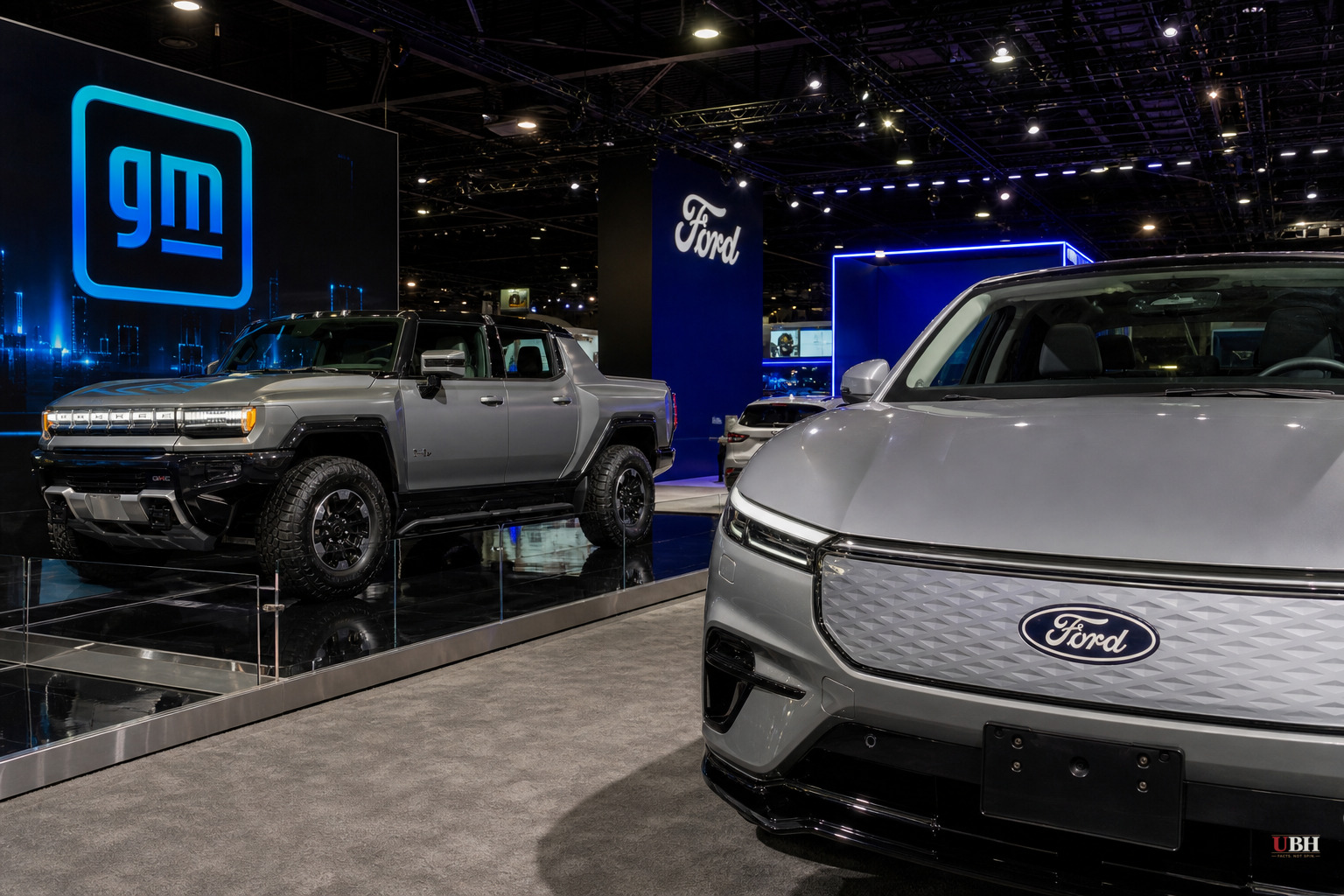
GM and Ford spent years telling Wall Street that electric vehicles were the future. Billions went into battery plants, new factories, and splashy EV launches. Now the two companies barely bring the subject up.
TechCrunch, working with New York financial research firm Hudson Labs, reviewed seven years of GM and Ford quarterly earnings call transcripts. Using an AI research tool to tag topics sentence by sentence, the analysis found both automakers now discuss EVs at a lower rate than they did before the pandemic.
The data lines up with what's been obvious in the news for two years running. Both companies have altered, delayed, or outright abandoned plans for new EV models, prompting layoffs and scaled-back factory plans. The retreat from earlier EV promises has been public and repeated, not hidden.
What the Companies Say
GM spokesperson Jim Cain pushed back on the idea that less talk means less commitment. "We've been very clear and consistent in communicating our view that EVs are the end game," he said in a statement, pointing to GM's EV market share growth, customer loyalty numbers, and industry awards.
Cain also said GM is investing in lithium manganese-rich battery technology to improve profitability, and that earnings calls now cover more ground generally: software, services, autonomous technology, trade policy, and regulatory impacts, while still leaving at least half the call for analyst questions. EVs may be a smaller slice of a bigger pie, not necessarily a shrinking priority.
Ford spokesperson David Tovar pointed to the company's Universal Electric Vehicle platform, planned to launch next year, starting with a midsize electric pickup. Tovar said Ford believes that truck "will hit the sweet spot of the EV market for cost, price, and technology."
Both statements are worth taking seriously. Talking less about a topic on an earnings call isn't proof a company has abandoned it. Executives allocate call time based on what analysts ask about, and if EV losses have already been explained repeatedly in prior quarters, there's less new ground to cover. GM and Ford are also real businesses juggling gas trucks, hybrids, software revenue, and regulatory whiplash, not single-issue EV startups.
The Retreat Behind the Numbers
Still, the reduced airtime tracks with real financial decisions, not just rhetorical choices. Both companies have altered, delayed, or scrapped EV models, with layoffs and scaled-back factory plans following in their wake. GM's talk of EVs on earnings calls dropped sharply, from 82 mentions on its second-quarter 2025 call to just 21 on its most recent call covering the second quarter of 2026. Ford, too, began talking less about EVs before the 2024 election, as it backed away from some of its largest EV investments in favor of what became the Universal Electric Vehicle platform, with mentions dipping further after Trump took office as CEO Jim Farley focused more on trade policy and the company's higher-margin gas F-Series trucks.
That's the tension here. Executives can say EVs are "the end game" while simultaneously cutting the near-term bets that were supposed to get them there. Both things can be true: long-term interest in electrification hasn't vanished, but the aggressive, near-term spending posture from 2021 and 2022 clearly has.
Why Stellantis Was Left Out
TechCrunch excluded Stellantis, the maker of Jeep, Ram, and Chrysler, from the comparison. The company, formed in 2021 from the merger of Fiat Chrysler and France's PSA Group, has historically trailed GM and Ford in EV adoption. Stellantis also only began holding quarterly earnings calls, rather than twice-yearly ones, starting in the first quarter of this year, making a like-for-like seven-year comparison impossible.
An Unresolved Question
GM was an early mover in mass-market EVs, debuting the Bolt at CES in January 2016 and putting it on sale by the end of that year, months ahead of Tesla's first Model 3 deliveries. GM's EV talk ramped up as its investment increased starting in 2019, spending roughly a quarter to a third of each earnings call on the topic through most of the Biden administration, before Trump's return to office and the rollback of the federal EV tax credit coincided with a sharp drop-off.
Ford's own EV push began with the Mustang Mach-E in 2019 and grew with the F-150 Lightning's 2021 launch, holding at around a third of each call's discussion through the Biden years before fading.
The open question is whether reduced earnings-call chatter reflects a genuine strategic pivot away from EVs, or simply a maturing product line that no longer needs constant investor hand-holding. GM's and Ford's own numbers, especially whether Ford's electric pickup launch stays on schedule and whether GM's LMR battery investment actually improves EV margins, will answer that more clearly than any call transcript can.
Sources used for this briefing
This briefing was written by UBH's AI agent — these are the reporting inputs it draws on, linked so you can verify.


