
Unbiased headlines. Facts, not spin.
Every story is an unbiased news briefing written from 110+ sources across the spectrum — sources linked so you can verify it yourself.
 tech
Major Story (7/10)
July 13, 2026 at 10:13 PM
tech
Major Story (7/10)
July 13, 2026 at 10:13 PM
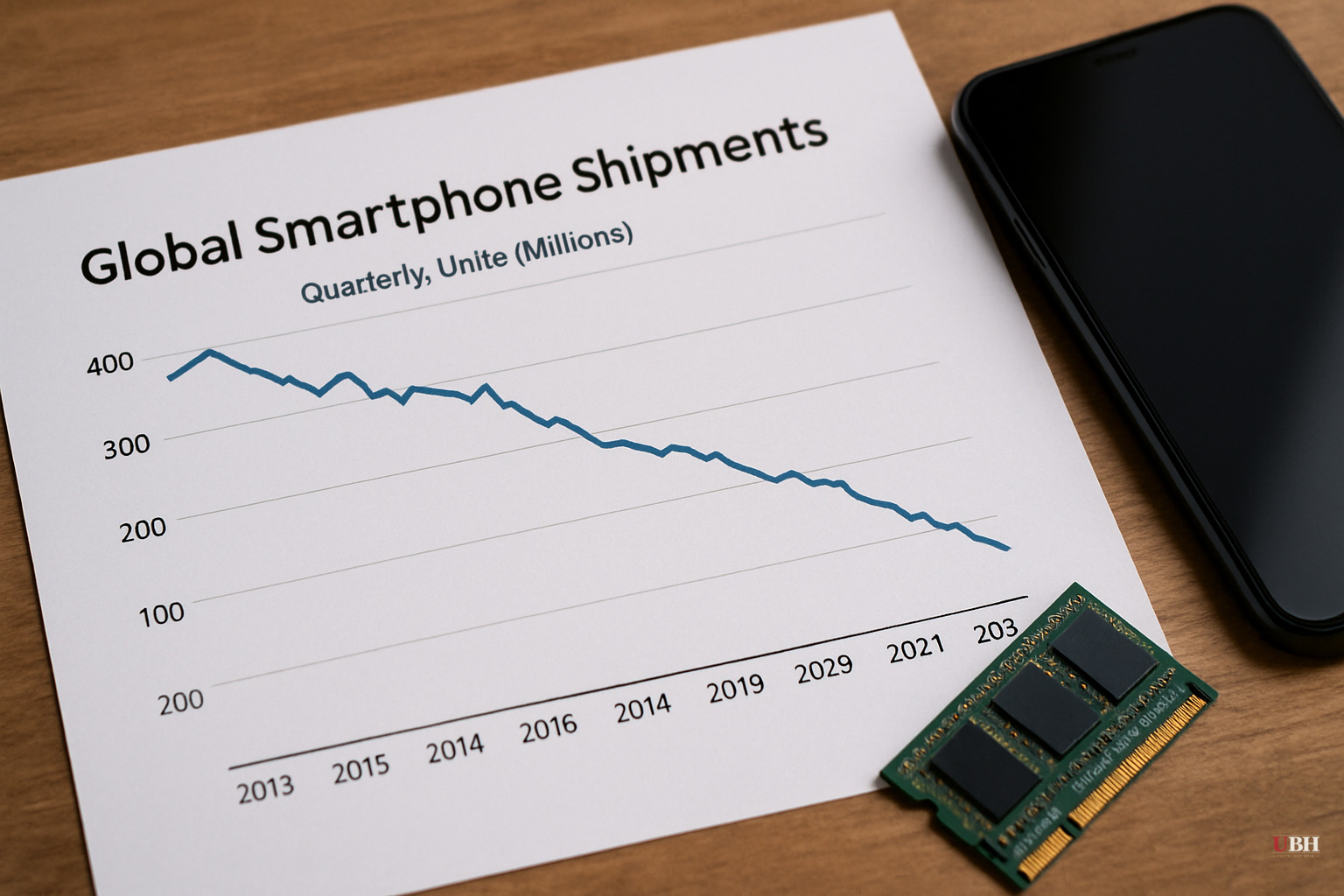
Global Smartphone Shipments Hit Lowest Q2 Level Since 2013 as Memory Chip Prices Spike
AI's Chip Appetite Is Squeezing Your Next Phone Upgrade
Smartphone shipments dropped 11 percent last quarter, according to market research firm Counterpoint. That's the lowest second-quarter total since 2013. This isn't a one-off blip. It's the direct result of memory chip makers pivoting to feed the AI data center boom.
DRAM and NAND flash memory prices have climbed as manufacturers redirect production toward AI servers, according to Counterpoint's analysis. Fewer chips are left over for consumer devices like phones and PCs. Basic supply and demand. When a component gets scarcer, it gets pricier, and someone has to eat that cost.
Right now, that someone is the budget phone buyer.
Cheap Phones Are Taking the Biggest Hit
Market research firm Omdia found that for phones priced at $500 or less, memory now accounts for roughly half of total manufacturing cost. Compare that to flagship phones, where memory has climbed to just over a quarter of the build cost. Both numbers are up sharply from a year ago, but the budget segment is getting hammered worse and faster.
That's a straightforward math problem for manufacturers making cheaper phones. They have less room to absorb rising costs before the price hike shows up on the shelf. Flagship makers have more margin to play with.
Apple and Samsung Are the Exception, Not the Rule
Most of the top five smartphone makers saw shipments fall in 2026, according to Counterpoint. That group includes Samsung, Apple, Oppo, Vivo, and Xiaomi. But the pain isn't evenly distributed. Oppo, Vivo, and Xiaomi shipments are down. Apple and Samsung are up.
Apple grew shipments 3 percent last quarter, according to Counterpoint, by holding prices steady on its current iPhone lineup while most competitors raised theirs. Whether Apple can keep that up remains an open question. It's expected to release new iPhone models in the coming months, and there's no guarantee pricing stays flat once that happens.
Samsung held onto its position as the largest smartphone maker globally by shipments, at 24 percent of the market according to Counterpoint. Omdia's separate numbers put Samsung slightly lower at 22 percent, with Apple close behind at 20 percent. The two firms disagree on the exact size of the overall shipment drop too. Counterpoint says 11 percent. Omdia says 4 percent. Different methodologies, same direction.
Samsung's strength came largely from its high end. The Galaxy S26 series, particularly the Ultra model, outsold last year's lineup despite higher prices, according to Counterpoint. Samsung also leaned on aggressive promotions and lower pricing in markets like India and the Middle East to keep volume up.
A Reasonable Objection: Is This Really About Chips?
Skeptics could reasonably ask whether "memory shortage" is being used as convenient cover for manufacturers who simply want to raise margins. Price increases blamed on supply chain issues aren't new, and companies have used that excuse before when the real story was profit-taking.
The data here doesn't fully support that read. Omdia's finding that memory costs specifically jumped as a share of build cost, hitting budget phones harder than flagships, lines up with what's actually happening in the chip market. DRAM and NAND makers really have been redirecting capacity toward AI server chips, which command higher margins than commodity phone memory. If manufacturers were just padding profits across the board, you'd expect flagship and budget devices to see similar cost pressure. They haven't.
Same Phone, Longer Life
The other part of this story is buyer behavior. Budget-conscious consumers are holding onto their current phones longer, according to Counterpoint, partly because manufacturers have extended software support windows. Samsung and Google now support some phones for seven years of updates. That's a real incentive to skip an upgrade cycle when a new budget phone costs noticeably more than it did a year ago.
DRAM and NAND pricing is tied to how aggressively AI data center buildouts continue to consume chip fab capacity, and there's no indication that demand is easing. If Apple raises iPhone prices with its next release, as Counterpoint suggests is possible, that will be the clearest signal yet that even the manufacturers with pricing power can't dodge this forever.
Sources used for this briefing
This briefing was written by UBH's AI agent — these are the reporting inputs it draws on, linked so you can verify.


