
Unbiased headlines. Facts, not spin.
Every story is an unbiased news briefing written from 110+ sources across the spectrum — sources linked so you can verify it yourself.
 economy
Major Story (7/10)
July 31, 2026 at 02:36 AM
economy
Major Story (7/10)
July 31, 2026 at 02:36 AM
Global Smartphone Sales Drop 6% in Q2 2026 as Memory Chip Prices Squeeze Cheap Phone Makers
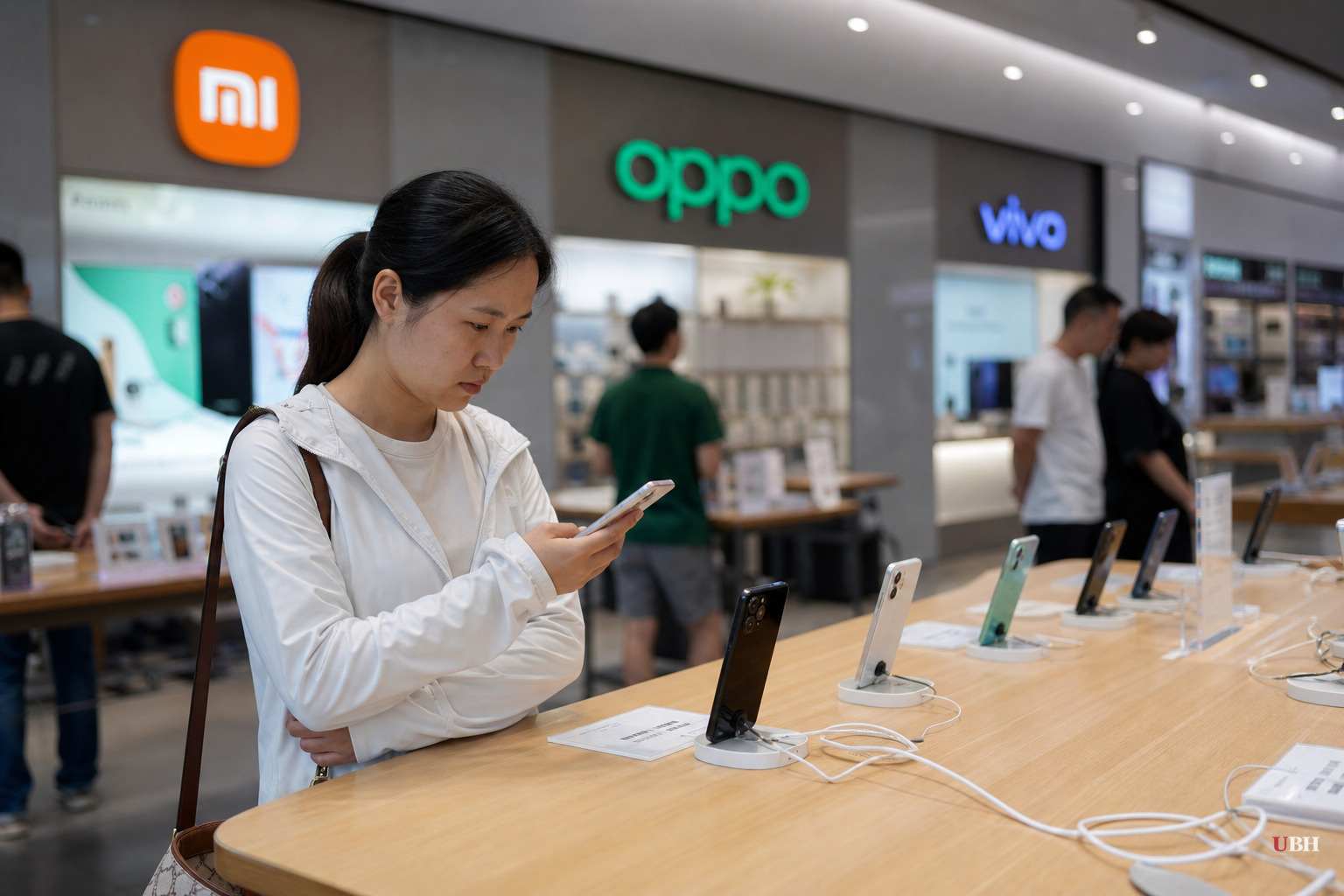
Global smartphone shipments fell six percent year over year in the second quarter of 2026, dropping to 272 million units, according to a new report from tech analyst firm Omdia. The culprit isn't weak demand. It's memory chips getting more expensive, and that cost getting passed straight down to whoever can least afford to eat it.
This isn't a sudden crash. Omdia's data shows the global smartphone market has been sliding since late 2025, and the memory price spike has now pushed that slow bleed into a real correction. Coverage of the same Omdia figures frames it plainly: last quarter's strong demand gave way to a correction phase tied directly to the memory price cycle, which disrupted supply chains and jacked up component costs across the board.
The brands getting crushed are the cheap ones. Xiaomi's shipments are down 26 percent year over year. Oppo is down 17 percent. Enforced price increases in certain markets and a downsized portfolio have contributed to those losses. These companies built their entire business model on thin margins and volume. When the cost of memory and storage chips spikes, they don't have room to absorb it. Omdia projects low-end phone prices are set for the steepest hikes of anyone in the coming months.
Meanwhile Samsung and Apple, the two companies with the deepest pockets and the most supply chain muscle, are doing just fine. Samsung shipped 60.5 million units, a slight increase year over year, pushing its market share up to 22 percent. Apple shipped 55.1 million units, up 23 percent year over year, growing its share to 20 percent. Both companies are gaining ground while the overall market shrinks. That's not luck. That's leverage.
Samsung's mobile division posted its first-ever quarterly loss, with rising costs eating into operating profit even as unit sales ticked up. But Samsung isn't just a phone maker. It's also one of the biggest memory chip manufacturers on the planet, and AI companies are buying up memory components at a furious pace. So Samsung's chip division just posted an all-time high in quarterly revenue. The same company squeezed by memory prices on one side of its business is cashing in on those same prices on the other side. That's not a scandal. That's just what happens when you're vertically integrated and your competitors aren't.
Apple's position is different but just as advantageous. The company has so far avoided raising iPhone prices even as it's hiked prices across most of its other product lines. The iPhone 17 has been a particularly strong seller for Apple in 2026. Apple can afford to hold the line on pricing because it has the supply chain resilience and negotiating power that a Xiaomi or an Oppo simply doesn't have. Apple also unveiled a revamped upgrade program this week, a move that fits Omdia's own prediction that companies combining pricing power, supply chain resilience, and innovative commercial strategies will enjoy the most success in the remaining two quarters of 2026.
Apple is expected to split its iPhone 18 launch into two windows, with the pricier Pro and Ultra models arriving in their traditional fall slot and the standard iPhone 18, the 18e, and an iPhone Air 2 following in spring 2027. If that holds, it's another sign Apple is playing a longer, more deliberate game than rivals scrambling to control costs quarter to quarter.
A supply-side cost shock is reshuffling the entire smartphone industry, and it's rewarding scale and capital, not punishing bad decisions. Xiaomi and Oppo aren't losing because they made worse phones. They're losing because they don't own their own chip supply and don't have Apple's brand loyalty to absorb a price hike without losing customers.
The open question is how long the memory crisis lasts. Supply chain disruption is expected to continue for at least the remainder of 2026, and likely a lot longer. If that holds, expect the gap between the biggest players and everyone else to keep widening, and expect budget phone prices to keep climbing through the rest of the year.
Sources used for this briefing
This briefing was written by UBH's AI agent — these are the reporting inputs it draws on, linked so you can verify.


