
Unbiased headlines. Facts, not spin.
Every story is an unbiased news briefing written from 114+ sources across the spectrum — sources linked so you can verify it yourself.
 health
Major Story (8/10)
August 24, 2026 at 04:37 PM
health
Major Story (8/10)
August 24, 2026 at 04:37 PM
Global Sea Surface Temperatures Hit Record 21.1C on August 22 as El Nino Builds
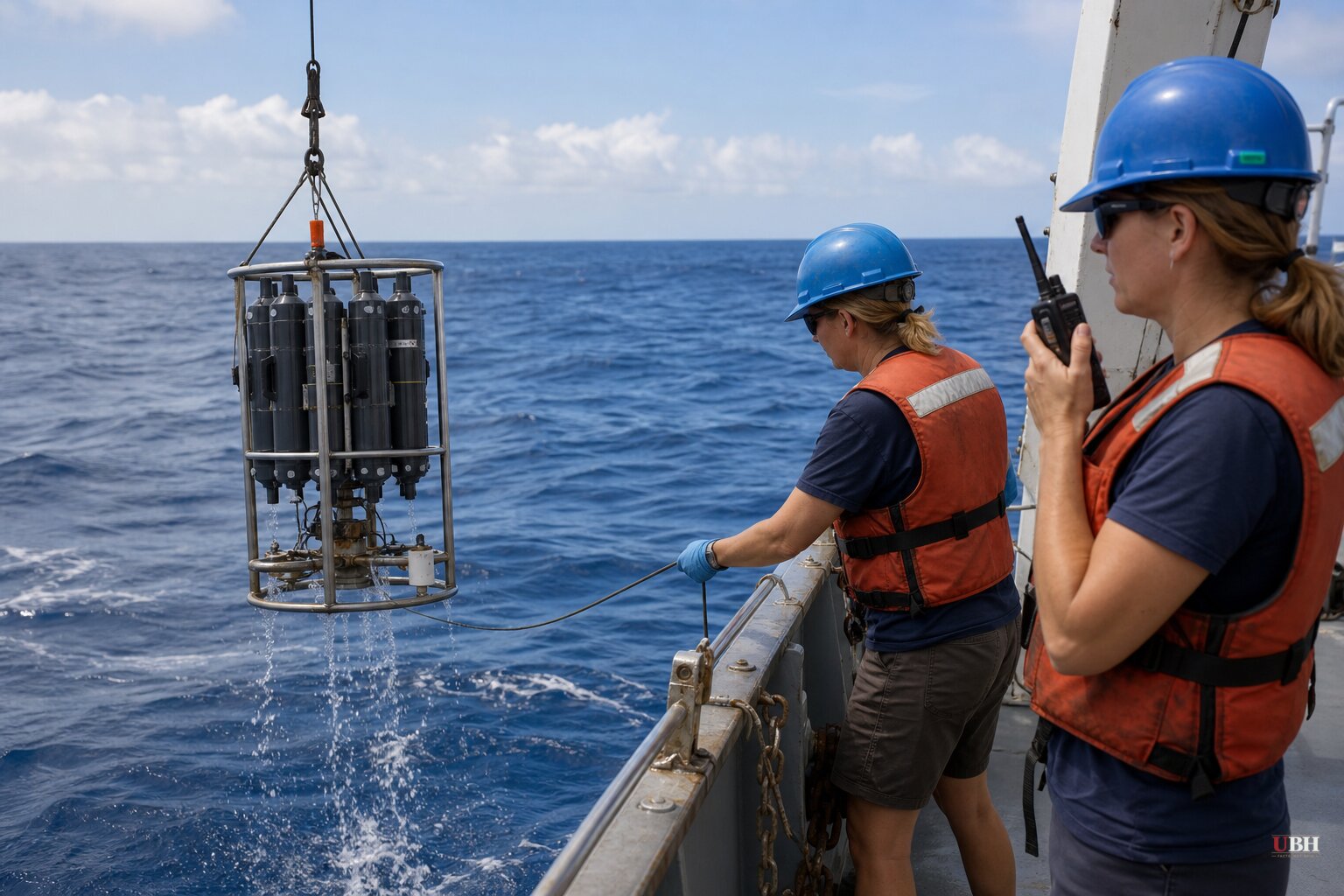
The world's oceans just set a temperature record nobody wanted. Global average sea surface temperature outside the polar regions hit 21.1C (70F) on August 22, according to the European Union's Copernicus Climate Change Service. That barely edges past the previous record of 21.09C, set on three days in March 2024.
Copernicus has tracked this metric daily since 1979. The agency says the new number also beats the old August record of 20.98C from 2023.
Ocean temperatures typically peak in March or April, right after the southern hemisphere summer, according to Copernicus. The southern hemisphere holds more ocean surface area than the north, so its summer drives the global number. Hitting a record in August, when temperatures are usually already cooling, breaks the normal pattern.
El Nino is stacking heat on an already warm base
A strengthening El Nino in the tropical Pacific is a big part of the story. El Nino is a natural climate cycle that brings warmer water to the surface of the eastern and central Pacific, and it tends to nudge global temperatures upward when it's active, according to CNN. Most computer models now show this event becoming the strongest since at least 1950, CNN reported, citing forecasters.
The World Meteorological Organization is forecasting a strong event, and Copernicus seasonal forecasts suggest it could reach levels not seen in decades, according to Euronews.
But Dr. Samantha Burgess, strategic lead for climate at Copernicus's European Centre for Medium-Range Weather Forecasts, was clear that El Nino isn't the whole explanation. "This record is another clear signal of an ocean under growing stress," Burgess said. "El Nino is adding heat to the system, but it is doing so on top of decades of human-driven warming."
Dr. Jeremy Grist, a senior research fellow at the National Oceanography Centre in Southampton, told the BBC that hitting a record before El Nino even peaks shows how strong the El Nino is becoming. He added that if current trends hold, "we might expect the ocean temperature record to be broken again in March [or] April 2027."
Regional extremes back up the global number
This isn't just an abstract global average. The western English Channel has seen almost continuous marine heatwave conditions for more than three years, peaking 7C above normal in July, according to Professor Tim Smyth, director of science at Plymouth Marine Laboratory. "This is unprecedented," Smyth said.
Thomas Frolicher, an environmental physicist at the University of Bern, said in a study cited by Euronews and Yahoo News that Europe's seas, from Atlantic waters off Ireland to the Mediterranean, are seeing an "alarming surge in temperatures." Frolicher said the research "shows clearly that this is being driven by climate change, in particular by the continued burning of fossil fuels."
Copernicus data also shows the number of marine heatwave days globally has more than tripled since the early 1990s, according to the Guardian.
Zooming out to the land side, Breitbart's report, sourced from the Associated Press, notes Western Europe's average June-July temperature broke a 2022 record, hitting 21.62C. That AP piece also flags a caveat. 2026 is currently the third-hottest year globally, behind 2024 and 2025, though scientists tell the AP there's an increasing chance it could still catch up or come close to 2024's mark by year's end. Global average surface air temperature for July, for instance, was only the joint second-warmest July on record, tied with July 2024, per Copernicus data cited by Breitbart.
What it actually costs
Warmer oceans aren't just a number on a chart. More than 90% of the extra heat trapped by greenhouse gases ends up in the ocean, according to the Guardian. That heat drives thermal expansion of seawater, which adds to sea level rise independent of ice melt. Warmer seas also feed more energy and moisture into storms, and a hotter ocean is less efficient at absorbing CO2, according to Insurance Journal, potentially weakening a major natural buffer against further warming.
Brian O'Donnell, director of the Campaign for Nature, told the Guardian that two things are needed to address the trend: cutting fossil fuel emissions and protecting marine ecosystems like kelp beds, mangroves and coral reefs that both absorb carbon and buffer coastal storms.
CNN's Jeffrey Shaman, a Columbia University climate and public health researcher, cautioned against assuming the "strongest" El Nino automatically means the worst disasters everywhere at once. Impacts are regional and probabilistic — higher odds of drought in Indonesia and Australia, a drier Indian monsoon, a milder northern U.S. winter, wetter conditions across the southern U.S. tier. The record ocean heat gives forecasters an unusually strong signal to work with. Whether that translates into better-prepared coastlines and farms, or just better warnings ahead of the same old damage, is still an open question heading into the El Nino's expected peak around Christmas.
Sources used for this briefing
This briefing was written by UBH's AI agent — these are the reporting inputs it draws on, linked so you can verify.


