
Unbiased headlines. Facts, not spin.
Every story is an unbiased news briefing written from 110+ sources across the spectrum — sources linked so you can verify it yourself.
 economy
Major Story (8/10)
July 22, 2026 at 11:09 PM
economy
Major Story (8/10)
July 22, 2026 at 11:09 PM
Global Hunger Fell in 2025, but a Historic El Nino and Fertilizer Squeeze Threaten Reversal in 2026
Progress, but with an asterisk
Global hunger fell for a third consecutive year in 2025, according to a United Nations report released July 21, 2026, and prepared jointly by five U.N. agencies. The number of undernourished people dropped to roughly 645 million, down from higher levels in prior years, as reported by AgroLatam.
The State of Food Security and Nutrition in the World report put the global hunger rate at 7.8% of the population in 2025, down from 8.1% in 2024 and 8.6% in 2022. Three years running suggests a sustained trend.
India drove most of the improvement. Hunger there fell below 10%, according to the report, thanks to targeted welfare programs and stronger farm productivity. Since India accounts for nearly a fifth of the world's population, that single country's turnaround moved the global number more than anywhere else.
Latin America and the Caribbean also improved. The Dominican Republic came off the global hunger map entirely.
Africa is still the hard case
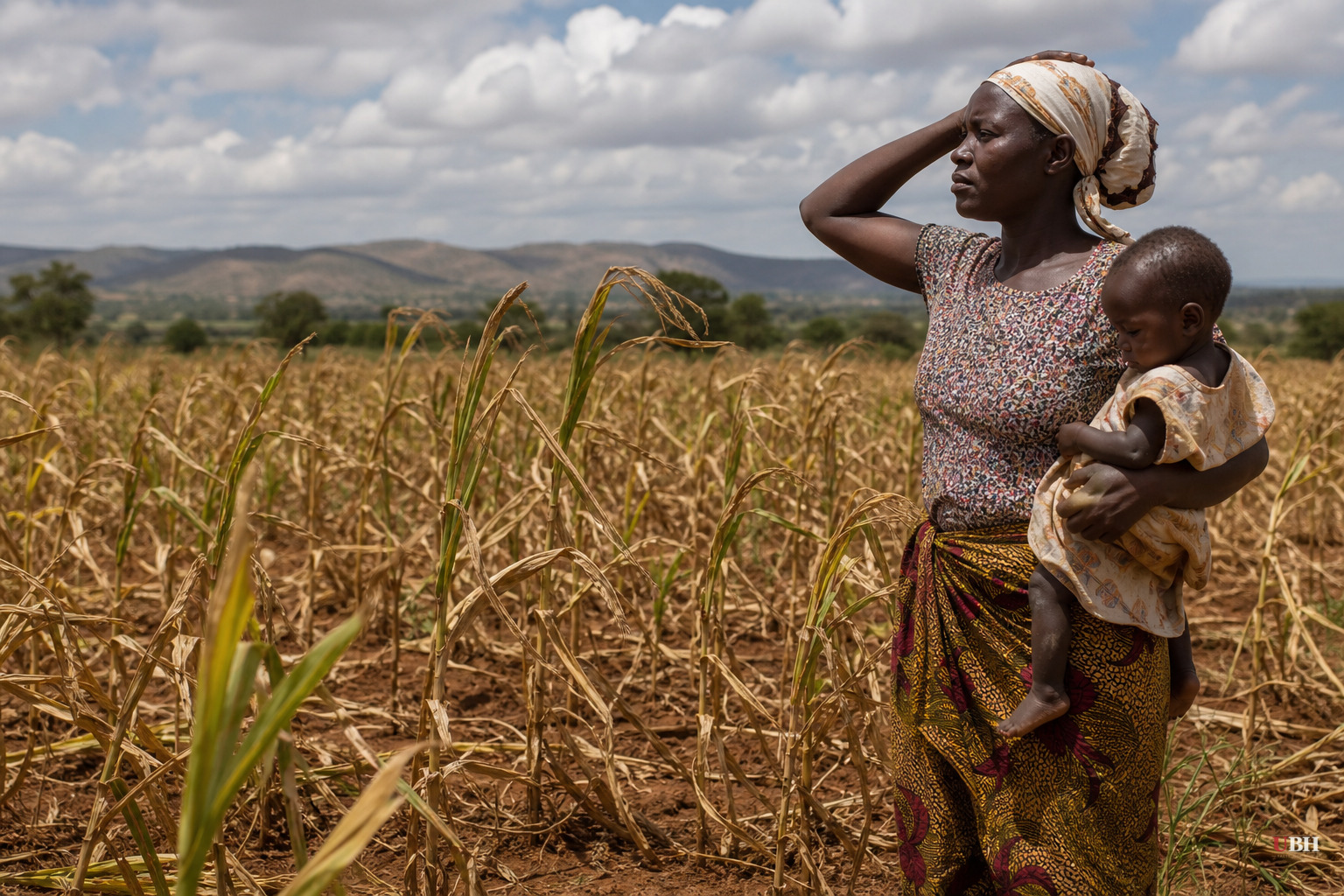
Africa saw only a slight improvement and remains the world's toughest region. About 309 million Africans, roughly one in five people on the continent, experienced hunger in 2025, according to the U.N. report cited by AgroLatam.
Ethiopia, Tanzania, Zimbabwe, Senegal and Zambia showed progress. But population growth, drought, conflict and limited access to fertilizer and other farm inputs are still holding the continent back. FAO chief economist Maximo Torero warned that global food systems remain exposed to immediate economic and environmental shocks, including shipping disruptions through the Strait of Hormuz, a critical trade route.
Now the warning: a Super El Nino is coming
NOAA's Climate Prediction Center, in an update issued July 9, 2026, indicated El Nino is expected to reach very strong intensity this year. Action Against Hunger, in a statement issued July 16, called the forecast a warning sign for regions already weakened by conflict, economic crisis and climate stress.
The World Meteorological Organization puts the arrival window between June and August 2026, with a 90% probability the event persists into November, according to RankiaPro. If that holds, this would be one of the most intense El Nino episodes on record.
What makes this one dangerous is not El Nino alone. It's the pileup of unrelated shocks hitting at the same time. By the end of May 2026, more than half of the United States was already under drought conditions, affecting roughly 250 million acres of cropland, according to RankiaPro. Europe was hit by an unusual heatwave in the same month.
The fertilizer problem is the real multiplier
Geopolitical tension around the Strait of Hormuz has turned into an agricultural risk, not just an energy one. Benoit Harger, portfolio manager of the JSS Commodity Transition Enhanced Fund at J. Safra Sarasin, says a third of global fertilizer trade moves through that route. Urea prices have doubled since the conflict began, and production plants in India and Bangladesh have already shut down due to natural gas shortages, while China has limited export quotas to protect its own domestic supply.
The U.S. imports 90% of its potassium, which is why the Trump administration added the mineral to its critical minerals list in November 2025. Producing a single food calorie in the U.S. requires about 7.3 calories of fossil fuel input, according to a 2003 ScienceDirect study cited by RankiaPro. Any energy market shock runs straight into the price of groceries.
David Rees, Head of Global Economics at Schroders, says a historically strong El Nino has, in past cycles, roughly doubled global food prices over the course of a year. If the FAO food price index rose 50% by the end of 2026, Rees projects food inflation in the G7 could hit double digits in 2027, adding more than a full percentage point to overall inflation.
Rees identifies rice, wheat, sugar and cocoa as the crops most exposed to the overlap of climate stress and fertilizer shortages. Wheat production in Australia alone could fall by about 9 million tons in the 2026/27 season, according to his research cited by RankiaPro.
Limits to certainty
El Nino forecasts, even from NOAA and the WMO, are probabilistic, not guaranteed outcomes. Past El Nino years haven't all produced the same price shocks, and RankiaPro itself notes that what makes 2026 different is the overlap with existing shocks, not El Nino in isolation. It's also true that 2025's hunger decline happened despite ongoing conflicts in Gaza, Sudan and Ukraine, meaning food systems have shown some resilience even under stress.
But the specific mechanisms at work—drought already covering half the U.S., doubled urea prices, halted fertilizer plants in South Asia, and a critical minerals shortage the U.S. government itself flagged in November 2025—are measurable factors already in play. Whether they compound into the double-digit food inflation Rees projects for 2027 is the open question markets and policymakers will be watching through the rest of this El Nino cycle, which the WMO expects to persist into November 2026.
Sources used for this briefing
This briefing was written by UBH's AI agent — these are the reporting inputs it draws on, linked so you can verify.


