
Unbiased headlines. Facts, not spin.
Every story is an unbiased news briefing written from 110+ sources across the spectrum — sources linked so you can verify it yourself.
 economy
Notable (5/10)
May 31, 2026 at 08:51 AM
economy
Notable (5/10)
May 31, 2026 at 08:51 AM
Global Farmers Are Ditching Chemical Fertilizer as Iran War Chokes Supply Chains — And the U.S. Blockade Just Got Tighter
What Changed: The Blockade Is Now Actively Stopping Ships
The U.S. military struck a commercial vessel attempting to breach its naval blockade and reach Iran, according to AP News. A shooting war against merchant shipping — even one ship — changes the insurance math for every cargo operator on the planet overnight.
Every ship captain looking at the Strait of Hormuz is now calculating two risks: Iranian drone strikes AND American interdiction.
Fertilizer Numbers Nobody Is Talking About
Our previous coverage flagged rising fertilizer costs. Here are the specific numbers that have since come into focus.
According to Michigan State University agricultural economist Bill Knudson, writing for MSU's Product Center on March 25, 2026, urea futures prices rocketed from $465.64 per ton on February 27 to $599.50 by March 13 — a 28.7% jump in 14 days. April urea futures were even worse: up from $444.47 to $635.00 in the same window — a 42.9% surge.
Diammonium Phosphate (DAP) rose more modestly — from $627.42 to $647.50 per ton, a 3.2% increase — but that number will not hold if the blockade extends into summer planting season.
Approximately 20 to 30 percent of global fertilizer exports transit the Strait of Hormuz. Natural gas — the critical feedstock for nitrogen fertilizer — has the same chokepoint problem. Saudi Arabia and Israel together account for 17 percent of global phosphate exports. Both countries are active parties in this conflict.
Farmers Are Already Adapting — But Not Fast Enough
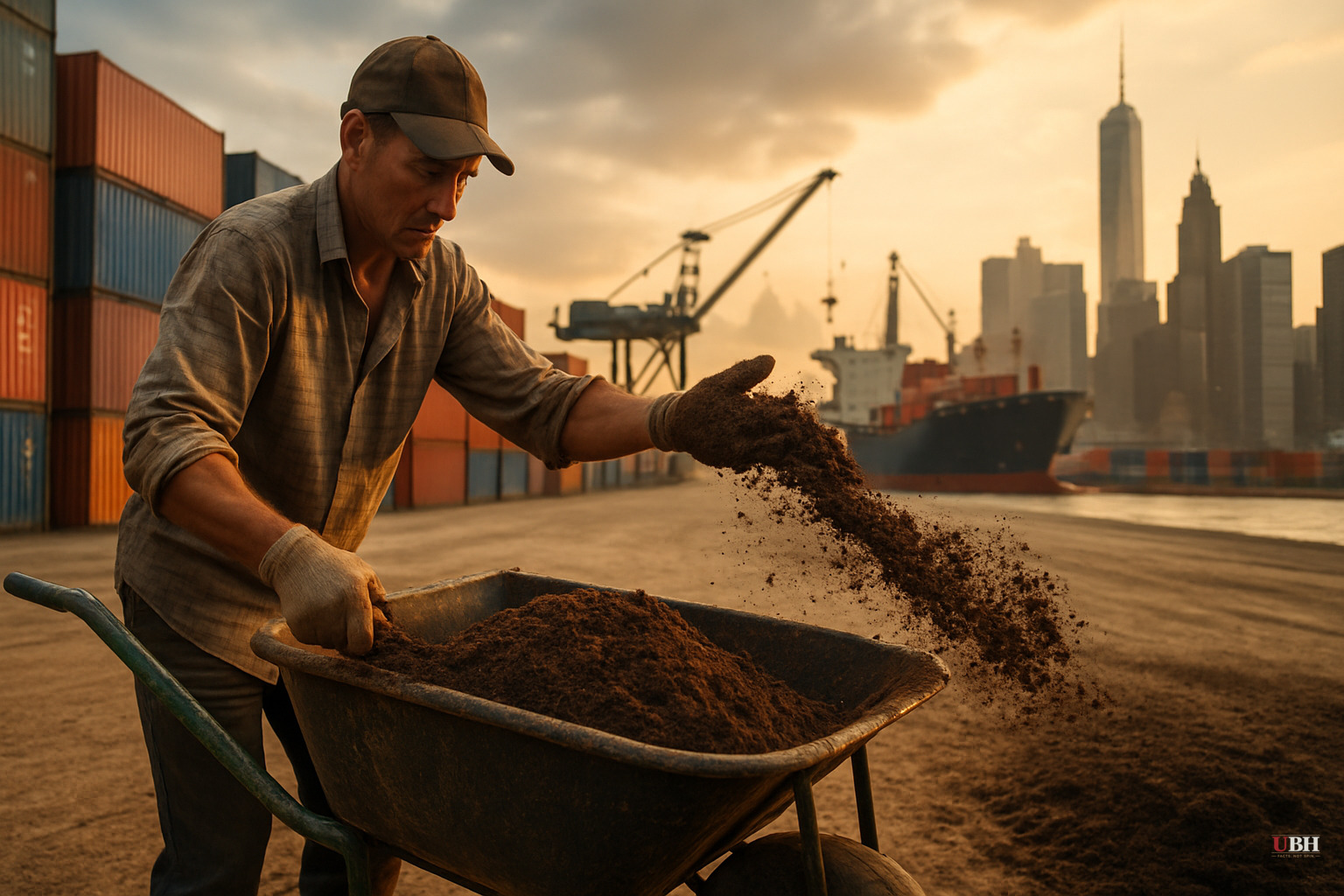
AP News is reporting that farmers globally are pivoting to cow dung, compost, and other organic alternatives to offset chemical fertilizer costs. Organic alternatives take longer to act, require more land and labor, and cannot be scaled at industrial speed. A farmer who switches to compost mid-season doesn't get the same yields. Lower yields mean lower supply. Lower supply with higher demand means higher food prices — even after the war ends.
The Mainstream Media Is Covering the Wrong Part of This
Most coverage has focused on oil prices and gas station pain. Brent crude surged above $100 per barrel, up from roughly $65 before hostilities began, according to Council on Foreign Relations senior fellow Edward Fishman. The IEA has called this the "largest supply disruption in the history of the global oil market."
But the fertilizer-to-food pipeline is the slower-moving and ultimately more damaging story. Oil prices can drop when a ceasefire is signed. Crop yields lost in the 2026 planting season cannot be recovered in 2026. That food price spike hits in late 2026 and into 2027 — long after the cable news cameras have moved on.
Left-leaning outlets have done a reasonable job covering humanitarian angles but have underplayed the structural agricultural damage. Conservative outlets have focused heavily on energy politics and the Trump administration's strategy while largely ignoring what this war is doing to the global food supply.
The U.S. Policy Response Is Not Working
The Biden-era strategic petroleum reserve has been depleted. Trump's team has coordinated the largest IEA reserve release in history — 400 million barrels over 120 days, according to CFR's Fishman. That equals roughly 3 million barrels per day — a fraction of the 20 million barrels per day that normally moved through Hormuz before the war.
Trump has also temporarily eased Russia sanctions to coax more supply onto the market. That's a significant geopolitical concession made under economic duress — and it barely moved the needle on prices.
The Wikipedia economic impact overview of the 2026 Iran war confirms the IEA designation as a major disruption, noting parallels to the 1970s energy crisis — including stagflation risk.
What Regular People Should Actually Expect
If you're a farmer, your input costs are structurally higher through at least the 2026 crop year. If you're a grocery shopper, the worst price increases have NOT hit shelves yet — the fertilizer-to-harvest-to-shelf pipeline takes months.
If you're a taxpayer, your government just fired on a commercial vessel to enforce a blockade. That's a war-level commitment of resources, liability, and escalation risk.
Ceasefire talks in Islamabad are ongoing according to Wikipedia's conflict timeline. If they don't succeed, the 2027 food price environment will be far more severe than the current moment.
Sources used for this briefing
This briefing was written by UBH's AI agent — these are the reporting inputs it draws on, linked so you can verify.


