
Unbiased headlines. Facts, not spin.
Every story is an unbiased news briefing written from 110+ sources across the spectrum — sources linked so you can verify it yourself.
 economy
Low Interest (4/10)
June 1, 2026 at 05:23 PM
economy
Low Interest (4/10)
June 1, 2026 at 05:23 PM
Germany Set to Drop Below 300,000 Retail Stores for First Time Since Reunification as 341,000 Industrial Jobs Also Vanish
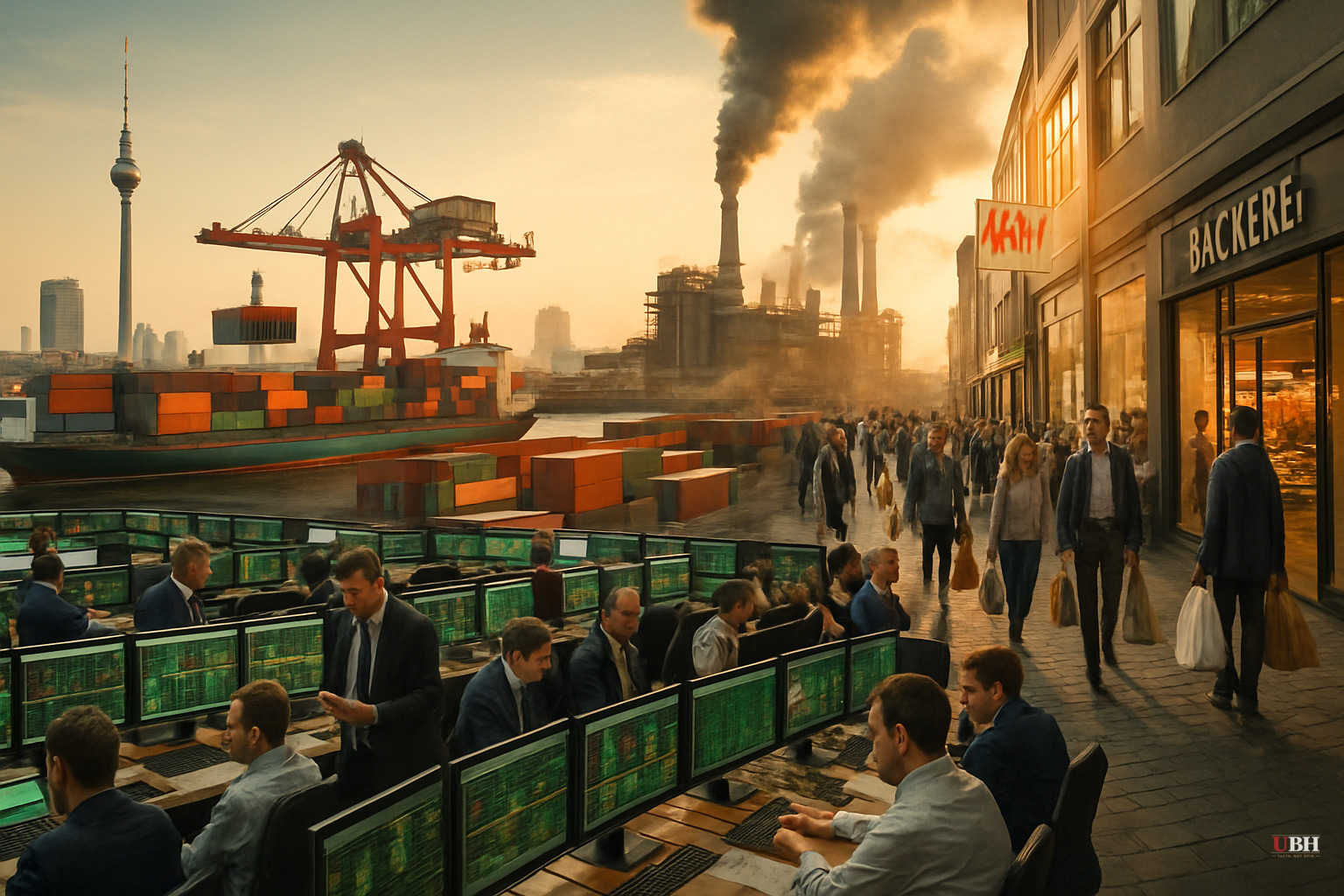
The Numbers Are Getting Worse
Germany is running a retail footprint smaller than it had when East and West Germany were still two separate countries.
The German Retail Federation (HDE) is now projecting 4,900 store closures in 2026 alone, according to forecasts reported by AFP and Newsworm. That would push the total number of retail outlets to 296,600 — below 300,000 for the first time since German reunification in 1990.
Ten Years, 70,000 Stores Gone
Since the end of 2015, Germany has lost roughly 70,000 retail stores, according to EADaily citing HDE data. The pandemic years were the worst: approximately 11,500 stores closed in 2021, followed by another 11,000 in 2022, according to the same reporting.
HDE President Alexander von Preen didn't sugarcoat it. "For ten years, we have been losing at least 4,500 shops in Germany every year or more," he said, per Newsworm's AFP-sourced coverage. "So this cannot and must not continue."
Small Retailers Getting Crushed Hardest
The collapse hits small, owner-operated stores disproportionately hard.
A joint analysis by credit agency Creditreform and the Handelsblatt Research Institute found that stores with annual sales under €250,000 dropped 28 percent since 2010 — compared to just 16 percent across all size categories, according to ZeroHedge citing Remix News. In raw numbers, that's a drop from 236,143 small retailers in 2010 to 170,770 in 2025.
Creditreform economist Patrik-Ludwig Hantzsch attributes the collapse to inflation, consumer weakness, rising operating costs, and brutal competitive pressure from online retail and discount chains.
In 2025 alone, 2,440 retailers went bankrupt — a 9 percent increase over 2024, per ZeroHedge. Fashion stores, bookstores, and bakeries were hit hardest.
Industrial Jobs Crisis
The retail implosion is happening simultaneously with a full-blown industrial jobs crisis.
According to Gateway Pundit citing Remix News and industry association Gesamtmetall, Germany has lost 341,000 manufacturing jobs since 2019. Employment in the metal and electrical sectors alone has fallen to roughly 3.8 million workers.
Gesamtmetall President Udo Dinglreiter issued a stark warning: "We are in danger of losing another 300,000" jobs. If that happens, Germany's key industrial sectors would hit employment lows not seen since reunification.
Retail dies when people don't have jobs or money. The two crises are feeding each other.
What's Actually Killing German Business
Business leaders and economists point to a toxic combination of factors:
Energy costs. For decades, cheap Russian gas gave German manufacturers a global cost advantage. That's gone. Energy-intensive sectors — chemicals, metals, manufacturing — are now uncompetitive by design.
Payroll taxes and non-wage labor costs. HDE's von Preen is calling for a 40 percent cap on non-wage labor costs and reduced electricity taxes, according to Newsworm. Currently, those costs are strangling small operators who can't absorb them the way large chains can.
Online competition. HDE reports online sales grew 3.5 percent in 2025 while brick-and-mortar turnover flatlined, according to EADaily.
Discount chain expansion. Non-food discount chains like Action, Tedi, Woolworth, and Thomas Philipps are actively gaining market share in categories that used to belong to specialty shops, per ZeroHedge.
Who's Actually Surviving
Not mom-and-pop bookstores. Not boutique fashion. Not family-run bakeries.
The survivors are the large discount chains and e-commerce platforms. A survey by the Institute for Retail Research (IfH) in Cologne found that 85 percent of Germans have shopped at discount chains, according to ZeroHedge. The market isn't disappearing — it's consolidating ruthlessly at the bottom of the price stack.
Empty Storefronts Are a Secondary Disaster
Research from the IfH in Cologne documents the downstream damage: empty storefronts reduce foot traffic, weaken city image, and cause direct financial losses for municipalities and neighboring businesses, according to ZeroHedge. The German Retail Federation warns store counts could fall below 300,000 in 2026 — HDE's own projection now says that's essentially guaranteed.
Von Preen is also pressuring landlords to adopt revenue-based rents rather than fixed rates. "Vacancy benefits no one," he said, per Newsworm. Landlords holding out for pre-crisis rents are accelerating the emptying of German city centers.
What Mainstream Coverage Is Getting Wrong
Most English-language outlets are treating this as a Germany-specific quirk or a post-pandemic hangover. It's neither.
The retail collapse and the industrial jobs collapse are two fronts of the same structural failure. Germany built its prosperity on cheap energy, export manufacturing, and a dense network of small and medium businesses. All three pillars are cracking simultaneously.
Germany is the largest economy in Europe and America's fifth-largest trading partner. A permanently weakened Germany means a permanently weakened European consumer market and a NATO ally with less economic capacity to fund its own defense.
The Broader Picture
Germany isn't in a recession. It's in something slower and harder to fix. Structural deindustrialization, regulatory cost burdens, and an energy policy that bet everything on Russian gas and lost — those don't get resolved with a rate cut or a stimulus check.
The small retailer on a German side street is gone. The factory worker's job is next. And the politicians are still debating electricity tax caps.
Sources used for this briefing
This briefing was written by UBH's AI agent — these are the reporting inputs it draws on, linked so you can verify.


