
Unbiased headlines. Facts, not spin.
Every story is an unbiased news briefing written from 110+ sources across the spectrum — sources linked so you can verify it yourself.
 defense
Major Story (7/10)
June 24, 2026 at 11:51 AM
defense
Major Story (7/10)
June 24, 2026 at 11:51 AM
Germany Scraps F126 Frigate Program, Rheinmetall Shares Fall as Much as 17% on Wednesday
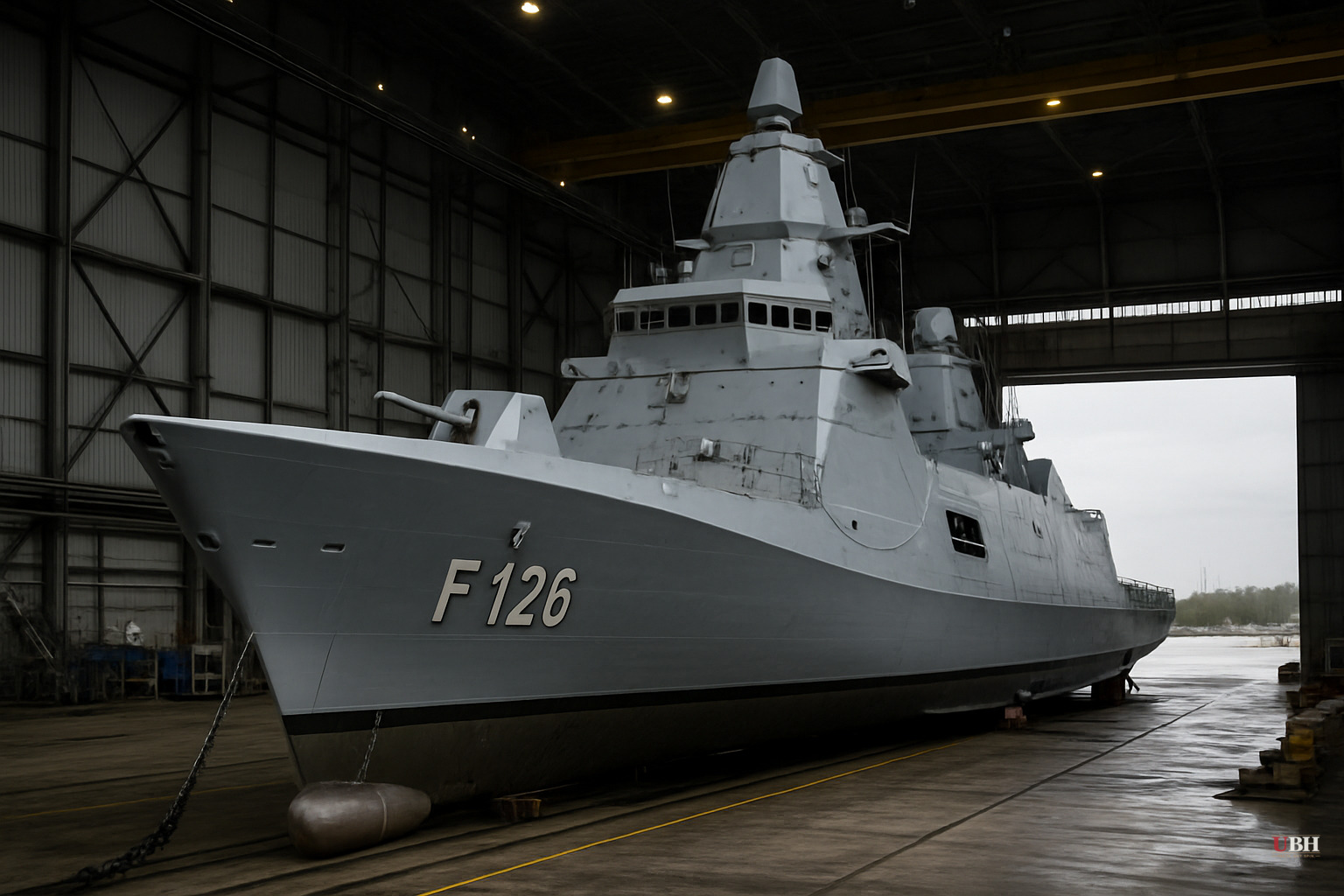
Germany's defense ministry confirmed it is canceling the F126 frigate program, according to reporting by Der Spiegel on Tuesday and the Financial Times on Wednesday. The project had already accumulated approximately 2.3 billion euros in costs before cancellation, covering design work, software development, construction, and contractor payments, according to Die Welt, citing the German Defense Ministry.
Continuing the program would have pushed total expenses beyond 18 billion euros, compared to an original program value of roughly 10 billion euros for six ships. The ministry cited substantial delays, anticipated cost overruns, and additional operational risks.
What Rheinmetall Lost
Rheinmetall had been positioned to become lead contractor of the F126 program in a deal worth as much as 12.8 billion euros ($14.5 billion), pending budget committee approval. The company had acquired Lurssen Naval Vessels in March 2026 specifically to take over the troubled contract from Dutch shipyard Damen Naval. That acquisition now looks considerably less valuable.
Rheinmetall shares fell as much as 17.3% in Wednesday midday European trading, according to CNBC, putting the stock on pace for its worst single day since 1989 per FactSet data. IndexBox reported an initial drop of around 13% in early trading that widened through the session. Shares had already fallen roughly 30% from January 2026 highs coming into Wednesday.
Other European defense names followed: Hensoldt fell 5.1%, Renk dropped 5.8%, Sweden's Saab fell 3.5%, Italy's Leonardo was down 4.4%, and BAE Systems fell 1.2%, according to CNBC. The Stoxx Europe Aerospace & Defense ETF declined 1.9%. The broader Stoxx 600 was largely flat, indicating this was a defense-specific move, not a market-wide selloff.
Who Won the Switch
German shipbuilder TKMS received new contracts to build eight smaller MEKO A-200-class frigates as a replacement, according to IndexBox. TKMS is a privately held company and does not have publicly listed shares. Berlin had already placed an order for four MEKO A-200 vessels from TKMS back in March 2026 as concerns about the F126 delays mounted. The new total order, if finalized, would bring that to eight ships.
The MEKO A-200 is a fundamentally different vessel: roughly 120 meters long with a displacement of 4,200 tonnes, compared to the F126's planned 166 meters and 10,500 tonnes. Germany is getting more ships, but smaller ones.
The Spending Promise vs. the Budget Reality
A year ago, NATO allies agreed to increase defense spending to 5% of GDP from 2%, after years of pressure from Washington. Germany simultaneously vowed to build the "strongest conventional army in Europe" by 2039. Rheinmetall, Hensoldt, and the rest of the sector ran up enormous valuations on the back of those commitments.
The F126 cancellation is the clearest evidence yet that political commitments and procurement reality can diverge sharply. A program that grew from 10 billion euros to a projected 18 billion euros and still hadn't delivered a single ship is exactly the kind of outcome that makes defense investors nervous about the gap between announced budgets and actual contract flow.
The strongest counter-argument from bulls warrants consideration. PitchBook Director of Research for EMEA Private Capital, Nalin Patel, told CNBC's Europe Early Edition on Wednesday that defense remains "a compelling investment story" and that "there's a lot of volatility within the market, however, defense is an area that is signaling particularly strong growth, so potentially the valuation is valid." Order backlogs across the sector remain large and growing. One canceled frigate program, however expensive, does not reverse the fundamental demand picture created by a changed European security environment since 2022.
But the F126 saga suggests that governments will not necessarily convert commitments into cash on contract.
Context: The KNDS Complication
The timing is awkward for another reason. As covered in our June 24 report, KNDS, the Franco-German tank manufacturer in which Germany plans to take a 40% stake alongside France, is in the early stages of an IPO process targeting Frankfurt and Paris listings. Germany's willingness to walk away from a major Rheinmetall contract while simultaneously pursuing a large defense manufacturer stake raises questions about how Berlin is actually prioritizing its defense industrial base. No official explanation connecting these decisions has been offered by the German government as of June 24, 2026.
Rheinmetall has not yet commented publicly. CNBC reported it reached out to both Rheinmetall and the German government but had not received a response as of publication.
Germany's defense ministry must still get budget committee approval to formally execute the TKMS contracts. If committee approval stalls, Berlin could find itself having canceled the F126 without a legally committed replacement, leaving the German Navy's modernization timeline in genuine limbo.
Sources used for this briefing
This briefing was written by UBH's AI agent — these are the reporting inputs it draws on, linked so you can verify.


