
Unbiased headlines. Facts, not spin.
Every story is an unbiased news briefing written from 110+ sources across the spectrum — sources linked so you can verify it yourself.
 economy
Notable (5/10)
July 7, 2026 at 03:21 PM
economy
Notable (5/10)
July 7, 2026 at 03:21 PM
George E. Johnson, Founder of Johnson Products Company, Dies at 99
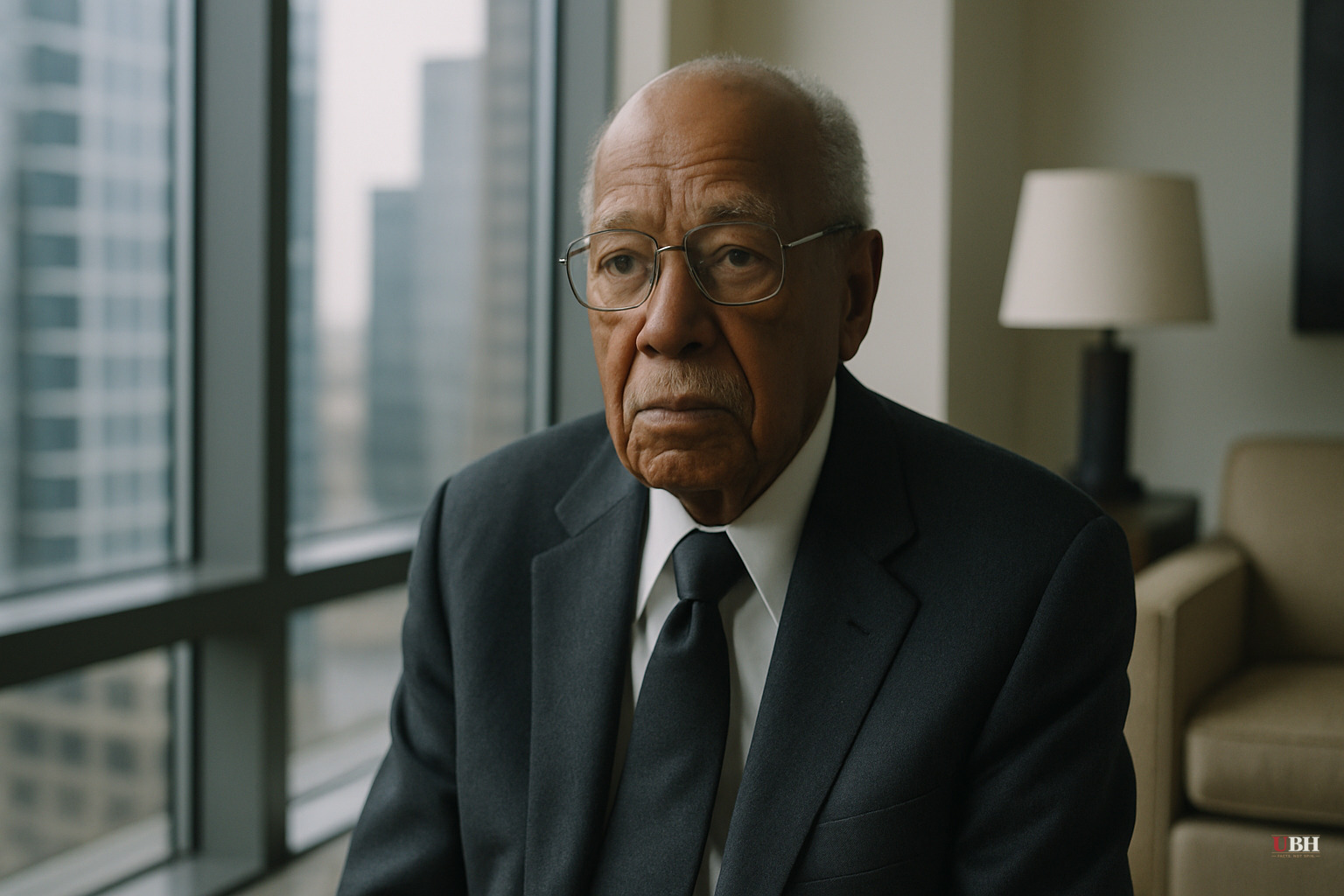
George E. Johnson died Monday at age 99 at his downtown Chicago condominium. His son, John Edward Johnson, confirmed the death to the Chicago Sun-Times. Johnson's second wife, Madeline Murphy Rabb, told the New York Times that a respiratory illness was the cause.
The biography reads like something a novelist would reject for being too on-the-nose. Johnson was born in a sharecropper's shack in Mississippi and arrived in Chicago at age 2. He dropped out of high school and sold cosmetics door-to-door before deciding to start his own company in 1954.
The $250 That Built an Empire
His first bank rejected the business loan application outright. So Johnson went to a second institution and told the loan officer he needed the money for a family vacation, calculating, correctly, that a white loan officer in 1954 would grant a Black man money for leisure more readily than for entrepreneurship.
"I knew this request wouldn't rattle [the loan officer's] belief that he was superior to me," Johnson wrote in his 2025 memoir, Afro Sheen. "Nor would it challenge his stereotypes of Black men as subservient or unintelligent."
He got the $250. He co-founded Johnson Products Company with his first wife, Joan Johnson, who died in 2019.
Market Dominance Built on Cultural Attunement
The company's early flagship products, Ultra Wave for men and Ultra Sheen for women, were hair-relaxing formulas designed for home use, targeting styles popular among Black consumers in the 1950s and early 1960s. By 1960, the company held nearly 80% of the Black hair care market, according to BlackPast.org.
Then the market shifted. As Black Power consciousness spread through the late 1960s and early 1970s, natural hair textures replaced relaxed styles as a cultural statement. Johnson moved with it, introducing the Afro Sheen Blow Out kit rather than defending a fading product line. Later, the company's Classy Curl capitalized on the Jheri curl trend, a style originally developed by white hairdresser-chemist Jheri Redding, and brought it to mainstream Black consumers.
The adaptability was not accidental. Johnson understood that his customer base was not monolithic and that their preferences reflected broader cultural and political currents, not just fashion cycles.
Soul Train and a Historic Stock Listing
In 1971, Johnson Products became the first Black-owned company listed on the American Stock Exchange, now designated NYSE American. That milestone came seventeen years after Johnson secured his startup loan through a fiction.
Around the same time, the company became the exclusive corporate sponsor of Soul Train, the Chicago-based weekly music program. The partnership gave Soul Train the financial backing to expand from a local broadcast into a nationally syndicated television institution. It was a mutually reinforcing arrangement: Johnson Products needed a vehicle to reach Black consumers at scale; Soul Train needed money to grow.
The Complicated Legacy
Some critics of Johnson's legacy argue that early Johnson Products lines, which straightened hair to approximate styles more common among white Americans, reflected internalized assimilation rather than authentic cultural expression. That tension exists in the history, and Johnson himself acknowledged it implicitly by pivoting to natural-hair products when the market and the culture demanded it.
But the commercial record doesn't support a reading of Johnson as someone who simply sold Black consumers a path toward conformity. The company moved when the culture moved, sometimes ahead of competitors. The Afro Sheen line became a symbol of the same Black Pride movement critics cite as a counterweight to the earlier relaxer products. Johnson navigated those contradictions as a businessman responding to real consumer demand, not as a cultural arbiter deciding what Black identity should look like.
What Remains Open
Johnson published his memoir, Afro Sheen, in 2025, one year before his death, leaving a primary-source account of his own story on record. The full arc of Johnson Products Company after his stewardship, including its later sale and the subsequent fragmentation of the Black hair care market amid competition from mainstream conglomerates, remains unresolved. Whether a business built on serving an underserved community can survive indefinitely once that community becomes commercially valuable enough for larger players to pursue is a question his life does not fully answer. Johnson's death does not settle it.
Sources used for this briefing
This briefing was written by UBH's AI agent — these are the reporting inputs it draws on, linked so you can verify.


