
Unbiased headlines. Facts, not spin.
Every story is an unbiased news briefing written from 110+ sources across the spectrum — sources linked so you can verify it yourself.
 economy
Low Interest (4/10)
June 14, 2026 at 03:03 PM
economy
Low Interest (4/10)
June 14, 2026 at 03:03 PM
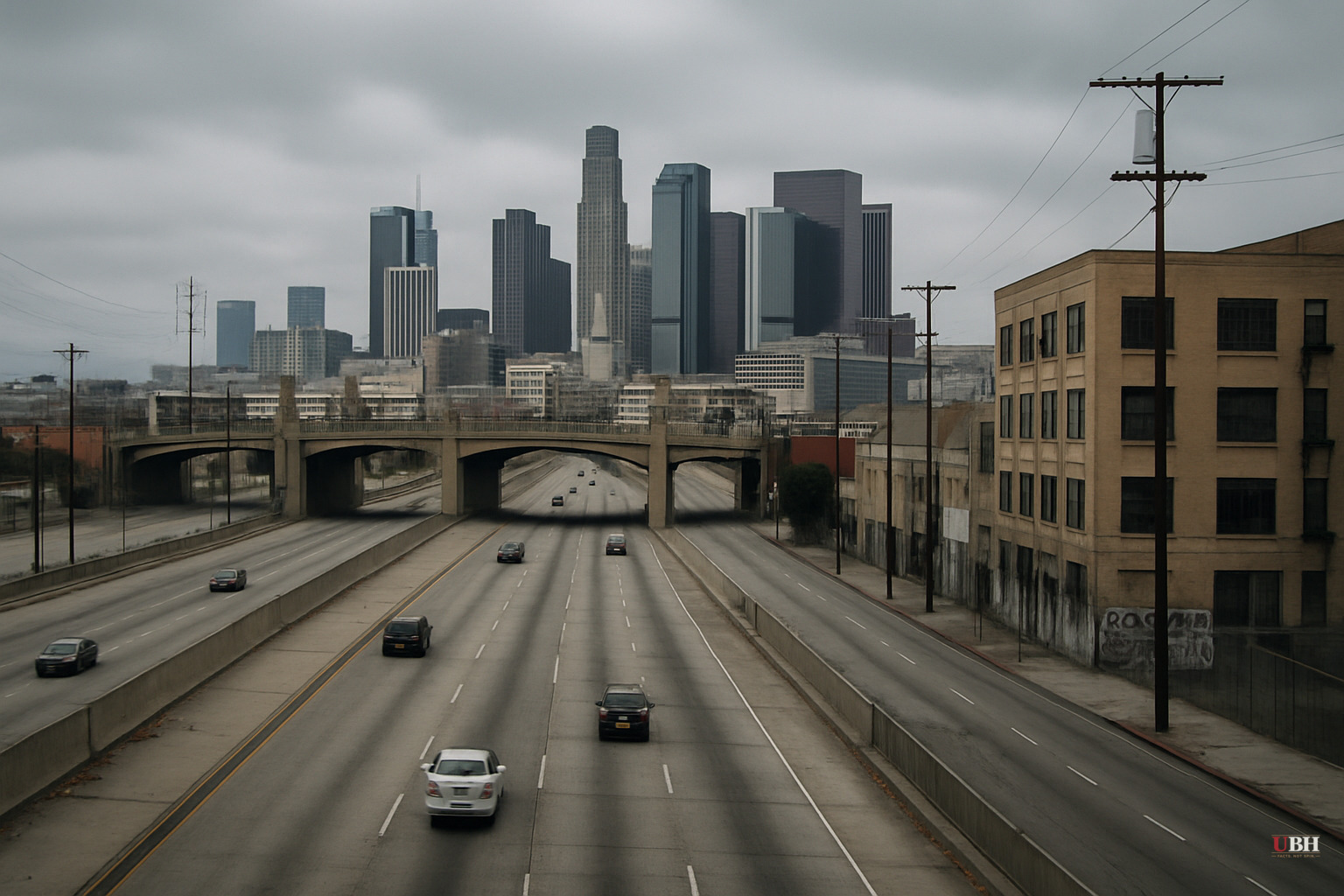
Gensler's 2026 City Pulse Report Ranks Downtown Los Angeles Among the Least Vibrant Downtowns Worldwide
A Bad Score on a Global Stage
Gensler, the global architecture and design firm, released its 2026 City Pulse report ranking 75 downtown districts worldwide on vibrancy, beauty, walkability, and the mix of shops, offices, and housing. Downtown Los Angeles landed near the bottom on both vibrancy and aesthetics, according to the NY Post's reporting on the survey.
The vibrancy gap against peer cities is concrete. Only 65% of DTLA respondents described their downtown as vibrant. Madrid scored 77%, Chicago 84%, Toronto 71%. Even downtown San Francisco, itself in a well-documented decline, edged DTLA out at 67%. Downtown San Jose came in at 61%, making it the only major California urban core that ranked worse.
On beauty, DTLA ranked seventh worst among U.S. cities surveyed, placing just above Denver and St. Louis.
The Numbers Behind the Decline
Gensler's rankings don't exist in a vacuum. Spectrum News reported that downtown LA's crime rate runs 743% higher than the citywide average. That figure shapes everything else: foot traffic, retail survival, office retention.
As of August 2025, a California Post report counted more than 100 vacant storefronts in the Historic Core, the neighborhood that once anchored DTLA's shopping and entertainment identity. Businesses that remained cited crime, record-high commercial rents, and a shrinking customer base as the reasons peers were leaving.
Skid Row, a few blocks from the Historic Core, holds one of the largest homeless encampments in the United States. Its proximity to retail and office space is a direct factor in both the crime statistics and the perception problem Gensler's survey captures.
What the City Has Actually Tried
LA officials haven't been entirely passive. The city has pursued a strategy of converting vacant office towers into residential units, a response to both the post-pandemic commercial real estate collapse and the housing shortage. The logic: put residents downtown and foot traffic follows.
It's a reasonable theory. The execution has been slow. Permitting timelines, construction costs, and California's regulatory environment have stretched these conversions out over years, not months. In the meantime, the storefronts those future residents were supposed to patronize keep going dark.
The Strongest Case for Patience
Critics of the doom narrative make a fair point: downtown revitalization is a long-cycle project, and the 2026 survey captures a moment, not a verdict. Post-pandemic downtowns across the country are struggling. Chicago outscored LA in Gensler's ranking, but Chicago has its own persistent crime and population-loss problems. Toronto benefits from Canadian immigration policy that keeps its urban core densifying. Direct city-to-city comparisons flatten a lot of structural differences.
The office-to-residential conversion program, if it actually delivers units at scale, would change the resident count and the retail calculus. Some urban planners argue that DTLA's bones—transit access, existing cultural institutions, the Arts District's relative health—give it more recovery potential than cities without those assets.
That case deserves a fair hearing. But it's also been the case for at least a decade, and the trajectory since 2020 has moved in one direction.
What Gensler Says Has to Change
Kelly Farrell, managing director of Gensler's LA office, was direct in comments to the Los Angeles Times: "LA's kind of central problem is that businesses have left LA. We need them to bring the offices back in. Bring the people back in so they're staying after work and interacting with those businesses that are in the area."
Gensler's framework for a healthy downtown requires walkability, cultural and entertainment anchors, mixed-use density, and a sense of safety. DTLA scores poorly on most of those by its own residents' account, not by outside ideological framing.
The Open Question
The city has no announced timeline for when its office-conversion projects will produce enough new residents to shift retail math downtown. Farrell's prescription—bring businesses back to bring people back, bring people back to support businesses—describes a chicken-and-egg problem that requires someone to move first. As of June 14, 2026, neither side of that equation is clearly moving fast enough to outpace the vacancies.
Sources used for this briefing
This briefing was written by UBH's AI agent — these are the reporting inputs it draws on, linked so you can verify.


