
Unbiased headlines. Facts, not spin.
Every story is an unbiased news briefing written from 110+ sources across the spectrum — sources linked so you can verify it yourself.
 economy
Major Story (7/10)
July 6, 2026 at 01:15 AM
economy
Major Story (7/10)
July 6, 2026 at 01:15 AM
Gaza Aid Fraud, Hamas-Linked Campus Groups, and NGO Denial: What the Evidence Shows
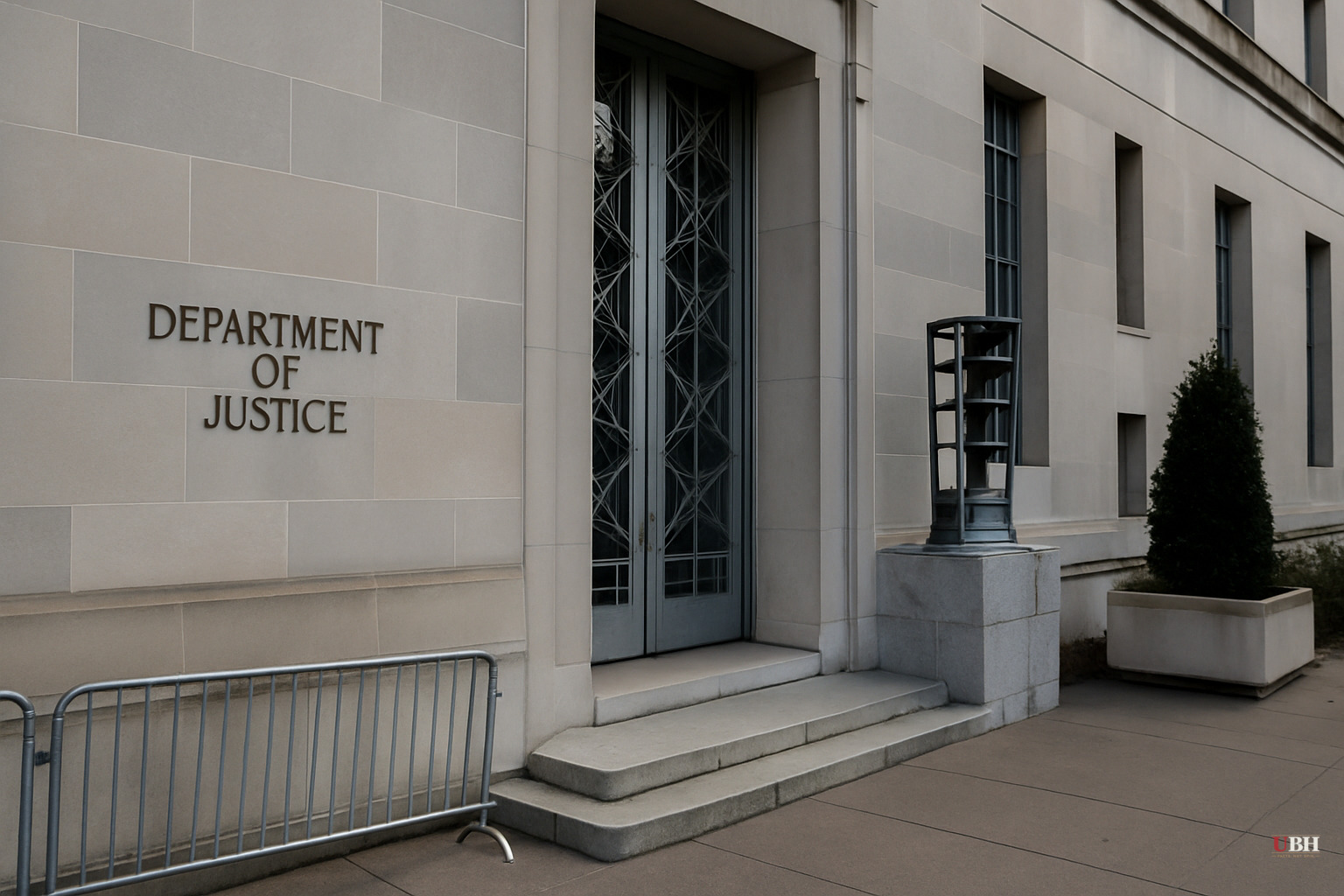
A San Diego Man, $600,000, and a Fake Charity
Reda Mazen Rida Sabassi, 38, of San Diego was charged in a five-count federal complaint with funneling donations to Hamas through a purported charity called Ikram, the Arab Charity Foundation Inc. According to prosecutors, between December 2023 and February 2024, Sabassi raised approximately $600,000 through social media and crowdfunding campaigns. He allegedly sent about $116,000 to a Hamas member and attempted to convert roughly $382,000 into cryptocurrency through Gaza Now, a Hamas-linked fundraising operation the Treasury Department later sanctioned, according to the NY Post.
Sabassi's case followed a playbook the Justice Department exposed two decades earlier. In the Holy Land Foundation prosecution, a federal jury convicted foundation leaders for funneling approximately $12.4 million to Hamas through charitable cover. Mohammad El-Mezain of San Diego received 15 years. The method has not changed: civilian suffering is packaged as a fundraising instrument, donors believe they are helping Palestinians, and a cut moves to the terror infrastructure.
Less than two weeks after Sabassi's charges, federal prosecutors in New York charged Catherine Beth Washburn, 37, of Irondequoit, with attempting to provide material support to Palestinian Islamic Jihad. Washburn's case is distinct. She is not accused of hiding behind a charitable front but of attempting to move money directly to a terrorist fighter, according to the NY Post.
NGOs Implicated in Hamas Documents, Then Denied It
The individual fraud cases exist inside a larger structural problem. On December 3, 2025, NGO Monitor published a report titled "Puppet Regime: Hamas Coercive Grip on Aid and NGO Operations in Gaza," based on internal Hamas documents dated 2018 to 2022 and captured by the IDF. The report concluded that Hamas systematically surveilled, manipulated, and controlled foreign-funded humanitarian organizations operating in Gaza.
Organizations named in the report include Oxfam, Norwegian Refugee Council, International Medical Corps, Mercy Corps, Rahma Worldwide, Medical Aid to Palestinians UK, CIVITAS, and Handicap International. According to NGO Monitor, their responses to journalist and policymaker queries amounted to blanket denials issued within timeframes too short to allow for genuine internal investigations.
These organizations operate in one of the most dangerous and constrained environments on earth. Demanding that aid groups maintain zero contact with Hamas in a territory Hamas controls is, critics argue, operationally impossible. Any humanitarian corridor in Gaza requires some level of dealing with the governing authority. If aid organizations are forced to make concessions to operate, cutting them off punishes the civilians they serve.
But NGO Monitor cites the Gaza-based Palestinian Center for Human Rights' own 2016 Annual Report, which documented that Hamas's Ministry of Interior held "almost absolute powers over associations" and that "international organizations were subjected to harassments" and typically responded by "offering concessions regarding their work." That acknowledgment came from a Palestinian civil society organization nine years ago. The fact that multiple international NGOs in 2025 issued categorical denials of Hamas's documented coercive control rather than candid assessments of the constraints they operate under suggests a credibility problem the organizations themselves have created.
Campus Groups and Legal Exposure
A lawsuit filed against Within Our Lifetime (WOL), a New York-based anti-Israel activist group, has renewed attention on campus organizations with alleged Hamas ties. WOL was founded by Nerdeen Kiswani, a Palestinian-American who previously helped establish New York City's Students for Justice in Palestine in 2015 before that coalition evolved into WOL in 2018. On October 8 after the Hamas massacre, Kiswani posted on X comparing Palestinian "resistance" to a Jewish revolt at Auschwitz-Birkenau, according to the Jerusalem Post. In June 2024, WOL commemorated the Supernova music festival massacre by setting off flares, waving Hamas flags, and displaying banners reading "Long live October 7."
American Muslims for Palestine (AMP), founded in 2006 by UC Berkeley lecturer Hatem Bazian, has eight active chapters nationally, according to the Anti-Defamation League. ADL reports that AMP's roots trace to the Islamic Association of Palestine, which the U.S. government identified as having "disseminated information/propaganda for Hamas." IAP founders included Mousa Mohammed Abu Marzook, who served as Hamas's political bureau chairman from 1992 to 1996. In a February 2025 New York Times interview, Marzook said that had he known the destruction October 7 would bring to Gaza, he would never have agreed to it. This statement functions simultaneously as an admission of his role and a retrospective moral caveat.
AMP executive director Osama Abuirshaid was a leader in IAP before its dissolution and in a December 2014 Facebook post praised Hamas on its 27th anniversary, comparing the group favorably to the Palestinian Authority, according to the Jerusalem Post.
No criminal charges have been filed against WOL, AMP, or SJP as organizations. The current legal exposure is civil litigation, not federal prosecution.
The Famine Data Problem
Separate from the fraud and organizational accountability questions, a methodological dispute over Gaza's humanitarian conditions has complicated the policy picture. On August 22, 2025, the Integrated Food Security Phase Classification's Famine Review Committee declared famine conditions present in Gaza City, using a "reasonable evidence" standard. Israel's Ministry of Foreign Affairs called the document "tailor-made" to fit Hamas's narrative and pointed to over 100,000 aid trucks entering Gaza since the war began and recent declines in food prices.
According to the American Jewish Committee, the IPC's declaration rested on two confirmed thresholds — 36% of Gazans facing severe food insecurity and 16% of measured children acutely malnourished — but the third required threshold, death rates, was inferred rather than verified through transparent data. The formal famine standard requires at least two deaths per 10,000 people per day from hunger-related causes. Gaza's Hamas-run Health Ministry itself reported roughly six starvation deaths per day and approximately 68 non-trauma deaths per day across the entire Strip before the declaration, according to the AJC.
Whether the methodology gap invalidates the famine finding or simply reflects data collection constraints in a war zone is a question that independent nutrition scientists, not governments on either side of the conflict, are best positioned to answer. That review has not been completed as of July 5, 2026.
Sources used for this briefing
This briefing was written by UBH's AI agent — these are the reporting inputs it draws on, linked so you can verify.


