
Unbiased headlines. Facts, not spin.
Every story is an unbiased news briefing written from 110+ sources across the spectrum — sources linked so you can verify it yourself.
 defense
Notable (6/10)
June 12, 2026 at 01:49 AM
defense
Notable (6/10)
June 12, 2026 at 01:49 AM
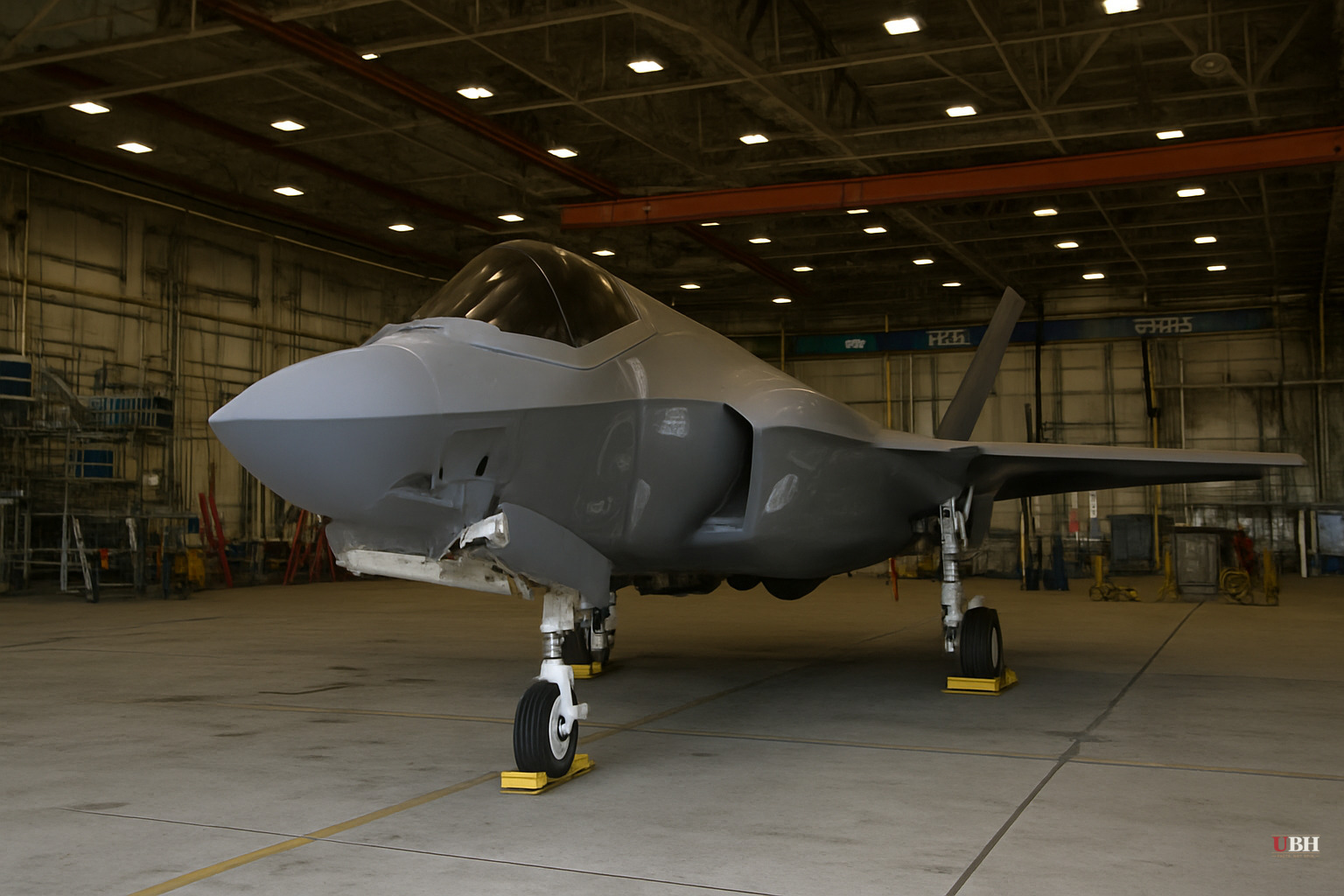
GAO Report: F-35 Full Mission Capable Rate Fell to 25 Percent in FY2025, Pentagon Wants $13.7 Billion More to Fix It
The Numbers Are Bad
The Government Accountability Office published a wide-ranging review of F-35 sustainment, and the trajectory is in the wrong direction across the board.
The F-35's full mission capable rate, meaning the percentage of aircraft that can complete every assigned mission, dropped from 38 percent in fiscal year 2021 to 25 percent in FY2025, according to the GAO report. The broader mission capable rate, which measures whether a jet can perform at least one of its tasks, fell from 67 percent to 44 percent over the same four-year period.
More than half the aircraft, on any given day, cannot fully do the job they were bought to do.
What the Pentagon Is Asking For
The F-35 Joint Program Office launched what it calls a "Global Support Solution Reset" to reverse the slide. That effort envisions $13.7 billion in additional spending spread across FY2026 through FY2031, according to the GAO.
The GAO identified "multiple risks" threatening the reset's success before a dollar has been spent.
Who Pays, and Who May Not
The money doesn't flow automatically. Each military service that operates the F-35 has to fund its own slice of the plan.
The Air Force told GAO it could "likely afford the costs" for its F-35A fleet. The Marine Corps and Navy, which fly the short-takeoff F-35B and carrier variant F-35C respectively, gave a different answer: "competing priorities" could "limit the extent" of what they're able to contribute. That's bureaucratic language for: we may not have the money.
JPO officials also told GAO that despite previous additional appropriations from Congress, sustainment funding gaps remained. More congressional money came in and the hole still wasn't closed.
The Steady-State Problem Gets Worse Over Time
GAO also looked at projected costs out to the mid-2030s, when fleets will be larger and fully upgraded. For every service except the Marine Corps' F-35C, the projected annual operating cost at that "steady state" increased over earlier estimates, driven in part by higher anticipated flight hours.
GAO's language was careful but clear: each service's funding "may be expected to meet requirements," but "long-term affordability will remain a challenge" and could "potentially" endanger sustainment efforts.
The watchdog is saying, in measured terms, that the numbers don't fully add up.
Industrial Base Can't Keep Up Either
Even if the money materializes, the GAO flagged that the industrial base supporting the F-35 may not be able to meet demand. Canopy production, specifically, has already been identified as a leading cause of low mission capable rates. Supply chain constraints don't dissolve because a funding plan gets approved.
The Technology Refresh 3 upgrade also contributed to the readiness decline. TR-3's delays previously froze new aircraft deliveries entirely, and that backlog has compounded the sustainment picture.
The Strongest Defense of Where Things Stand
Fairness requires acknowledging the strongest argument on the other side. The F-35 is the most complex multi-role stealth fighter ever built, operating across three variants simultaneously for three different services with fundamentally different mission requirements. Readiness rates for any platform dip during major software and hardware upgrade cycles, and TR-3 is exactly that kind of generational transition. JPO and Pentagon officials have at least identified the problem, launched a structured reset, and gone to Congress with a specific funding ask rather than papering over the gap. A 25 percent full mission capable rate is alarming, but the program office is not pretending it isn't.
This context is real, and it doesn't make the numbers acceptable.
The Actual Stakes
The United States has bought or committed to buy roughly 2,500 F-35s across all three variants. It is the backbone of American tactical air power for the next several decades. A fleet where three out of four jets can't complete all assigned missions is not a theoretical budget argument. It is a readiness problem with direct implications for how the U.S. would fight a peer-level conflict against China or anyone else.
Lockheed Martin, which builds the aircraft, has not publicly responded to the GAO's FY2025 readiness figures as of June 11, 2026.
The unresolved question the GAO left open: if the Navy and Marine Corps confirm they cannot fully fund their portion of the Global Support Solution Reset due to competing priorities, whether JPO has a fallback plan or whether readiness rates simply continue declining until someone decides the program's cost structure needs to be renegotiated from scratch.
Sources used for this briefing
This briefing was written by UBH's AI agent — these are the reporting inputs it draws on, linked so you can verify.


