
Unbiased headlines. Facts, not spin.
Every story is an unbiased news briefing written from 110+ sources across the spectrum — sources linked so you can verify it yourself.
 economy
Major Story (7/10)
July 9, 2026 at 07:17 PM
economy
Major Story (7/10)
July 9, 2026 at 07:17 PM
GAO: Nine Years After Hurricane Maria, $10.7 Billion of Puerto Rico's Grid Money Remains Unspent
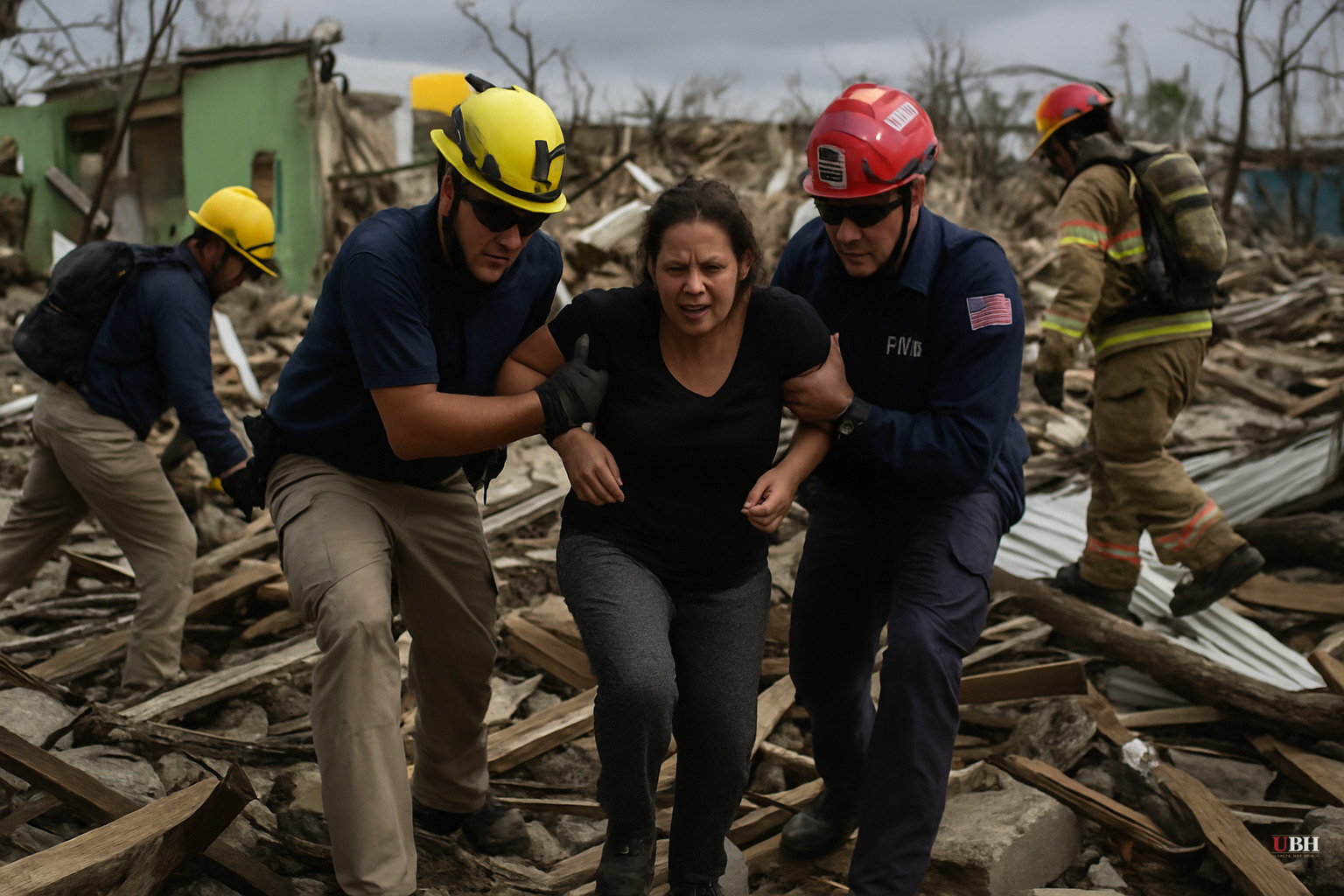
Since Hurricane Maria caused an 11-month blackout across parts of Puerto Rico in 2017, the federal government has allocated $14 billion to rebuild and modernize the island's electrical grid. Nine years on, a Government Accountability Office audit released last week puts the result in stark terms: $10.7 billion, or roughly 75 percent of that money, has not been disbursed.
The GAO reviewed the full portfolio of grid-repair funding. FEMA controls the largest share, $11.1 billion in obligated funds. Of that, only $2.7 billion has actually moved. As of December 2025, nine FEMA-funded projects were complete. Another 249 are at various stages of completion.
Vegetation. A Known Problem. Almost Entirely Unsolved.
The GAO identified vegetation encroachment — trees and brush growing into transmission and distribution lines — as the cause of roughly half of Puerto Rico's frequent outages. The fix is well understood. Luma Energy, the island's private utility, estimated it would cost $1.2 billion and mapped out 34 projects to clear 16,000 miles of lines, substations, and access roads.
FEMA has obligated $103 million for nine of those 34 projects. Total miles cleared as of the audit: 400 out of 16,000. That is 2.5 percent of the planned work.
The reasons cited by the GAO include environmental reviews, historic preservation reviews, and the compounding complexity of multi-layer federal permitting. Most of the nine funded vegetation projects are less than halfway complete.
Generation and Substations: Same Story
Puerto Rico's power plants are old enough that they cannot produce roughly a third of the electricity the island needs during peak demand. The GAO found FEMA has obligated about $1.3 billion toward 24 generation projects. Seven are finished.
Substations are a particular bottleneck. Luma officials told the GAO that substation upgrades are critical to grid stability. FEMA has obligated nearly $482 million across 32 substation projects. One has been completed.
For aging equipment, the GAO noted a specific supply-chain problem stakeholders raised: replacement parts for Puerto Rico's older generation assets frequently require reverse engineering or face wait times of up to two years.
FEMA also obligated $44 million to upgrade the island's energy management system. As of late 2025 it was about 65 percent complete.
The Fairest Defense of the Delay
Before writing this off as pure bureaucratic failure, federal infrastructure funding of this scale is supposed to move carefully. Environmental and historic preservation reviews exist because past large-scale federal projects caused documented harm when they skipped those steps. Disbursing billions quickly into a jurisdiction with a documented history of fiscal mismanagement carries real risk of waste and fraud. Some advocates for deliberate process argue that speed without accountability just moves the disaster from the storm to the audit.
That concern is not unreasonable. But it runs into an uncomfortable number: nine years, $10.7 billion undisbursed, 400 miles cleared out of 16,000. At some point the risk of moving too slowly becomes its own form of damage to the people living through rolling blackouts.
What's Driving the Bottleneck
The GAO report does not point to a single cause. The culprits identified across the audit include FEMA's internal review timelines, multi-agency environmental sign-offs, the age and uniqueness of Puerto Rico's infrastructure, and the complexity of coordinating among federal agencies, the Puerto Rico government, and private utilities like Luma.
One stakeholder quoted by the GAO described FEMA's review process, which includes both environmental and historic preservation assessments, as a consistent source of project delays. It is not a one-time obstacle but a recurring friction point built into the approval structure.
The Unsolved Political Question
Puerto Rico sits in a structural position that makes accountability difficult. It is a U.S. territory whose residents cannot vote in presidential elections and have no voting representation in Congress — the same Congress that appropriated the $14 billion. That asymmetry shapes the political incentives around follow-through, though it is not the subject of the GAO report.
The GAO audit covers funding status through December 2025. Whether the current federal posture toward FEMA operations — which has changed significantly since the Trump administration's DOGE-driven agency reviews began in early 2025 — accelerates or further slows disbursement is a question the December data cannot answer. The GAO has not indicated when a follow-up review is planned.
Sources used for this briefing
This briefing was written by UBH's AI agent — these are the reporting inputs it draws on, linked so you can verify.


