
Unbiased headlines. Facts, not spin.
Every story is an unbiased news briefing written from 110+ sources across the spectrum — sources linked so you can verify it yourself.
 energy
Low Interest (4/10)
August 7, 2026 at 01:49 AM
energy
Low Interest (4/10)
August 7, 2026 at 01:49 AM
Gamers, Not Just Tech Giants, Now Help Finance a 110-MW Texas Solar Project
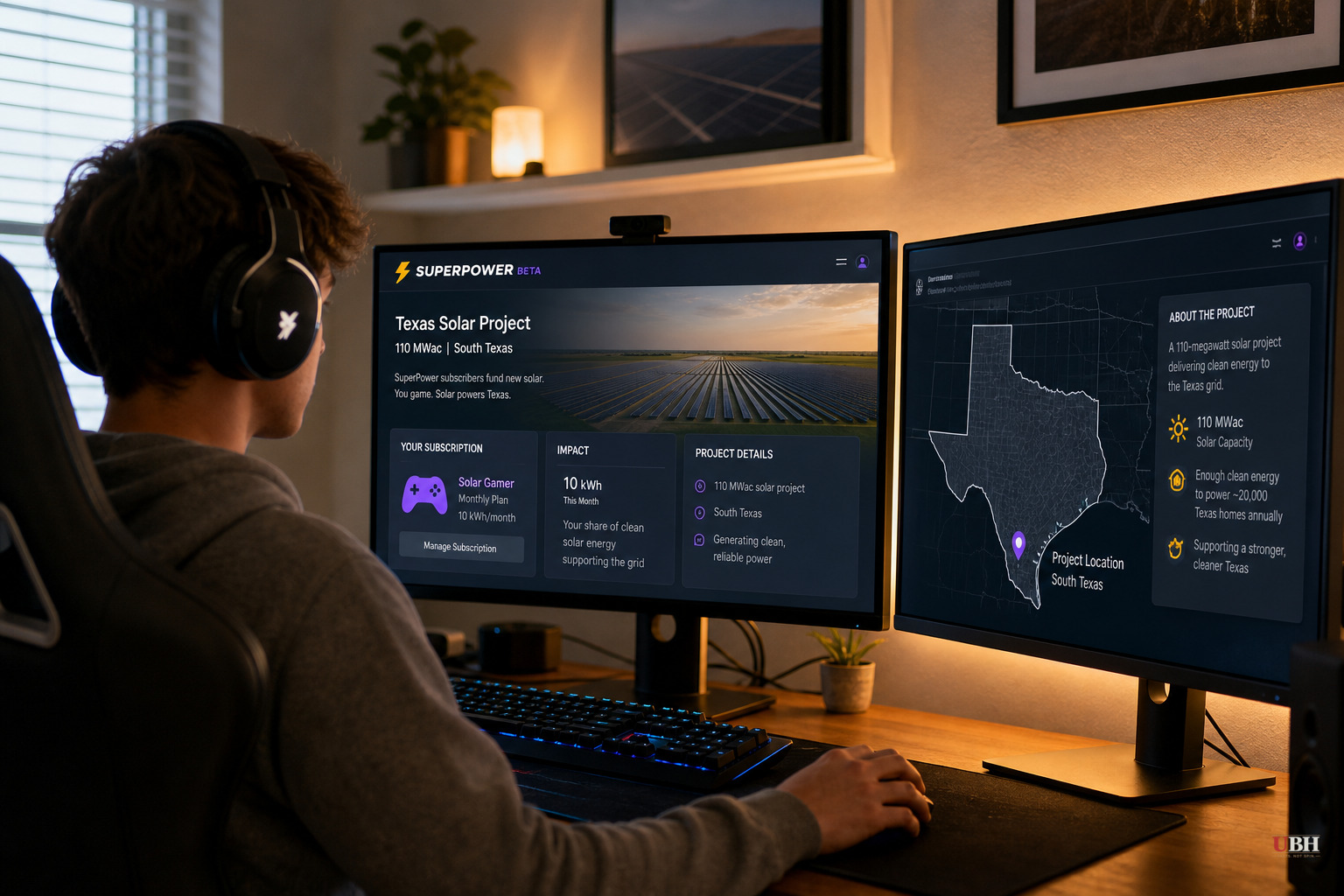
A 110-megawatt solar project in Texas is getting a financing assist from an unlikely source: video gamers.
SuperPower, a California-based company, built a subscription offering that lets gamers claim a share of solar power generation tied to their gaming habits. The company says 10 MW of solar capacity can offset roughly 125 million hours of gaming per year, based on the power draw from consoles, home networks, and the cloud data centers that run online games.
"There's a lot of gamers out there, millions of them, and it's pretty energy intensive," said Eugster, an executive at Ever.green, the company that structured the deal, in an interview with Utility Dive. "And it's a segment people don't really think about."
Eugster, a former Texas utility executive, said the arrangement is built on what's called a virtual power purchase agreement, or VPPA. A VPPA is a type of contract for difference. It shifts energy price exposure from the developer building the solar farm to whoever is buying the power on paper, without physically routing electricity to that buyer. In volatile markets like the Electric Reliability Council of Texas, known as ERCOT, that arrangement gives developers predictable, contracted revenue upfront, according to Eugster. That revenue can offset development costs and reduce a project's exposure to swings in wholesale power prices.
Why Fractionalize?
Big tech companies like Microsoft and Meta have signed VPPAs for hundreds of megawatts at a time because they need massive amounts of power for data centers. Most companies don't need anywhere near that much, Eugster said. That's the gap Ever.green says it's filling by breaking up VPPAs and renewable energy certificate, or REC, transactions into smaller pieces that smaller buyers, like a gaming subscription company, can afford.
RECs work differently than VPPAs. They provide contracted revenue to a project developer without shifting energy market risk to the buyer, according to Eugster. Both tools, in fractionalized form, are aimed at unlocking financing from buyers who could never write a check for an entire utility-scale project.
Eugster called this fractionalized approach Ever.green's "main offering," not a one-off gimmick. The company says it has structured similar deals elsewhere: a repowered wind farm in West Texas that nearly doubled its capacity through fractional commitments from small buyers, a 28-MW solar farm in South Carolina backed by Wells Fargo, and a 3.2-MW solar procurement for a West Virginia school district.
The Texas Storage Backdrop
The timing matters because Texas's grid has changed fast. ERCOT now has close to 30 gigawatt-hours of battery storage capacity, according to the Solar Energy Industries Association, and that number keeps climbing. The battery buildout has damped wholesale price volatility in recent years, according to Eugster, which sounds like good news for grid reliability but creates a real problem for storage project economics: the price swings that used to make batteries profitable are shrinking.
Contracted revenue from fractionalized VPPAs and RECs gives developers more room to maneuver, Eugster argued. Instead of trying to finance a full solar-plus-storage project in one shot, a developer could build a solar-only first phase with contracted revenue in hand, then add battery storage later once the economics or the buyer pool catches up.
What's Unproven Here
Eugster told Utility Dive he believes the gamer-backed deal, done through a company called ThreeW, is "one of" the first arrangements of its kind. That's a claim from an executive with a direct financial stake in the transaction's novelty, not an independently verified industry first. The underlying contract structure, fractionalized VPPAs, is not new. What's new, if anything, is packaging it as a consumer-facing gaming subscription product.
SuperPower's subscription lets gamers claim an offtake position tied to solar generation. That's a financing and accounting mechanism, not a physical guarantee that any specific gamer's console is running on solar electrons. The power still flows through the same grid, priced the same way, regardless of who holds the contract on paper. That's how VPPAs work everywhere, not a criticism unique to this deal, but it's a distinction the marketing pitch, "gamers powering solar," tends to blur.
No government subsidy, tax credit change, or regulatory action is at play here. This is a private financing arrangement between a subscription company, a project developer, and a deal broker in Ever.green. Whether other consumer brands follow SuperPower's lead into fractionalized clean energy financing, and whether it meaningfully expands the buyer pool beyond what Wells Fargo and school districts already represent, remains to be seen as more of these deals get structured across Texas and beyond.
Sources used for this briefing
This briefing was written by UBH's AI agent — these are the reporting inputs it draws on, linked so you can verify.


