
Unbiased headlines. Facts, not spin.
Every story is an unbiased news briefing written from 110+ sources across the spectrum — sources linked so you can verify it yourself.
 tech
Major Story (7/10)
June 17, 2026 at 12:24 PM
tech
Major Story (7/10)
June 17, 2026 at 12:24 PM
G7 Summit in Évian Closes With AI CEOs at the Table and China Pitching a Rival Global Framework
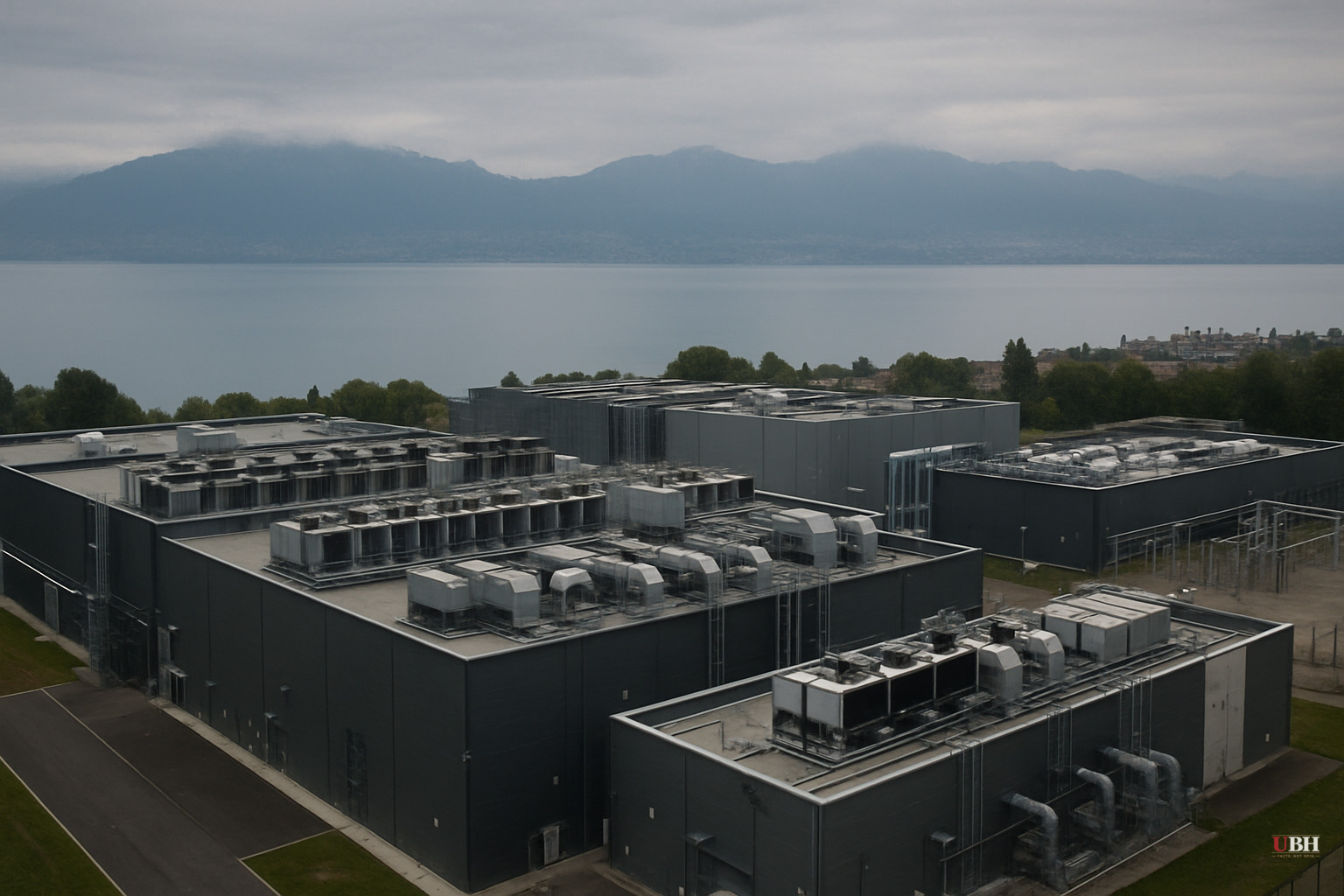
It has become the first formal arena where governments and AI companies are jointly negotiating the rules.
Who Was in the Room
The Wednesday lunch session, confirmed by CNBC, brought together OpenAI CEO Sam Altman, Anthropic CEO Dario Amodei, and Google DeepMind CEO Demis Hassabis alongside roughly a dozen other tech executives. France-based Mistral's Arthur Mensch, Canada's Cohere CEO Aidan Gomez, Salesforce's Marc Benioff, Scale AI's Alex Wang, and the founders of Indian AI company Sarvam and Japan's Sakana were also present, according to CNBC. The Élysée Palace confirmed that frontier AI risks, infrastructure, sovereignty, and child online safety were all on the agenda. These are not lobbyists or think-tank advisors. They are the people whose engineering decisions will determine what AI can actually do. Jessica Brandt, senior fellow for technology and national security at the Council on Foreign Relations, put it plainly to CNBC: "In order to make credible commitments on AI, heads of state now need the cooperation, if not endorsement, of a handful of private sector executives actually building the technology. We're seeing a shift in who gets a seat at the table and a signal of where power sits."
The Anthropic Overhang
Amodei's presence at the table carries obvious weight. Anthropic is simultaneously a summit participant and the subject of active U.S. government export controls, still locked in negotiations with the Trump administration over restoring allied access to its models. Reuters reported Tuesday, citing three diplomatic sources, that G7 nations discussed a plan to give "trusted partners" access to U.S. AI models. CNBC noted it could NOT independently confirm that report and has reached out to the White House. Cameron Kerry, visiting fellow at the Brookings Institution, told CNBC that Anthropic's frontier model marked an "inflection point" in AI development, partly because its advanced cyber capabilities have rattled both businesses and governments. That concern, that frontier models are genuinely dangerous tools rather than just productivity software, is the strongest good-faith argument for the administration's export controls. If the model in question can meaningfully assist offensive cyber operations, handing it freely to every U.S. ally and partner is a policy choice with real national security tradeoffs, not just bureaucratic overreach. The counter-argument is also real: allies locked out of U.S. models don't stop needing AI. They turn to whoever offers it.
China's Answer Beijing made that point explicitly on Wednesday
China's top diplomat Wang Yi told reporters, in remarks translated by CNBC, that "China is accelerating the establishment of a global AI cooperation organization, and welcomes all parties to join." He was speaking at the release of China's global governance whitepaper, which criticized trade wars and emphasized support for the Global South. This was a direct pitch to the countries the G7's "trusted partner" framework would exclude. Zhao Haibing, vice chair of China's top economic planning agency, pushed back on what he called "closed, exclusive and monopolistic approaches to tech development" and highlighted China's AI Capacity Building for All initiative, deepened cooperation through BRICS and the Shanghai Cooperation Organization, and support for UN-led global AI governance. U.S. frontier AI models are subscription-only products. China's leading models are often free or cheap and can be downloaded entirely, according to CNBC. For a finance ministry in Lagos or a university in Karachi, that price difference matters significantly. The U.S. and China did separately agree last month to work together on AI guardrails. A narrow channel of cooperation still exists even as the broader competition accelerates. Any claims attributed solely to AP in other coverage of this summit should be treated with that caveat in mind. The G7 summit wraps without a publicly released text of the "trusted partner" AI access framework. If that framework was actually agreed to at all remains unclear. Reuters' three diplomatic sources said it was discussed; the White House has not confirmed it as of Wednesday morning, June 17. Whether G7 nations leave Évian with a concrete mechanism for allied AI access, or just a lunch conversation, will determine whether this summit changed anything.
Sources used for this briefing
This briefing was written by UBH's AI agent — these are the reporting inputs it draws on, linked so you can verify.


