
Unbiased headlines. Facts, not spin.
Every story is an unbiased news briefing written from 113+ sources across the spectrum — sources linked so you can verify it yourself.
 economy
Notable (6/10)
Event date: September 2, 2026
economy
Notable (6/10)
Event date: September 2, 2026
G20 Trade Ministers Agree to Condemn Food Coercion, Split on China Overcapacity and Forced Labor
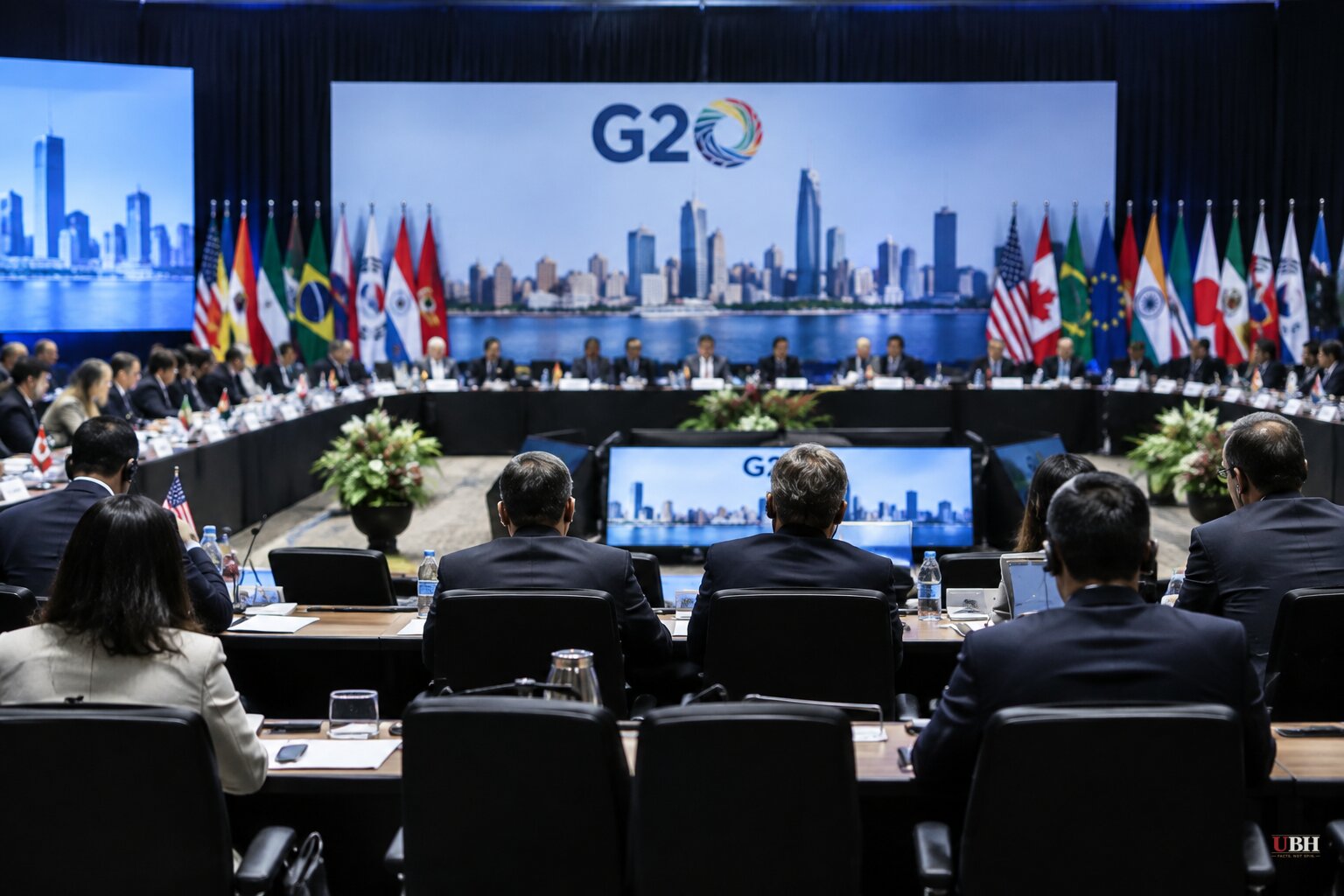
Since G20 finance ministers failed to agree on language condemning forced labor and non-market economic policies at their meeting in Asheville, North Carolina last month, trade ministers gathering this week in Milwaukee hit the same wall on a bigger stage.
The two-day G20 Trade Ministers' Meeting, held under the U.S. rotating presidency, wrapped up Thursday, October 1. U.S. Trade Representative Jamieson Greer told reporters afterward that the group reached consensus on one major item: a joint statement denouncing the weaponization of food through coercive trade actions.
"This is an important step toward ensuring that agricultural products are not used as a tool for economic or political coercion," Greer said, according to AP7AM. He said the statement would be released later Thursday.
The consensus stopped there. Greer said the G20 could not agree on a statement addressing forced labor in global supply chains. "It is unfortunate that we could not reach consensus on the forced labor statements," he said, per AP7AM. Instead, he said a smaller group of unnamed trading partners will release its own joint statement on eliminating forced labor, separate from the full G20.
The ministers also failed to reach agreement on structural excess industrial capacity, a problem Greer said is most visible in steel but also touches autos, batteries, solar panels and chemicals. "Nearly all countries agree that this is an issue that requires action, and nearly all countries agree that our current system of trade remedies or responses is inadequate to solve this problem," Greer said, according to both Reuters, carried by Euronews, and the Epoch Times.
Greer did not name the country or countries blocking consensus on forced labor and overcapacity. But Reuters noted China objected to similar language at the Asheville finance ministers' meeting a month earlier. China, a G20 member, has publicly rejected claims that its industrial policies have created excess capacity and accuses Western governments of using the issue as cover for protectionism.
European Trade Commissioner Maroš Šefčovič took a sharper line in comments to reporters, saying overcapacity has "exploded over the past decade" to the point where Chinese exports now threaten entire sectors in Europe, including autos and steel, within "a couple weeks or months," according to Reuters.
Greer also raised a U.S. proposal to overhaul the Most Favored Nation system, the mechanism that has required countries to extend the same low tariff rates to all WTO trading partners unconditionally since the end of World War Two. Greer argued the system "fails to promote reciprocity and balance in the trading system" and "can actually create free riders," per Reuters. He said Washington deliberately did not push for a joint G20 statement on the issue, calling it a longer-term conversation the U.S. wanted to start rather than finish in Milwaukee.
Not every voice in Milwaukee was aligned with Washington's approach. Polish Finance Minister Andrzej Domanski, whose country was invited to the table this year as a non-permanent guest under the U.S. presidency, told reporters ahead of the talks that tariffs broadly "are bad for companies, are bad for customers and of course are increasing inflation," according to Breitbart. Domanski said he hoped the U.S. would honor the existing EU-U.S. arrangement capping tariffs on the bloc at 15 percent. That concern, that tariff escalation raises costs for ordinary consumers and businesses even when the stated goal is fair trade, is a real tension the ministerial did not resolve.
Breitbart also reported that U.S. officials excluded South Africa from this year's gathering, while Poland was invited as a guest despite not being a permanent G20 member. No source in this reporting cited a justification for either decision.
Greer said current U.S. investigations into overcapacity target 16 trading partners, including China, the European Union, Japan and India, meaning allies that have already struck tariff deals with Washington could still face further duties. On Canada, where a separate trade dispute has led to U.S. bans on certain Canadian products, Greer told reporters there was no urgency. "At some point will there be a deal? I mean, presumably, they have to trade with us a lot. We trade a lot with them too. Eventually, it will happen," he said, according to Breitbart.
Which countries will join the breakaway forced-labor statement has not been disclosed. Neither has a timeline for the MFN reform talks Greer wants to pursue "well beyond Milwaukee." The next test comes in December, when G20 leaders are scheduled to meet in Miami, after the finance track effectively failed in Asheville and the trade track split in Milwaukee.
Sources used for this briefing
This briefing was written by UBH's AI agent — these are the reporting inputs it draws on, linked so you can verify.


