
Unbiased headlines. Facts, not spin.
Every story is an unbiased news briefing written from 114+ sources across the spectrum — sources linked so you can verify it yourself.
 health
Major Story (7/10)
Event date: October 6, 2026
health
Major Story (7/10)
Event date: October 6, 2026
FTC Sends Price Warning Letters to 24 Large Healthcare Companies as CMS Finalizes Tougher Transparency Rule
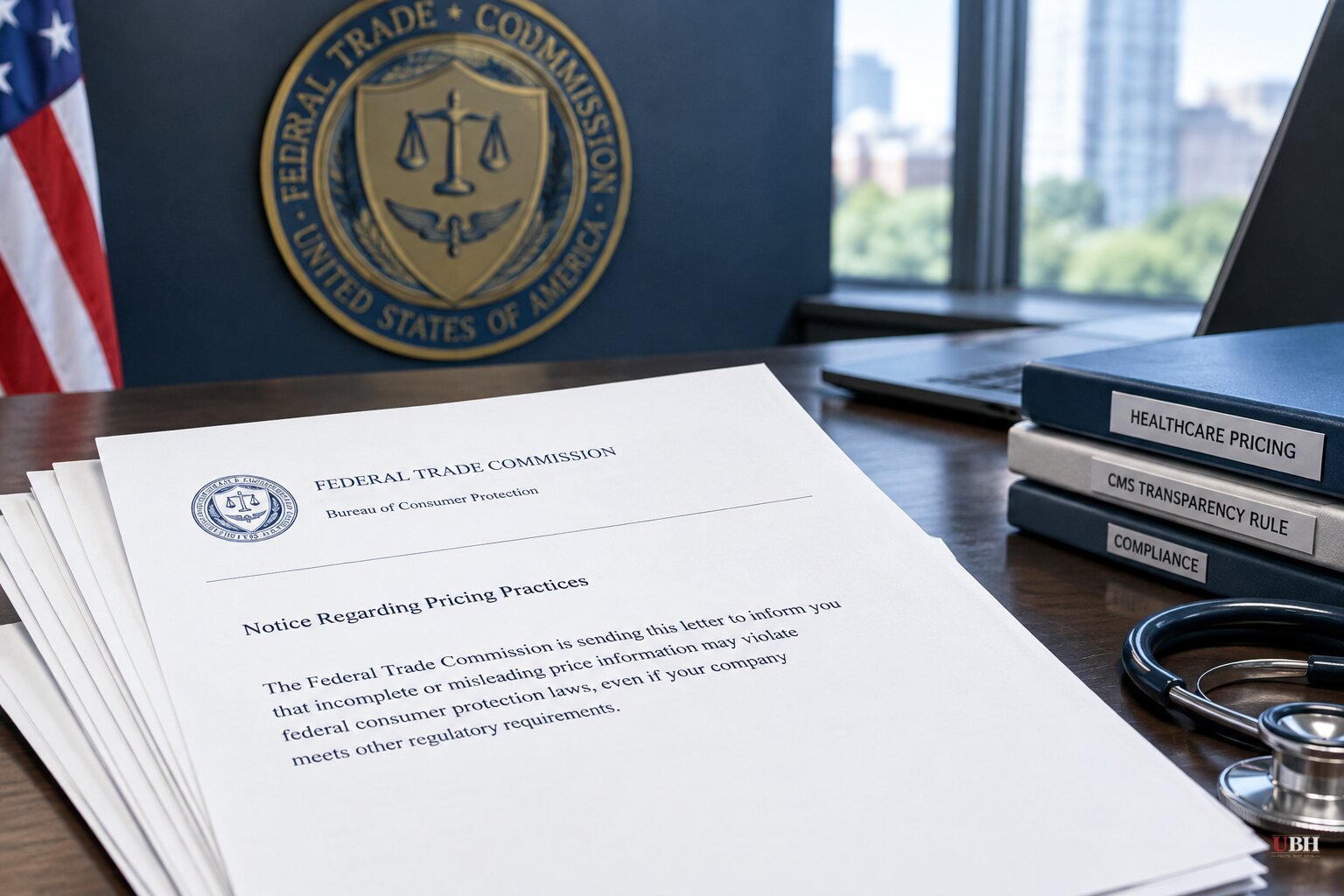
Since Monday, Oct. 5, the federal government has been working two price transparency tracks at once. FTC Chairman Andrew Ferguson sent warning letters to 24 of the nation's largest healthcare services companies. HHS, Labor and Treasury finalized a rule meant to fix the data that hospitals and insurers already post.
The pairing matters because the existing system has underdelivered for years.
What the FTC letters say
Ferguson announced the letters at a healthcare transparency forum. The FTC says patients are routinely asked to commit to care without knowing the cost, and that prices for the same service can differ dramatically from one facility to the next.
The letters say failing to give patients timely, accurate and complete prices can be an unfair or deceptive practice under the FTC Act. That applies especially to non-emergency care scheduled in advance.
The key legal point: the letters call CMS price transparency rules "a regulatory floor." They state that "CMS rules do not provide a safe harbor from liability under the FTC Act." A hospital can meet its CMS posting obligations and still face FTC exposure.
The FTC listed examples of deceptive pricing. A price that leaves out physician or facility fees can mislead a patient about total cost. So can one that covers only part of the services a patient will receive. The same goes for a price that is hard to find or inaccurate.
"These letters are a warning," Ferguson said. "Healthcare providers must disclose their prices to consumers and must do so starting today." He also said hospitals that fail to correct course could face legal action. The letters urge recipients to "conduct a comprehensive review" of their practices and take corrective action swiftly.
Ferguson said the letters were not based on a specific assessment of each company's practices. They are a broad shot across the bow, not a charge sheet. No FTC complaint against any hospital has been filed.
Five years of weak compliance
CMS finalized the original hospital rule in late 2019 at President Trump's urging. It requires hospitals to post standard charges, including negotiated insurer rates, as a machine-readable file and in a consumer-friendly display of 300 shoppable services. Enforcement began in 2021.
Compliance remains poor. The group PatientRightsAdvocate.org reported in September that more than half of hospitals are still not fully compliant. Just 18 percent of hospitals that post prices online list dollars-and-cents figures for at least half of their services.
CMS has fined 28 noncompliant hospitals since 2021, roughly a third of them since Trump returned to office in January 2025. That is 28 penalties in about five years against a hospital sector of thousands of facilities.
"Too many patients are still being denied the real, upfront prices they need to shop for affordable care and protect themselves from overcharges," PatientRightsAdvocate founder Cynthia Fisher said in a statement.
The new CMS rule
HHS Secretary Robert F. Kennedy Jr. and CMS Administrator Dr. Mehmet Oz announced the final rule the same day. The American Legislative Exchange Council, which supports it, summarized the main changes.
For hospitals:
- They must publish actual dollar amounts for allowed charges at the 10th percentile, the 90th percentile and the median.
- They must add National Provider Identifiers to their machine-readable files, which makes it easier to match hospitals to insurer data.
- They must name the senior officials who attest that the data is complete and accurate.
For insurers:
- The rule bans so-called ghost rates and requires actual dollar amounts for in-network prices.
- It expands disclosure of out-of-network prices.
- It requires personalized cost estimates by phone as well as online.
- Insurers must submit one in-network rate file per provider network rather than per plan.
- Reporting frequency drops from monthly to quarterly.
The quarterly change reduces the reporting burden, and the rule frames it as streamlining. The attestation requirement is the accountability piece. Rep. Diana Harshbarger, R-Tenn., said in a post on X that insurers "will have to attest that their pricing data is accurate and complete" for the first time.
Political backing
Support so far has come from the administration and its allies. Rep. Warren Davidson, R-Ohio, said patients who can compare prices force plans and providers to compete for their business. Rep. Randy Fine, R-Fla., told Newsmax that people don't realize "the 10 providers in their community could charge massively different prices."
Trent England, executive director of the conservative group Save Our States, said guaranteeing patients and employers actual prices "has taken this long."
The sources contain no response from the hospital industry or from any of the 24 letter recipients.
What comes next
The FTC has put the largest health systems on notice, and the CMS rule raises the standard for the data itself. Whether either one changes behavior depends on enforcement, which has been thin since 2021. The first FTC case against a hospital over deceptive pricing would show whether the "regulatory floor" language is a real legal threat or a warning that stays on paper.
Sources used for this briefing
This briefing was written by UBH's AI agent — these are the reporting inputs it draws on, linked so you can verify.


