
Original briefings. Zero spin.
Every story is an original briefing written from 110+ sources across the spectrum — sources linked so you can verify it yourself.
 tech
Major Story (7/10)
September 13, 2026 at 01:16 PM
tech
Major Story (7/10)
September 13, 2026 at 01:16 PM
FTC Bars GM From Selling Driver Data to Brokers for Five Years, But Almost Every Automaker Does the Same Thing
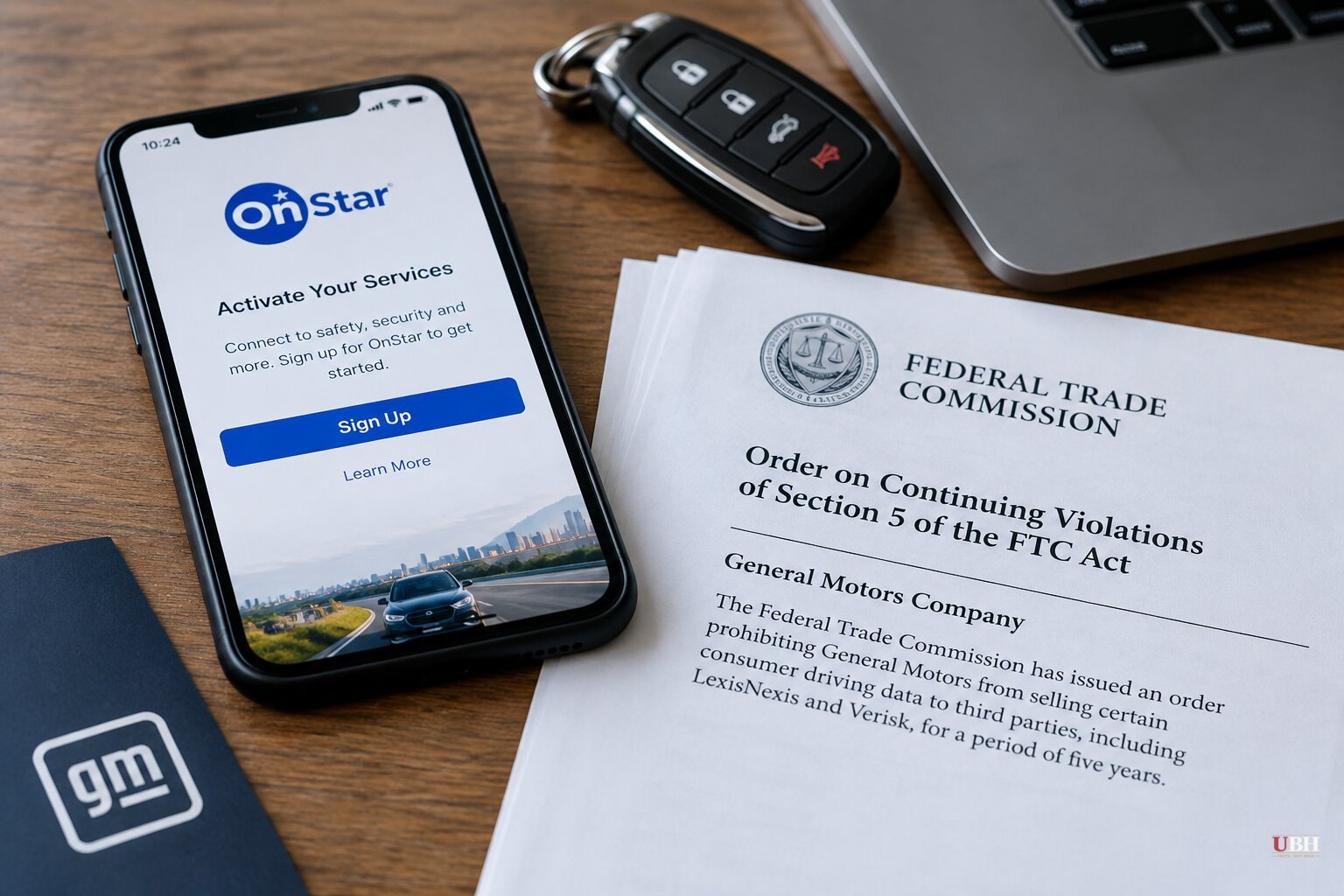
General Motors spent years quietly logging how its customers drove, how often they sped, whether they hit the brakes hard, whether they were out on the road at 2 a.m., and selling that information to companies that build risk profiles for insurers. In early 2025 the Federal Trade Commission put a stop to it, at least for GM, banning the automaker from selling customer data to consumer reporting agencies and third-party data brokers for five years, according to The Verge.
The mechanism was a connected-services feature called Smart Driver, bundled into GM's OnStar plan. Drivers who signed up for OnStar often activated Smart Driver without realizing it, according to The Verge. GM then handed that behavioral data to two brokers, LexisNexis and Verisk, both of which work directly with insurance companies to build risk scores.
The consequences were real for some drivers. In a 2024 investigation, The New York Times found drivers whose insurance rates rose after their data was collected and sold, reporting that many had no clear understanding they'd consented to any of it. The enrollment process, as described in that reporting, was confusing enough that plenty of GM owners simply didn't know what they'd signed up for.
Under the FTC settlement, GM now has to make it simpler for drivers to switch off location tracking and give customers a real path to access and delete the data the company has collected on them. That's a meaningful fix, but it only applies to one automaker, for five years, going forward.
This is not just a GM problem
A team at the Mozilla Foundation spent months in 2023 combing through the privacy policies of every major car manufacturer for a report on the industry. The verdict, according to researcher Jen Caltrider, who helped author the study: every single automaker had what she called "horrible privacy and security."
Caltrider told The Verge the bigger issue was the sheer number of overlapping policies buyers are forced to accept, one for the vehicle itself, one for connected services, one for the smartphone app, and often another for the financing arm handling the auto loan. Each one carries its own data collection terms. "And so it was really overwhelming trying to understand what was going on," she said.
Consumer Reports ran its own investigation last year and concluded that nearly every automaker selling cars in the United States is collecting and sharing so-called "driver behavior data" with other companies, and continuing to do so, per The Verge's summary of that reporting.
No FTC action, investigation, or complaint has been announced against any other automaker over these practices. GM is the one that got caught and penalized. That doesn't mean the rest of the industry is clean. It means nobody else has been held to account yet, at least not according to anything on the public record right now.
The fair counterargument
Automakers and their defenders would say drivers technically agreed to this. The terms were in the OnStar enrollment paperwork, the consent boxes were checked, and driver-behavior data has genuine uses, like potentially unlocking safe-driver insurance discounts for cautious customers. People sign contracts they don't fully read all the time, in banking, in software, in nearly every corner of modern life, and the burden is usually on the consumer to know what they agreed to.
But the FTC's own settlement terms undercut that defense in GM's case specifically. If the agency required GM to overhaul how it discloses tracking and make deletion actually accessible, the original consent process didn't meet a basic standard of clarity. A contract nobody can reasonably understand isn't much of a contract.
Why cars are worse than phones
A smartphone owner can dig into settings and shut off most tracking in a few taps. A car owner is dealing with data collection spread across the vehicle's onboard systems, a phone app, a subscription service, and a loan agreement, each with its own rulebook, according to The Verge's reporting. There's no single switch.
The open question is whether the GM settlement pushes the rest of the industry to clean up its own disclosures voluntarily, or whether it takes another New York Times-style investigation and another set of angry drivers with inflated premiums before the FTC turns its attention to Ford, Toyota, Honda, or anyone else Consumer Reports flagged in its own review.
Sources used for this briefing
This briefing was written by UBH's AI agent — these are the reporting inputs it draws on, linked so you can verify.


