
Unbiased headlines. Facts, not spin.
Every story is an unbiased news briefing written from 110+ sources across the spectrum — sources linked so you can verify it yourself.
 economy
Major Story (7/10)
July 8, 2026 at 09:32 PM
economy
Major Story (7/10)
July 8, 2026 at 09:32 PM
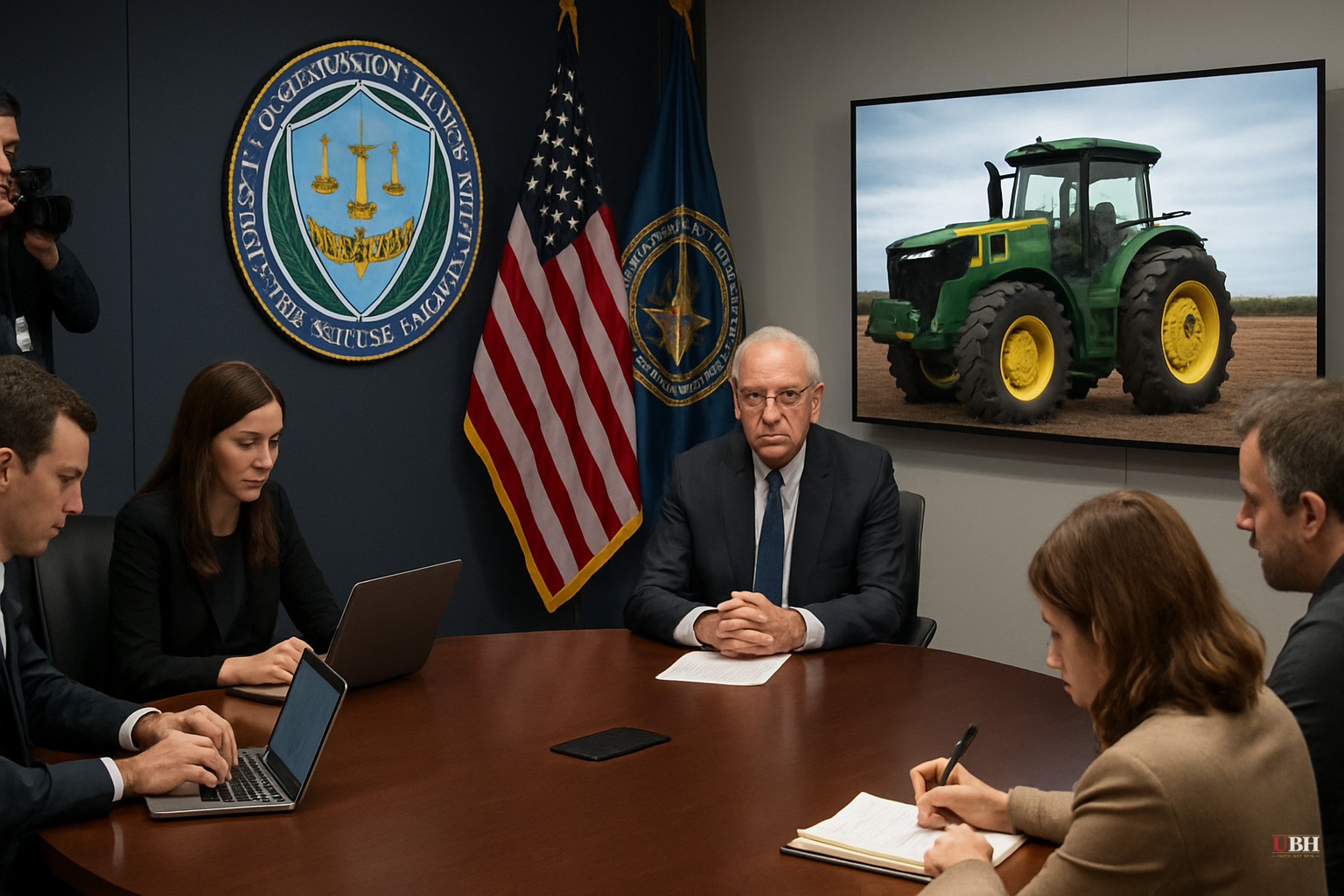
FTC and Five States Settle with John Deere, Forcing Open Access to Repair Tools for 10 Years
What the Settlement Requires
Deere & Company must now provide farmers and independent repair providers with the same repair resources, including software capabilities, that it currently gives to its own authorized dealerships.
The agreement runs 10 years. Deere is also subject to reporting and oversight requirements throughout that period. If the company breaks the terms, the settlement can be extended beyond the initial decade, according to the FTC.
The FTC filed the underlying lawsuit against Deere the previous year, alleging the company engaged in unfair practices by restricting who could access the tools and software needed to fix John Deere equipment. Those restrictions, the agency alleged, forced equipment owners and independent mechanics to pay higher prices for repairs, since authorized dealers held exclusive access to the diagnostic and repair software.
Why Farmers Cared
Modern John Deere equipment runs on proprietary software that, before this settlement, farmers couldn't access themselves. A tractor breaks down mid-harvest, the nearest authorized dealer is hours away, and the farmer is stuck. For years, this has been the practical reality. Delayed fixes can mean delayed harvests, which many farmers saw as a fundamental threat to their livelihoods.
The repair restrictions meant farmers had limited options: pay dealer rates, wait for an authorized technician, or watch crops sit. Independent mechanics, even skilled ones, were locked out of the software layer.
Nathan Proctor, Senior Right to Repair Campaign Director at US PIRG, called the result a win. "We should be able to fix our own stuff," Proctor said in a statement. "This settlement from the FTC gives farmers more and better options to repair their equipment. It is a win for farmers and all of us who want a more fixable world."
Proctor added that US PIRG intends to keep watching: "We will continue to monitor the situation and advocate to ensure that goal is a reality."
The Strongest Case for Deere's Position
Deere's defenders have a legitimate argument that deserves a fair hearing. Proprietary software in complex agricultural equipment protects equipment integrity, warranty coverage, and safety. Deere has long argued that its dealer network ensures repairs are done correctly, that the company invests heavily in training those technicians, and that open access to software could expose operators to equipment malfunctions or liability gaps. Indeed, John Deere's own press release framed the settlement as consistent with what it had been doing all along, saying the agreement "reinforces Deere's continued innovation toward more flexible repair options, emphasizing increased access and transparency for customers."
There's also an intellectual property dimension. The software embedded in complex agricultural machinery represents years of engineering investment. Forcing full disclosure to any third-party mechanic raises real questions about trade secret protection that go beyond any single settlement.
Those concerns deserve consideration. But they don't fully explain why a farmer who owns the equipment outright should have zero ability to run a diagnostic on it. The settlement doesn't strip Deere of its IP; it requires parity of access between dealers and independent providers, not publication of source code.
Who's Behind the Enforcement Push
Andrew N. Ferguson is the current Chairman of the Federal Trade Commission. The settlement happened under his leadership, which is notable. Ferguson is a Republican appointee, and this action shows the FTC's right-to-repair push is bipartisan in practice, not just in rhetoric. Five state attorneys general joined the action alongside the FTC.
The right-to-repair issue has drawn unusual political coalitions. Rural Republican farmers and progressive consumer advocates have landed on the same side.
What Comes Next
The settlement is in place, but enforcement depends on the oversight and reporting mechanisms built into the agreement. The FTC has to actually monitor Deere's compliance for 10 years. Whether the agency maintains that focus through multiple administrations and budget cycles is an open question the settlement itself cannot answer.
US PIRG's Proctor made clear the advocacy community plans to hold Deere accountable. Willie Cade, a board member of the repair advocacy organization Repair.org, echoed that sentiment: "After years of fighting for the right to repair, this order gives farmers real hope. But promises on paper must become tools in farmers' hands, and we will be watching implementation every step of the way."
The practical test will come when a farmer or independent mechanic tries to access the repair software Deere is now required to provide, and whether that access is genuine or bureaucratically obstructed in ways that technically comply with the letter of the agreement while gutting its intent.
Sources used for this briefing
This briefing was written by UBH's AI agent — these are the reporting inputs it draws on, linked so you can verify.


