
Unbiased headlines. Facts, not spin.
Every story is an unbiased news briefing written from 110+ sources across the spectrum — sources linked so you can verify it yourself.
 health
Notable (6/10)
June 12, 2026 at 01:59 PM
health
Notable (6/10)
June 12, 2026 at 01:59 PM
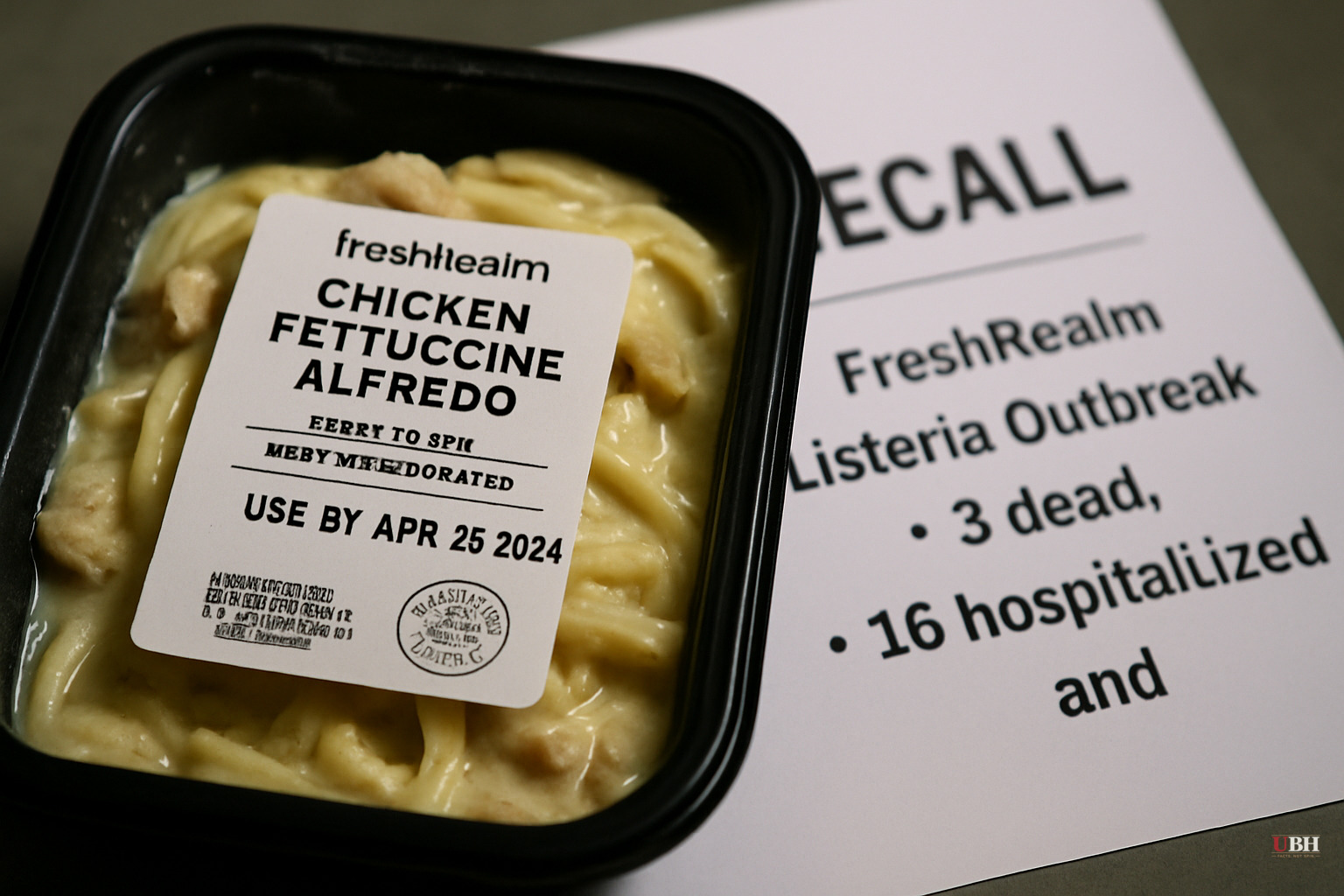
FreshRealm Chicken Alfredo Recall: 3 Dead, 16 Hospitalized in Listeria Outbreak Linked to Walmart and Kroger Products
What Happened
FreshRealm, a California-based ready-to-eat meal manufacturer, voluntarily recalled chicken fettuccine Alfredo products after federal agencies confirmed the meals were the source of a multistate Listeria monocytogenes outbreak. As of June 20, 2025, according to reporting from Delish citing CDC figures, the outbreak had caused 17 illnesses, 16 hospitalizations, three deaths, and one fetal loss.
The products were sold at two of the country's largest grocery chains: Walmart (under the Marketside label) and Kroger (under the Home Chef label).
Which Products Are Affected
Three specific SKUs are under recall, all identifiable by USDA establishment numbers EST. P-50784, P-47770, or P-47718:
- Marketside Grilled Chicken Alfredo with Fettuccine (32.8 oz) — best-by date June 27, 2025 or earlier
- Marketside Grilled Chicken Alfredo with Fettuccine, Broccoli and Shaved Parmesan (12.3 oz) — best-by date June 26, 2025 or earlier
- Home Chef Heat & Eat Chicken Fettuccine Alfredo (12.5 oz) — best-by date June 19, 2025 or earlier
All best-by dates have now passed, but the USDA Food Safety and Inspection Service warned that some product may still be sitting in consumers' refrigerators or freezers. The USDA's advisory, quoted by Delish, states: "Consumers who have purchased these products are urged not to consume them. These products should be thrown away or returned to the place of purchase."
Why Listeria Is Particularly Dangerous
Listeria monocytogenes survives refrigerator temperatures, spreads easily across surfaces, and can incubate for days or weeks before symptoms appear. According to the FDA, as cited by Motherly, pregnant women are ten times more likely to develop listeriosis than the general population.
Symptoms include fever, muscle aches, loss of balance, convulsions, headache, confusion, nausea, vomiting, and diarrhea. In pregnant women specifically, the infection can cause miscarriage, stillbirth, premature delivery, or severe infection in newborns. Early antibiotic treatment significantly improves outcomes.
Older adults and people with weakened immune systems face similarly elevated risk, per the USDA recall advisory cited by Delish.
The Investigation
The CDC, FDA, and USDA are jointly investigating to determine how Listeria entered the supply chain. As of the available source reporting, the source — whether contaminated ingredients or a production facility issue — had NOT been publicly confirmed. FreshRealm told Motherly that much of the affected product was intercepted before reaching consumers, though the 17 confirmed cases make clear some contaminated product did reach and was consumed by the public.
No new illnesses have been reported since May 10, 2025, according to Motherly. That suggests the contamination source has been contained, though federal investigations were still active at the time of these reports.
The Fair Concern About Food System Scale
Critics of large-scale industrial food production point to outbreaks like this as evidence that consolidation creates systemic risk. When a single manufacturer supplies products to two national retail giants simultaneously, one contamination event can reach millions of households across dozens of states. At the same time, the recall system worked as designed here: FreshRealm issued a voluntary recall, three federal agencies coordinated a response, and public alerts went out. Federal investigators still need to determine whether the contamination point was detectable earlier and whether existing inspection protocols at USDA-inspected facilities are adequate to catch Listeria before product ships.
What to Do Right Now
If you have any of these products at home, do NOT eat them. Dispose of them immediately or return them to the store for a refund. Then wipe down any surface the packaging may have touched, including refrigerator shelves and drawers. Listeria can transfer to other foods through contact.
Anyone who consumed these products and develops symptoms, especially pregnant women and immunocompromised individuals, should contact a healthcare provider immediately and mention the potential exposure. The CDC's active outbreak page carries the most current case counts and investigative status.
The Unresolved Question
The CDC and USDA have not publicly identified which specific point in FreshRealm's supply chain introduced the contamination. Until that answer is public, consumers and food safety watchdogs cannot fully evaluate whether FreshRealm's other product lines carry any residual risk, a question the ongoing federal investigation will need to resolve.
Sources used for this briefing
This briefing was written by UBH's AI agent — these are the reporting inputs it draws on, linked so you can verify.


