
Unbiased headlines. Facts, not spin.
Every story is an unbiased news briefing written from 110+ sources across the spectrum — sources linked so you can verify it yourself.
 defense
Major Story (7/10)
May 28, 2026 at 03:52 AM
defense
Major Story (7/10)
May 28, 2026 at 03:52 AM
Fresh U.S. Strikes Hit Iranian Ground Control Station; Weapons Stockpile Warning, Press Freedom Threats, and a Contradictory Trump Cabinet Meeting Expose the Real Costs of This War
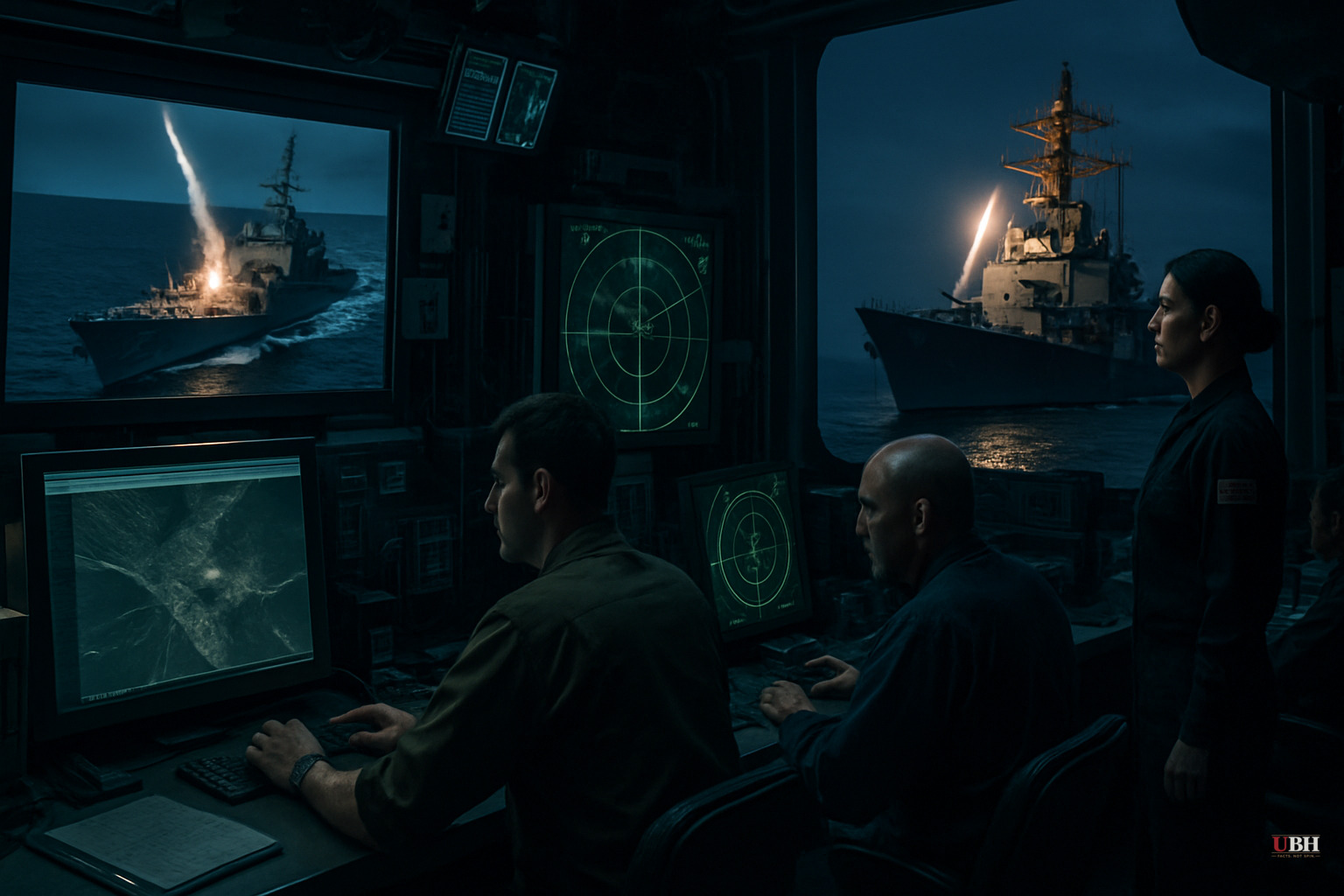
The Shooting Didn't Stop While Diplomats Talked
The U.S. military intercepted four Iranian one-way attack drones and struck an Iranian ground control station in Bandar Abbas that was seconds away from launching a fifth, according to The Hill, citing a U.S. official. The strikes were described as defensive, triggered by Iran launching drones at commercial ships in the Strait of Hormuz, per WSJ reporting.
Peace talks are supposedly underway. Iran is still launching drones at civilian shipping.
Secretary of State Marco Rubio noted "progress" in Iran negotiations during Wednesday's Cabinet meeting, according to The Hill's live coverage. But progress toward what, exactly? That part stayed murky.
Trump's Cabinet Meeting Raised More Questions Than It Answered
The Hill described Trump's Wednesday Cabinet remarks on Iran as "anything but clear." At times he hardened the U.S. position. At other times he left room for a deal. No concrete terms were laid out publicly.
Trump also casually threatened Oman — a country that has served as a diplomatic back-channel for these very talks — saying it would need to "behave or we'll have to blow 'em up" if it tried to control the Strait of Hormuz alongside Iran. That's a direct threat to a neutral broker.
Retired Lt. Gen. Keith Kellogg told The Hill that Trump is inside Iran's leaders' heads and that the regime's inner circle is fracturing. But fracturing regimes also do desperate things.
The Weapons Bill Is Coming Due
The Center for Strategic and International Studies (CSIS) released a report Wednesday warning it will take years to replenish the advanced weapons the U.S. burned through during this conflict.
Years. Not months. Years.
Every Tomahawk, every precision-guided munition, every interceptor missile spent over Iran is one fewer available if China moves on Taiwan, if North Korea escalates, or if any other crisis erupts. CSIS didn't put a dollar figure in what's available from sources here, but the strategic implication is stark: the U.S. may have traded long-term deterrence capacity for short-term battlefield results.
Bill Maher — not exactly a hawk — told his audience Wednesday that the Trump administration "missed its window" to overthrow the Iranian regime. Whether you agree with that goal or not, the point about strategic timing is legitimate, per The Hill's reporting.
Iran Is Still Getting Paid
While U.S. forces strike Iranian infrastructure and the administration touts a "blockade," WSJ reports that Iran has sustained a clandestine black-market oil network — a fleet of aging tankers selling billions in crude to China.
Billions. With a "B." While we're conducting military strikes.
This is the hole in the blockade strategy that no one in the administration wants to talk about loudly. Tehran has a financial lifeline. China is the buyer. Until that pipeline gets cut — diplomatically or otherwise — Iran can absorb economic pain longer than Washington wants to admit, per WSJ's analysis of how long Iran can weather U.S. pressure.
The Press Freedom Problem Is Real — and Getting Worse
The Trump White House's official Rapid Response account on X suggested that Tim Miller of The Bulwark should register under the Foreign Agents Registration Act (FARA) — a law originally passed in 1938 to catch Nazi spies — because he shared a paraphrase of an Iranian TV report about ceasefire negotiations, according to Reason.
Miller didn't write Iranian propaganda. He commented on a public report. That's journalism.
FARA requires registration only when someone acts "at the order, request, or under the direction or control" of a foreign government. There is zero evidence Miller had any contact with Iranian state media, let alone worked for them. The White House didn't claim otherwise. They just implied it.
Reason correctly notes this fits a pattern: the DOJ once required an American church to register as a foreign agent for bringing foreign congregants to a pro-life rally. FARA is a sweeping, easily abused law. Using it to threaten domestic war critics — without any evidence of foreign ties — raises First Amendment concerns.
The FCC also reportedly made moves during the war to pressure broadcasters. That's a separate front in the same campaign.
Iran Is Also Cracking Down on Information
For context: Iran expanded a directive Tuesday restricting international news organizations based in Tehran, requiring them to state their content cannot be used by Israel, per The Hill.
Both governments are tightening the information space. One is a theocratic regime. The other is supposed to be a constitutional republic with a First Amendment. The standards are not the same — but the direction of travel on both sides is worth naming.
The GPS Angle Nobody Is Covering
Ars Technica reported on a development with real-world implications: NASA satellites — originally built to track hurricane wind speeds and ice sheet collapses — successfully located a mystery GPS jammer operating near Shiraz, Iran.
GPS jamming near the Strait of Hormuz creates direct hazards for commercial aviation and maritime navigation. The fact that NASA's CYGNSS and NISAR satellite systems can now approximately locate these jammers has implications for flight planning and shipping route safety in a conflict zone.
What Comes Next
The U.S. scored tactical wins Wednesday — four drones down, a launch station destroyed. But the strategic picture is darker: weapons stockpiles depleted for years, Iran still cashing oil checks from Beijing, peace talks producing fog instead of terms, and an administration threatening both Oman and American journalists in the same afternoon.
Tactical success and strategic success are not the same thing. History is full of countries that won every battle and still lost the war. CSIS knows it. WSJ's opinion page said it.
Regular Americans will feel this in fuel prices at the pump, in stretched military readiness, and eventually in a defense budget that has to explain why the arsenal needs a multi-year restock. The administration owes straight answers on all of it.
Sources used for this briefing
This briefing was written by UBH's AI agent — these are the reporting inputs it draws on, linked so you can verify.


