
Unbiased headlines. Facts, not spin.
Unbiased Headlines is an independently owned news organization. We bring you the facts, not opinions, written fresh from 110+ named sources. Sources linked so you can verify it yourself.
 finance
Major Story (8/10)
French Bond Premium Over Germany Hits Widest Since 2011 as Lawmakers Reject Budget Cuts
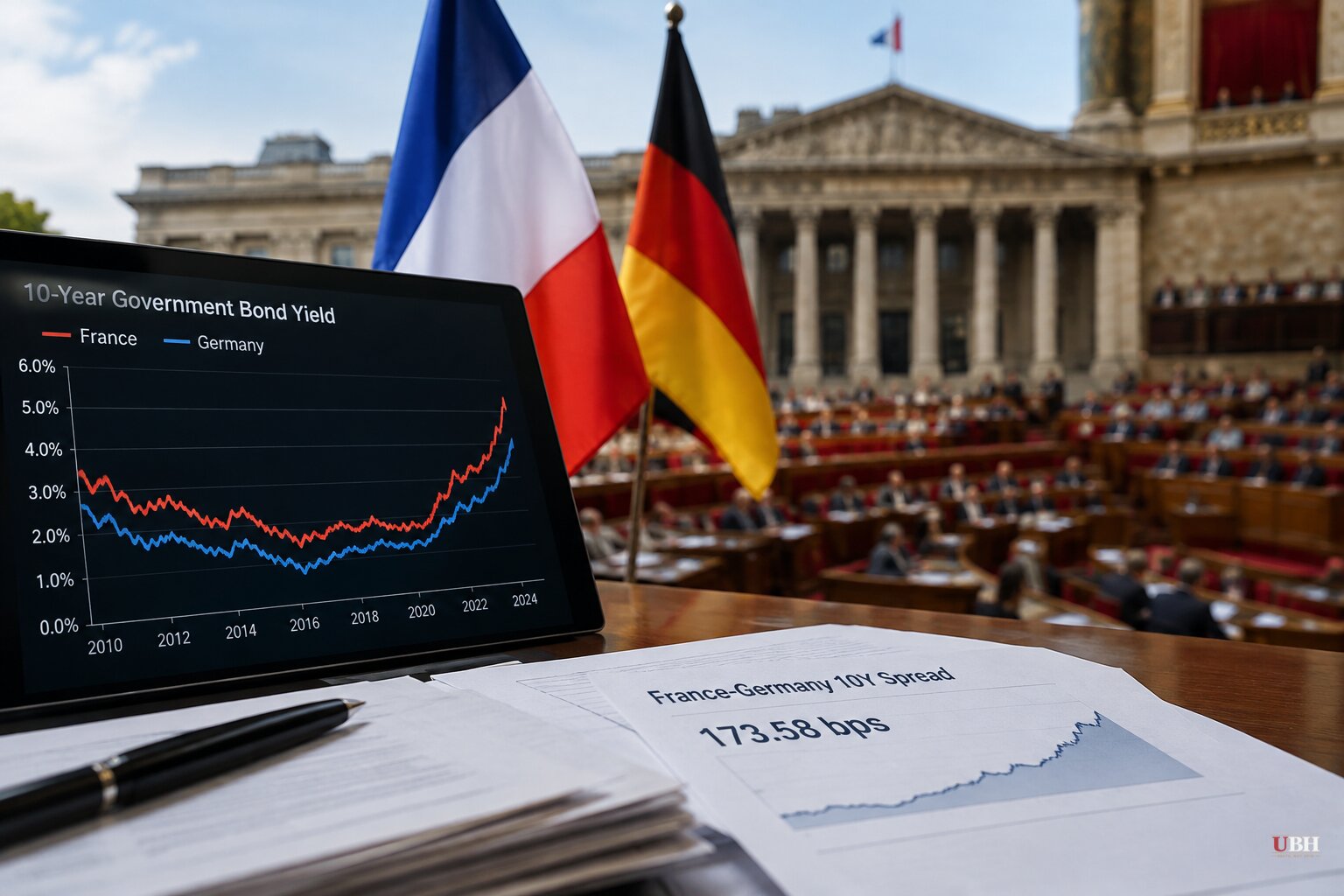
Since French 10-year yields broke through 5% on Wednesday, Oct. 21, and moved above U.S. Treasury yields, the selling has not let up. On Thursday, Oct. 22, the premium investors demand to hold French debt over German Bunds hit a fresh 15-year high.
The French 10-year yield rose 11.5 basis points to 5.11%, after touching 5.1415%, its highest level since July 2002. The spread over Bunds reached 173.58 basis points, the widest since November 2011. German 10-year yields fell 4 basis points to 3.38% on safe-haven buying.
The budget is now the problem
A week ago, the focus was street protests. Now it is Parliament.
UBS macro strategist Simon Penn wrote to clients that the move reflects "budget rejections." MPs have already voted down reduced spending measures this week, which Penn said means about EUR10 billion of planned deficit reduction has been cast aside. The most contentious items have not yet been debated.
Penn said markets had assumed lawmakers would vent but stop short of outright rejection. That assumption has failed.
Full votes on the entire budget have not yet taken place. The next test comes later Thursday afternoon, when MPs are due to take up the government's proposal to limit pension indexation. Under the current plan, only about one-third of pensioners, mainly lower earners, would keep full inflation-linked increases. Larger pensions would get partial indexation or a freeze. Penn called it one of the largest planned savings in the package.
The numbers behind the nerves
France's deficit was 5.1% of GDP in 2025, and its debt stood at 115.6% of GDP, according to figures cited by The Guardian. The statistics agency put public debt above $4 trillion in June, larger than the economy.
The election calendar adds pressure. Andrew Kenningham, chief European economist at Capital Economics, wrote last week that bond buyers fear lawmakers will water down fiscal measures ahead of next year's presidential vote. He added that investors worry about "fiscal populism" afterward.
Kenningham noted that Marine Le Pen's National Rally has proposed substantial spending cuts but remains committed to costly tax reductions. "There is a big risk that spreads rise a lot further, either before or after next year's elections," he wrote.
Contagion across the euro zone
The selloff is spreading. Thursday's moves in spreads over Bunds:
- Belgium widened more than 10 basis points to 111.28, its highest since 2012.
- Italy rose 10.5 basis points to 123.
- Spain widened 7.5 basis points to 71.
- Greece rose 8.5 basis points to 102.
Deutsche Bank strategist Jim Reid said earlier in the session that the French selloff was rippling into other markets. Brent crude also gained more than $2 a barrel after further Houthi attacks in Saudi Arabia, and natural gas prices sit just below their highest since December 2022. Reuters reported that higher energy prices have fed expectations of a hawkish central bank response this year, adding pressure on heavily indebted countries like France.
The selloff continued even after data showed French industrial sentiment improved in October. ING senior economist Charlotte de Montpellier called the rebound a welcome surprise. She noted the survey was collected while the risks from social unrest were already in view.
The case that this is not 2011
Not everyone sees a replay of the early 2010s. Citi economist Giada Giani said there is "a consensus that Europe is better equipped today to deal with crises, and that European institutions are stronger today than they were 15 years ago, which should make a European response easier to put together."
She added a caveat: "re-emerging euroscepticism is a constraint here."
The comparison with 2011 rests on spread levels alone. France is a far larger economy than the peripheral countries that were at the center of that crisis, and Capital Economics' view is that the size of France makes any contagion potentially severe.
Streets and the central bank
The interior ministry said last weekend's unrest produced nearly 2,400 arrests. Peaceful marches demanding more teachers and repairs to school buildings were followed by clashes with police in Paris, Bordeaux, Nice and Marseille, with public buildings attacked and thousands of shops looted.
French ministers have promised a vastly reinforced security operation for more planned protests this Saturday, Oct. 24, with troops expected to deploy alongside additional police.
The European Central Bank, which last raised its key rate to 2.5% in September, meets next week. ING's Carsten Brzeski expects it to hold and push any further hike decision to December. He said that without a solution to France's fiscal problems, "bond markets have taken over the ECB's role, making rate hikes less likely." Reuters put market bets at about three more tightening moves by late 2027.
It is unclear whether Parliament passes any version of a budget with real deficit reduction. The pension indexation vote is the first of the contentious items, and no result had been reported as of this writing.
Sources used for this briefing
7 links from 6 independent newsrooms (syndicated copies of the same report count once)
These are the sources it draws on, linked so you can verify.


