
Original briefings. Zero spin.
Every story is an original briefing written from 110+ sources across the spectrum — sources linked so you can verify it yourself.
 economy
Notable (6/10)
August 17, 2026 at 03:45 PM
economy
Notable (6/10)
August 17, 2026 at 03:45 PM
Freight Rail Gangs Stole More Than $200 Million in 2025, Industry Group Says
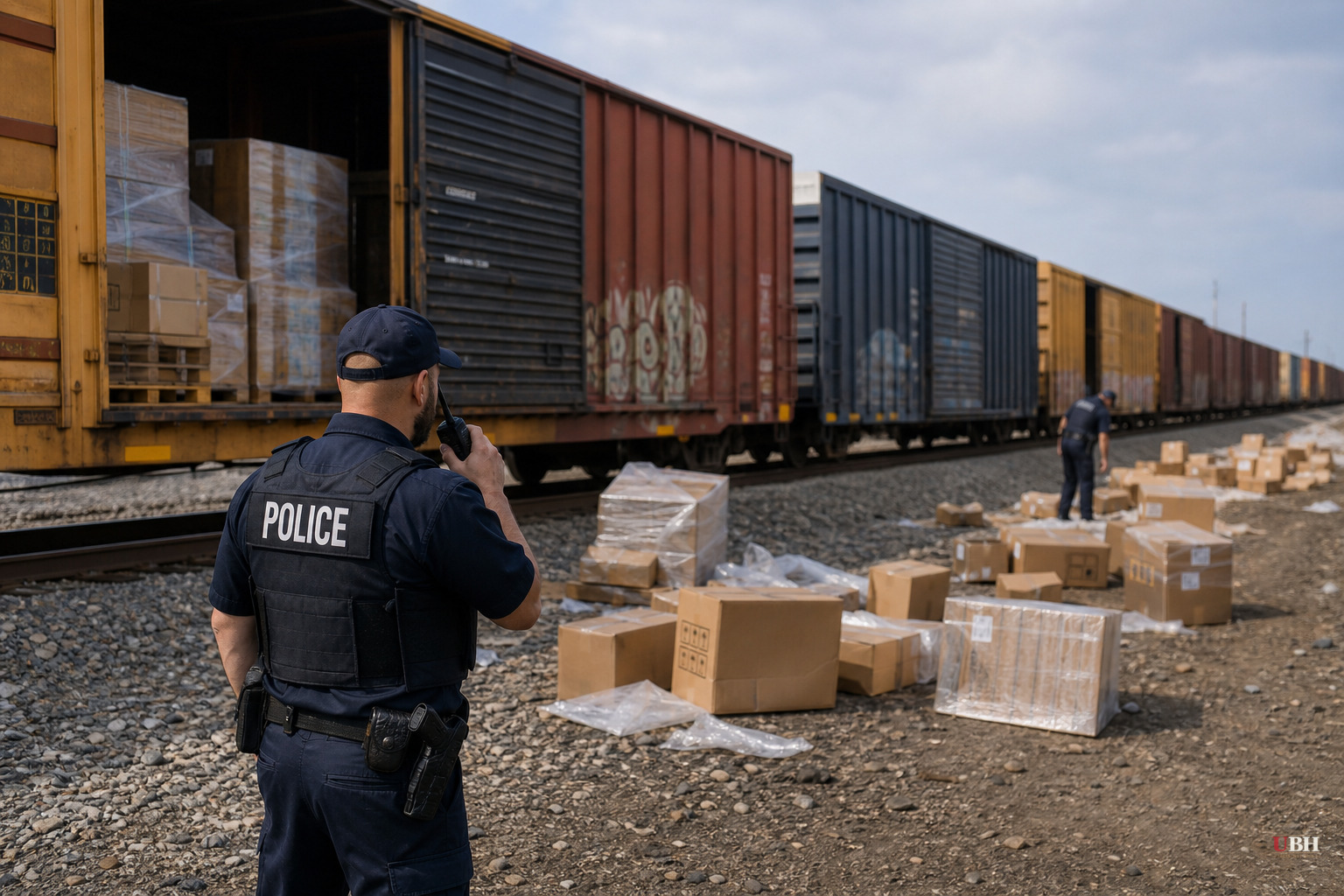
A black Kia Soul rolled up outside a CSX rail depot near Memphis last November. Three men climbed onto the railcars, cut the container locks, and grabbed more than $20,000 in merchandise: women's clothing bound for a Belk department store, Lazer Blocks toys, and cases of Fre non-alcoholic chardonnay, according to police records reviewed by Bloomberg News.
They stashed the rest in nearby woods, planning to come back later. They didn't get the chance.
AI-powered cameras had already caught the heist on tape. A task force led by the Tennessee Bureau of Investigation, working with federal, state and local agencies, the Tennessee National Guard and CSX's own police force, launched a plane that tracked the getaway vehicle for 11 miles. Officers arrested one man hours later as he unloaded stolen boxes. Two more were picked up in the following days, per the police records.
That single bust is a small piece of a much bigger problem. Criminals stole more than $200 million in goods from roughly 75,000 thefts on US freight rail networks in 2025, according to an industry group representing CSX Corp., BNSF Railway Co. and Union Pacific Corp., among others. That's roughly quadruple the theft levels seen before 2020, based on the same industry figures.
Why the pandemic changed the math
Train robbery sounds like something out of a Jesse James dime novel. But the modern version has a distinctly 21st-century origin story.
When COVID lockdowns hit, criminal gangs that had relied on the drug trade saw those supply chains disrupted. At the same time, stay-at-home orders spiked demand for physical goods shipped by rail. Gangs pivoted, and rail yards in urban bottlenecks—Chicago, Los Angeles, Memphis—became the new target.
The numbers get specific fast. A BNSF train got robbed of roughly 1,985 pairs of unreleased Nike sneakers worth more than $440,000 in January of last year, according to a filing in US District Court in Phoenix. Los Angeles police recovered $1.5 million in stolen cargo, including Milwaukee Tool products, during one raid. CSX says more than $900,000 worth of tires alone have vanished off its network since the start of 2023.
The industry's answer: cameras, drones and barbed wire
Freight carriers aren't waiting around. They're pouring money into AI-powered surveillance, drones, barbed-wire fencing and joint task forces with local police, the FBI and their own corporate security teams.
"These gangs can steal tens of thousands worth of goods in minutes, not to mention the damage that can be done to the trains," said Sean Douris, chief of police at CSX.
The thieves' tools are cheap and simple: hydraulic bolt cutters, a truck, cover of darkness. That's often all it takes to crack a container lock on a train that's been sitting still for hours in a yard, which is exactly why rail yards have become such a reliable target compared to, say, a guarded warehouse.
More than a dozen people were also arrested in a separate train robbery operation in Southern California, a case Breitbart flagged among a broader roundup of rail-related crime and safety incidents it has covered, including violent attacks on passenger trains in Atlanta, New York and London. Those passenger-train incidents are a distinct problem from freight cargo theft, but they point to the same underlying question raised across the political spectrum: whether current law enforcement resourcing matches the scale of rail crime, both cargo theft and violence against riders.
That question isn't hypothetical. North Carolina State House Chief Democratic Whip Terry Brown Jr., discussing a fatal stabbing on a Charlotte train, said on NewsNation that there's "a failure to ensure there are adequate resources to ensure public safety." That's a Democratic state legislator making essentially the same resourcing argument that gets used to justify freight security spending, evidence the concern about under-resourced rail policing isn't confined to one side of the aisle.
What's unresolved
The $200 million figure comes from an industry trade group representing the railroads themselves, companies with an obvious interest in showing the problem is serious enough to justify security spending, and there's no independent audit cited in available reporting that verifies the number against, say, insurance claims data or federal crime statistics.
It's also unclear how much of the $200 million in annual freight theft the new AI-camera and task-force approach is actually preventing versus just documenting after the fact. The Memphis case shows the system can catch thieves in near-real time. Whether that translates into a falling annual theft total, rather than just more prosecutions of the same volume of crime, is a question the 2026 numbers will have to answer.
Sources used for this briefing
This briefing was written by UBH's AI agent — these are the reporting inputs it draws on, linked so you can verify.


