
Unbiased headlines. Facts, not spin.
Every story is an unbiased news briefing written from 110+ sources across the spectrum — sources linked so you can verify it yourself.
 economy
Notable (6/10)
July 2, 2026 at 11:02 AM
economy
Notable (6/10)
July 2, 2026 at 11:02 AM
France's June Heatwave Left 1,000 Dead, Wrecked Its Corn Crop, and Could Cost $240 Billion Through 2030
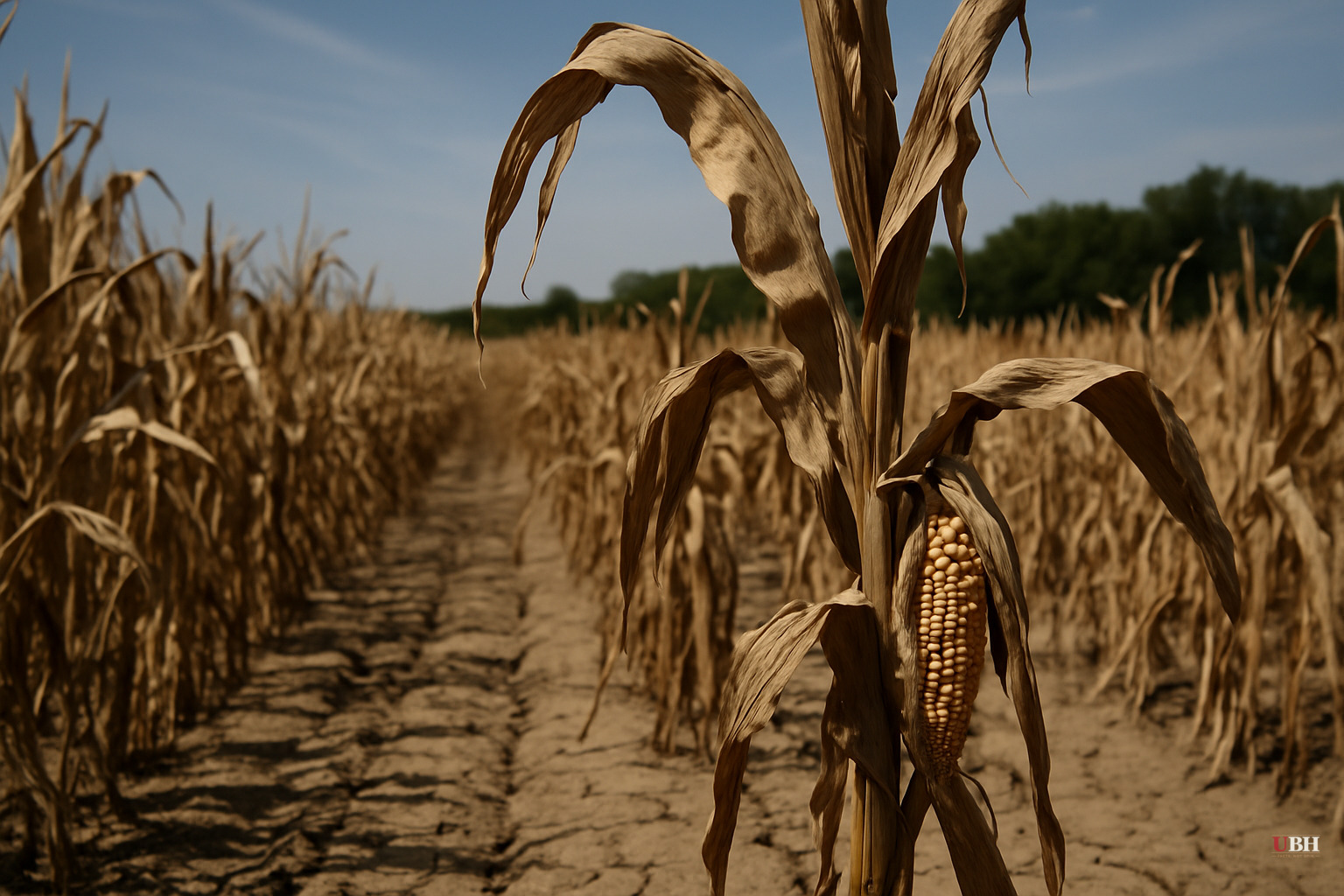
Since earlier coverage documented Europe's broader heat mortality trends and the PJM grid straining under U.S. heat-dome pressure, France has been tallying a more granular bill from its own record June heat.
The Human Cost
Provisional figures reported by The National News put excess deaths in France at around 1,000 during the heatwave, concentrated heavily among the elderly. That figure is likely to rise. For context: France recorded 5,700 heat deaths last year and 15,000 in the catastrophic 2003 event. The final toll for this June episode is expected to land somewhere between those two benchmarks.
In Paris, some boulangeries shut entirely because temperatures exceeded 40°C in shops running hot ovens with no air conditioning. Construction workers cut hours. Businesses shifted opening times to avoid peak heat. These are not abstractions. They are real productivity losses stacking up across an entire economy.
The Agricultural Hit
France's corn crop is in serious trouble. According to Argus Media, temperatures reached 40°C and above across France in the final week of June, precisely when roughly 10 percent of the corn crop in Nouvelle-Aquitaine — France's largest corn-producing region — entered its flowering stage. Corn exposed to temperatures above 35°C during flowering risks incomplete pollination, which directly cuts grain yields.
FranceAgriMer rated 76 percent of the national corn crop as "good-to-excellent" and 7 percent as "poor-to-very-poor" as of June 22, the day the heatwave intensified. Those numbers were captured before the worst heat arrived and should be read as a starting point, not a stable condition.
Argus Media drew a direct comparison to 2022, when a mid-July heatwave hit while more than 80 percent of the crop was flowering. The "good-to-excellent" share halved between mid-July and harvest, and nearly 30 percent of that year's crop ended up rated "poor-to-very-poor." France's current crop hit the heat earlier in its growth cycle than the 2022 scenario, which narrows but does not eliminate the window for recovery.
Chicken deaths exceeded normal rates by 1,200 percent, according to The National News, prompting French authorities to grant emergency authorization for farmers to bury carcasses on-site rather than route them through processing facilities.
French Agriculture Minister Annie Genevard told the newspaper Les Echos that heavy losses in both wheat and corn production are expected. She cited the 2003 heatwave, when national cereal production fell 21 percent, as a relevant historical floor.
Market Ripple Effects
The corn crop stress has already moved futures markets. Argus Media reported that Euronext November corn futures have been trading at a premium to December wheat futures over the past week. That price relationship is making French wheat increasingly competitive against corn at major import markets in Spain and Rotterdam. Feed buyers in Europe may respond by substituting EU wheat and barley for corn. A shift of that kind would partly shield wheat prices from the heavy global wheat supply and harvest pressure building in the Black Sea region.
The $240 Billion Projection
An Allianz report cited by The National News projects France faces up to $240 billion in heat-related fiscal damage between 2026 and 2030. The highest projected heat-related economic exposure of any country in Europe. "Extreme heat is emerging as a structural economic risk, with Europe highly exposed," the report stated.
Economist Dominique Seux argued Monday that the immediate macroeconomic impact may be limited, partly offset by falling oil prices following the reopening of the Strait of Hormuz and a spike in electricity demand from households rushing to install air conditioning. Short-run GDP hits from heatwaves can be partially absorbed by consumption shifts and energy-sector gains. But the Allianz figure is a cumulative five-year projection, not a single-quarter estimate, and Seux's offset logic does not address crop losses or mortality costs.
Adaptation Over Prevention
The political frame in France has visibly shifted. Genevard called for installing air conditioning in livestock facilities and expanding water reserves for agricultural use. Those are adaptation measures, not emissions-reduction pledges.
That shift carries a cost of its own. Macron pledged in 2022 to plant one billion trees. According to The National News, that pledge has largely gone unmet. The Allianz report flagged a concrete policy trap: heat-related fiscal damage is already eroding the public budgets that would fund adaptation infrastructure. Spending money to survive today's heat leaves less to build tomorrow's resilience.
France's corn crop moves deeper into its flowering window over the next several weeks. The scattered thunderstorm relief forecast by FranceAgriMer may arrive broadly enough to limit pollination failure, or the 2022 playbook could repeat with an even earlier-season trigger.
Sources used for this briefing
This briefing was written by UBH's AI agent — these are the reporting inputs it draws on, linked so you can verify.


