
Unbiased headlines. Facts, not spin.
Unbiased Headlines is an independently owned news organization. We bring you the facts, not opinions, written fresh from 110+ named sources. Sources linked so you can verify it yourself.
 economy
Major Story (8/10)
France Reports 1,314 Arrests and 53 Officers Hurt After Second Saturday of Protests
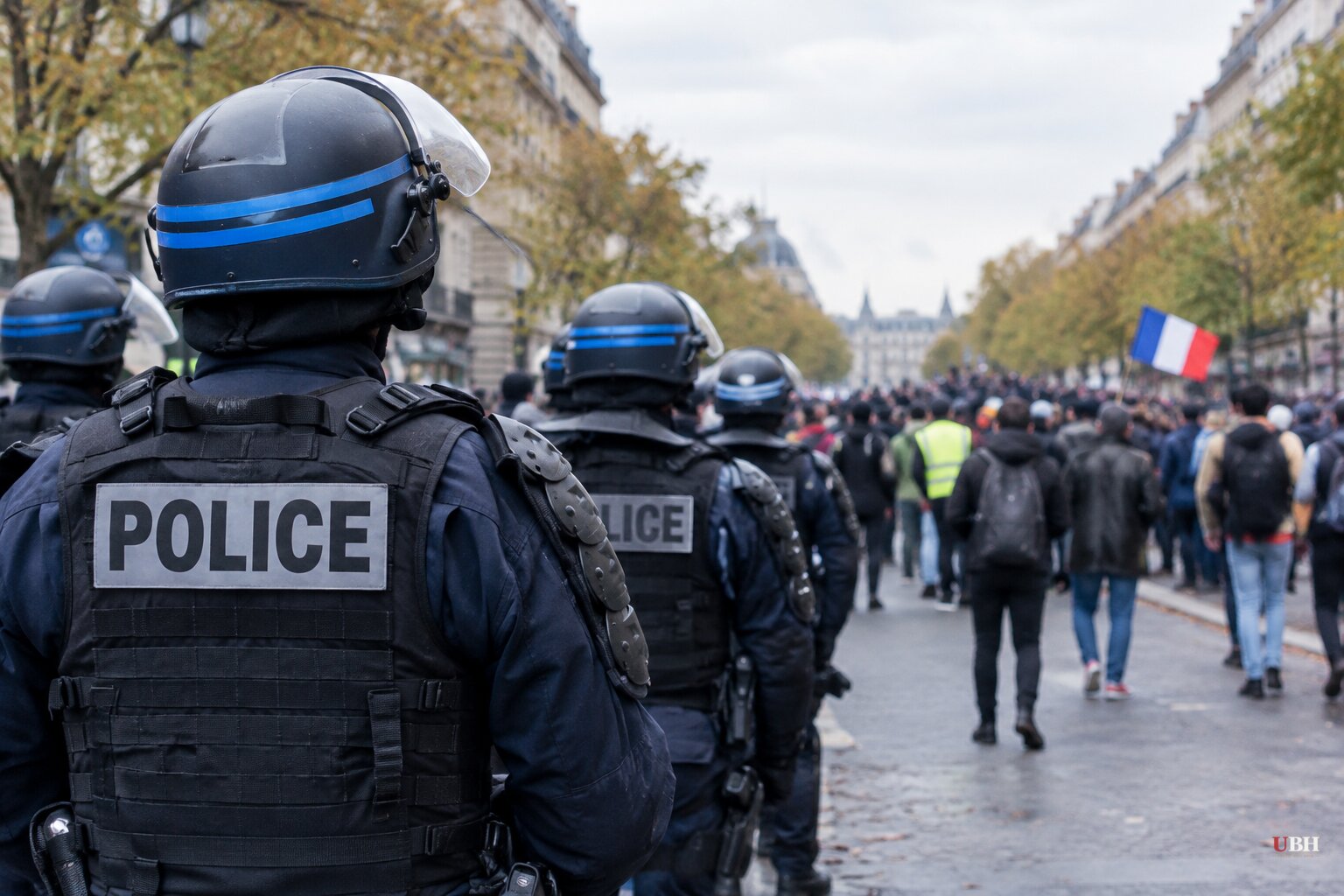
Since last weekend's riots, which left roughly 3,000 businesses damaged or looted, France has moved to a heavy security posture. Interior Minister Laurent Nuñez gave the toll from the second Saturday of protests today, Oct. 25: 1,314 arrests and 53 officers injured.
Nuñez had put the arrest figure at nearly 1,000 on Saturday night. Last week's arrests were reported at roughly 2,500 to 2,700.
What the interior minister says happened
Nuñez said the daytime marches "passed off well." Later, he said, police faced "an extremely elevated level of violence" from "ultra-left" groups.
He said "several thousand radical activists" gathered at the rear of the Paris march, including about 500 people he described as rioters. Paris police made 142 arrests, fewer than half the number from the same day a week earlier, according to the Interior Ministry.
Some shops and businesses were looted, Nuñez said, but "the scale was far smaller" than last week. He credited faster police intervention, more checks before the demonstrations and better protection of commercial areas.
Police confiscated metal balls, lead pellets, fireworks, slingshots, steel balls, improvised weapons, a katana and airsoft weapons before and during the marches, he said.
About 70,000 officers were deployed, backed by helicopters, armored vehicles and water cannon.
Where the clashes happened
Police fired tear gas and water cannon in Paris and in Marseille, Lyon, Bordeaux, Lille, Toulouse, Montpellier and Nantes. Barricades burned in Marseille. In Bordeaux, people in dark clothing pulled boards off a building to build a barricade.
In Paris, the trouble began after a peaceful march from Porte d'Italie toward Porte de Vincennes. Police baton-charged masked youths who were smashing a car dealership's windows. The operation included an elite unit that normally handles organized crime and counter-terrorism.
At least two people were seriously injured, Nuñez said. One was a man in Toulouse who reportedly had fingers blown off. The other was in Clermont-Ferrand. He gave no details on either case.
The fight over the rules
Macron decreed this week that only demonstrations organized by recognized trade unions would be permitted. The Paris march was moved at the last minute from Bastille to the more remote Porte d'Italie.
CGT union representative Murielle Guilbert called it "scandalous" that Macron had forbidden protesters from demonstrating "where we wish to demonstrate." Marchers complied with the change anyway.
Rights advocates and protesters also voiced anger over what they called an assault on freedoms and the right to demonstrate, Al Jazeera reported. The presidential election to choose Macron's successor is six months away.
The government's answer is the scale of the damage. Last week's riots included attacks on public buildings, hundreds of looted businesses and, by one count, 2,700 arrests. Hundreds of people have been jailed for vandalism, arson and looting after fast-track court hearings.
Turnout is still disputed. The Interior Ministry counted 410,000 nationwide across about 298 protests, and the CGT counted about 800,000. In Paris, police said 110,000 marched and unions said 250,000.
Markets and the budget
The unrest lands on top of a fiscal problem. France's 10-year yield hit its highest level since 2002 on Thursday, Oct. 22, and the spread over German Bunds was its widest since November 2011.
On Friday, Oct. 23, Moody's kept France at Aa3 but left the outlook negative. The agency cited "the increased risk that the fragmentation of France's political landscape will continue to impair the functioning of the country's legislative institutions." It said the outlook could return to stable if institutions narrow the budget deficit.
The government is targeting a deficit of 5% of GDP in 2027, down from a projected 5.4% in 2026. Opposition lawmakers are resisting the tax measures meant to produce the savings.
Alain Durré, head of EMEA economic research at Natixis CIB, said the government could try to hold its targets by invoking Article 49.3 or by using executive ordinances. Article 49.3 lets a bill pass without a final vote unless lawmakers carry a no-confidence motion.
Matthew Ryan, a market strategist quoted by CNBC, said it "remains unclear whether the 2027 budget will clear parliament."
What comes next
The National Assembly is due to resume debate on the budget's tax measures on Tuesday, Oct. 27. The Interior Ministry has not said whether the 70,000-officer deployment will continue beyond this weekend.
Nuñez said authorities remain on high alert.
Sources used for this briefing
8 links from 8 independent newsrooms (syndicated copies of the same report count once)
These are the sources it draws on, linked so you can verify.


