
Unbiased headlines. Facts, not spin.
Every story is an unbiased news briefing written from 110+ sources across the spectrum — sources linked so you can verify it yourself.
 economy
Notable (6/10)
July 6, 2026 at 05:58 AM
economy
Notable (6/10)
July 6, 2026 at 05:58 AM
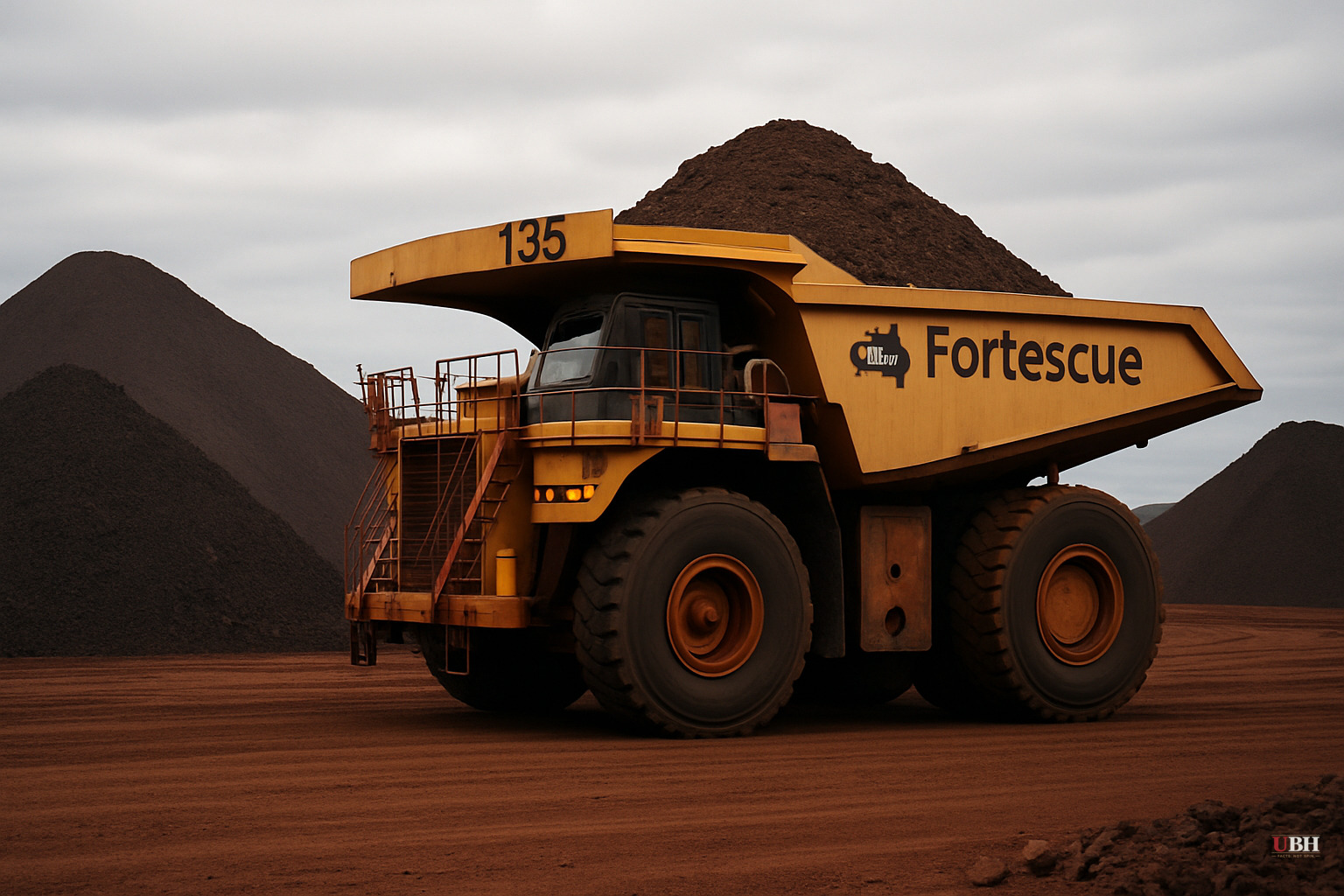
Fortescue Shares Fall 1.46% as China's State Buyer Moves to Block Delivery of Its Lower-Grade Iron Ore
The Disconnect
Iron ore futures spiked 3.8% intraday to US$101.20 per tonne on Singapore exchanges before paring gains to finish around US$98.45, still up 0.9% on the session. Fortescue shares moved in the opposite direction, finishing Thursday at A$18.96, down 1.46%, according to The Bull.
When a commodity rises but the producer stock falls, the market is pricing in a risk beyond spot price movements. The specific risk: Fortescue may not be able to sell its product at those rising prices if China's central purchasing arm shuts it out.
What China's State Buyer Is Doing
China Mineral Resources Group, the state-backed entity Beijing created in 2022 to centralize iron ore procurement, has verbally instructed select Chinese steel mills and traders to cease taking delivery of certain Fortescue iron ore products currently held at Chinese ports, effective after July 15.
The targeted products are Super Special Fines and Fortune Fines, both lower-grade ores in the 56–58% iron content range. These products represent a meaningful share of Fortescue's Pilbara export mix.
The instruction amounts to a blacklist on those inventory lots unless Fortescue and CMRG reach agreement on annual contract pricing before the mid-July deadline. Separately, some Fortescue cargoes scheduled to arrive in China next month are reportedly being held up while long-term price negotiations remain deadlocked, according to The Bull.
This Playbook Has Been Used Before
CMRG ran a nearly identical operation against BHP over the past year. The state buyer banned or heavily restricted certain Jimblebar and Newman fines, then suspended new dollar-denominated cargo purchases during a pricing dispute with the Australian miner. Those restrictions were only partially relaxed in recent months after prolonged negotiations, according to The Bull.
The precedent matters. These standoffs do not resolve quickly. BHP's experience suggests Fortescue could face sustained access restrictions for many months, creating a cloud over the stock even if iron ore prices remain elevated.
The Bigger Iron Ore Picture
Iron ore had a rough June. Prices fell roughly 6% as abundant seaborne supply and record Chinese port inventories of approximately 160 million tonnes weighed on the market. The recovery this week is real, but context matters.
China's ports are sitting on 160 million tonnes of iron ore inventory. That is not a market screaming for supply. CMRG's leverage over Australian miners is partly structural. When Chinese buyers are sitting on massive stockpiles, they can afford to slow-walk negotiations.
The Strongest Counter-Argument
Fortescue's defenders would point out that China needs Australian iron ore. Fortescue ships tens of millions of tonnes annually from the Pilbara, and Chinese steel mills cannot simply switch suppliers overnight. Brazil's Vale and other producers cannot fill the gap on short notice. The 56–58% grade products CMRG is targeting are used by specific blast furnaces calibrated for that ore type. Disruption cuts both ways.
There is also a negotiating theater element here. CMRG's verbal instruction, rather than a formal written directive, gives both sides room to back down without public humiliation. Some analysts read the move as pressure, not severance.
That argument has merit. But the BHP precedent shows CMRG is willing to hold restrictions for months at a stretch. A multi-month disruption to cargo deliveries, even a partial one, hits Fortescue's revenue in a real and measurable way.
CMRG's Strategic Goal
CMRG was explicitly created to centralize Beijing's iron ore purchasing and reduce the pricing power that major Australian and Brazilian miners held in bilateral contract negotiations. The restrictions against Fortescue fit that mandate precisely.
By credibly threatening to block specific product lines, CMRG signals to every miner that the old model, where BHP, Rio Tinto, and Fortescue largely set contract terms, is over. Whether that strategy succeeds long-term depends on China's domestic steel demand trajectory and whether it can develop alternative supply sources fast enough to reduce dependence on Pilbara ore.
What Comes Next
The hard deadline in these reports is July 15. If Fortescue and CMRG do not reach a contract pricing agreement before that date, the delivery restrictions on Super Special Fines and Fortune Fines inventory held at Chinese ports are set to take effect. Whether CMRG enforces the directive strictly, applies it selectively, or uses it as a final negotiating lever will determine how much of Fortescue's near-term export revenue is actually at risk. No charges, investigations, or regulatory actions have been announced by either government.
Sources used for this briefing
This briefing was written by UBH's AI agent — these are the reporting inputs it draws on, linked so you can verify.


