
Original briefings. Zero spin.
Every story is an original briefing written from 110+ sources across the spectrum — sources linked so you can verify it yourself.
 finance
Notable (5/10)
August 31, 2026 at 05:56 PM
finance
Notable (5/10)
August 31, 2026 at 05:56 PM
Former SEC and CFTC Officials Push for Lighter Rules to Lure $90 Trillion Offshore Crypto Derivatives Market Onshore
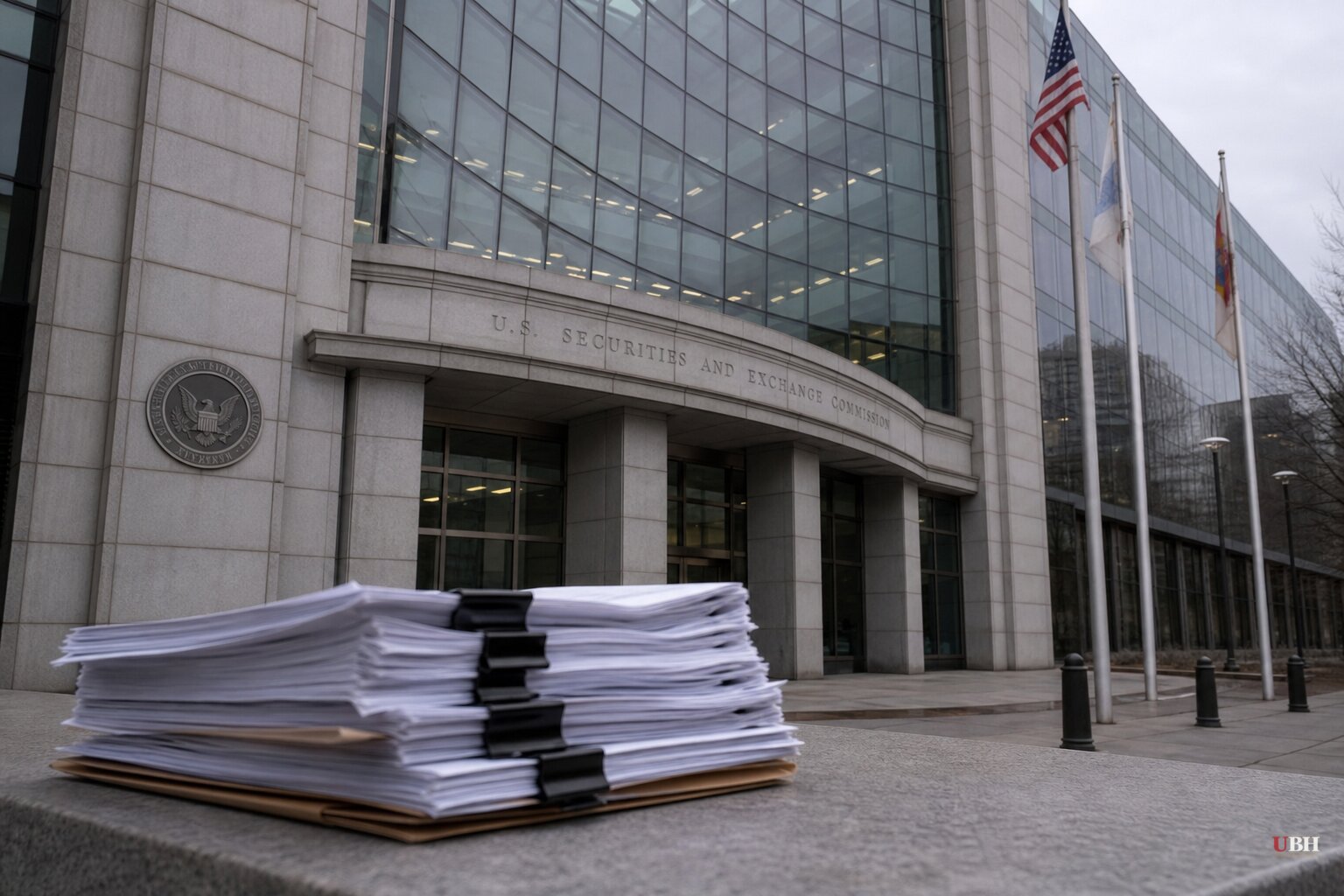
Since the House passed the CLARITY Act 294-134 on July 17, 2025, and the Senate Banking Committee advanced its own version 15-9 in May 2026, the bill has sat stuck through Congress's summer recess. Regulators are now moving to act without waiting for lawmakers.
On Monday, a bipartisan group of former Securities and Exchange Commission and Commodity Futures Trading Commission officials sent a comment letter to both agencies. Signers include former CFTC Chairman Chris Giancarlo, former CFTC Commissioners Brian Quintenz and Sharon Brown-Hruska, former SEC Commissioner Steven Wallman and former SEC Chief Economist Chester Spatt, according to Yahoo Finance and Decrypt.
The officials argue that similar risks deserve similar regulatory treatment, and stacking overlapping SEC and CFTC compliance rules on the same product just drives money overseas without reducing risk.
Kalshi, the prediction-market platform now offering crypto perpetual futures, retained law firm Bellementis PLLC to help draft the letter. The signers say they weren't paid and Kalshi had no say over the final content, per Decrypt.
The numbers behind the push are substantial. Kalshi estimates offshore perpetual futures trading topped $90 trillion in notional volume in 2025, up from roughly $28 trillion two years earlier. Nearly all of that trading happens on exchanges based outside the U.S., including Binance, Bybit and OKX, according to Crypto Briefing.
"The $90 trillion offshore perpetuals market isn't a mystery to solve, it's a market waiting for a sensible U.S. rulebook," Giancarlo told Crypto In America. "If we calibrate federal regulation to actual risk instead of maximum burden, that liquidity comes onshore. Every year we wait, it gets harder to bring to America."
Earlier this month, President Donald Trump said CFTC Chairman Michael Selig is working to bring offshore perps platform Hyperliquid into the U.S. Trump has also urged Congress to pass a "fair version" of the CLARITY Act, according to reporting cited by EdgeX Exchange.
Selig isn't waiting on Congress either. At the CFTC's Innovation Advisory Committee meeting on Aug. 20, he told staff to start drafting crypto market structure rules under the agency's existing authority. "If Clarity continues to stall because of Democrat obstruction, the CFTC will utilize its existing authorities to begin establishing a regime for crypto asset markets," Selig said, framing legislation as the better path but not the only one. He also referenced former SEC Chair Gary Gensler's crypto enforcement record, calling it a "rogue campaign of lawfare," a characterization that is Selig's own and not an independently adjudicated finding.
On the SEC side, the agency has sent a proposed rewrite of crypto custody rules to the White House Office of Information and Regulatory Affairs. The "Reg Crypto" proposal is now in the Federal Register with public comments open through Oct. 20, according to Chain Catcher and KuCoin.
Former SEC Chairs Tim Massad and Jay Clayton have separately urged both agencies to build coordinated standards for major tokens like Bitcoin and Ether without rewriting existing legal definitions, per Crypto Briefing. This shows the deregulation push extends beyond the five letter signatories.
The Case for Caution
A reasonable objection exists: perpetual futures are leveraged products with no expiration date, meaning losses can compound fast for retail traders who don't fully understand the mechanics. The Gensler-era SEC treated many of these crypto products as unregistered securities specifically over investor-protection concerns, even if Selig now calls that approach lawfare. None of the sources in this letter include a consumer-advocate or Democratic regulator on record pushing back on this specific proposal, which means the public record right now is dominated by industry and former officials who already favor lighter rules. Whether looser compliance costs actually improve investor protection, or just make it cheaper to offer leveraged products domestically, remains the open question Congress and the agencies haven't settled.
Enforcement Still Has Teeth
The push for lighter rules comes days after the CFTC showed it's still willing to swing hard. On Aug. 28, the agency ordered Gabriel Perez, a former White House teleprompter operator, to pay $172,539.02, including $107,539.02 in disgorged profits and a $65,000 penalty, for trading "presidential mention" event contracts using nonpublic advance knowledge of Trump's speeches between December 2025 and February 2026, according to the Epoch Times. Perez got a cooperation discount, agreed to a three-year trading ban, and no longer works for the federal government. The CFTC specifically thanked KalshiEX for helping build the case.
White House Press Secretary Karoline Leavitt called the episode "deeply unfortunate and frankly a disgrace," and confirmed Perez's departure came on the president's order, on unpaid administrative leave.
The two stories sit side by side: the same agency chasing bigger, freer markets for crypto derivatives is also the one that just fined a White House staffer for gaming a much smaller prediction-market contract. Congress returns from recess with the CLARITY Act still unresolved, the SEC's custody comment period running through Oct. 20, and Selig's staff already drafting rules the agency says it will use with or without a bill.
Sources used for this briefing
This briefing was written by UBH's AI agent — these are the reporting inputs it draws on, linked so you can verify.


