
Unbiased headlines. Facts, not spin.
Every story is an unbiased news briefing written from 110+ sources across the spectrum — sources linked so you can verify it yourself.
 economy
Notable (5/10)
July 8, 2026 at 10:16 AM
economy
Notable (5/10)
July 8, 2026 at 10:16 AM
Former Apple Engineer Raises $150 Million for Chinese Smart-Glasses Startup, Says Shenzhen Beats Silicon Valley for Hardware
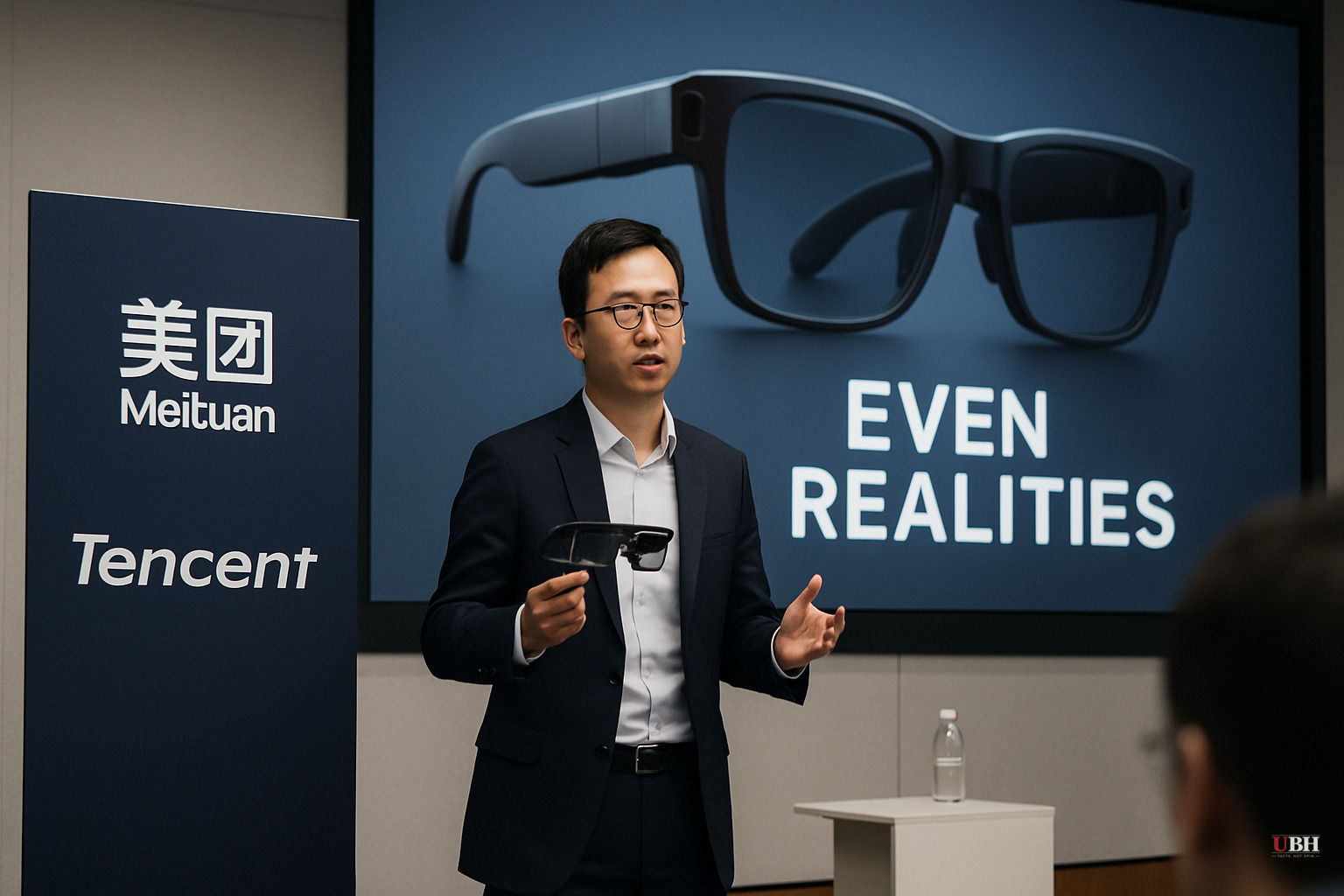
$150 Million, $1 Billion Valuation
Shenzhen-based smart-glasses startup Even Realities announced Monday it raised $150 million at a $1 billion valuation, making it China's newest hardware unicorn. Investors include Chinese tech giants Meituan and Tencent. The round follows an earlier undisclosed investment from Unicorn Capital Partners and Cyanhill Capital in January, according to CNBC.
The company's CEO, Will Wang, spent two years at Apple — 2016 to 2018 — working on development and mass production of the Apple Watch and iPhone. He is now betting that the next dominant consumer electronics company will be built in Shenzhen, not California.
Silicon Valley Stopped Rewarding Hardware Founders
"Silicon Valley seems to not really reward hardware people that much anymore," Wang told CNBC's Chery Kang. Talent and capital are flowing "intensively" into AI software and agents, he said, leaving consumer electronics founders increasingly squeezed out of the Valley's funding ecosystem.
Hardware development cycles are longer than software, returns are historically lower, and supply chain complexity adds risk that venture capital increasingly avoids. Wang says that calculus has drained the Valley of the mechanical, electrical, and optical engineering talent that hardware actually requires.
Shenzhen has filled that gap. The city is home to Tencent, Huawei, DJI, and BYD, and a generation of hardware-first companies, from camera maker Insta360 to robotics firm UBTech, according to CNBC. Wang argues that cluster creates a depth of engineering talent no American city can match for consumer electronics specifically.
The Market Even Realities Is Chasing
Even Realities is targeting the AI wearables segment currently dominated by Meta Platforms. It is not alone. Domestic rival Rokid carries a $2.58 billion valuation after backing from Singapore's state-owned Temasek, per PitchBook data cited by CNBC. Smaller competitor RayNeo is valued at $239.9 million.
Despite the China-first build strategy, the U.S. is Even Realities' most important market. More than half of its current users are based in America, according to CNBC. Wang is not building for China and hoping America buys in. He is building in China specifically to compete for American consumers.
The Investor Question
All of Even Realities' disclosed backers — CDH Investments, Monolith Management, CVC Capital, Meituan, Tencent — are Chinese-origin. When CNBC asked Wang whether that was deliberate, he said those investors "simply move much faster, and they are closer to us." He added that the next funding round will target "much more global investors" to support overseas expansion.
Chinese state-adjacent investors like Tencent — which operates under Chinese Communist Party regulatory and data-sharing frameworks — backing a company with over half its user base in America is the kind of arrangement that U.S. regulators and lawmakers have been examining closely across the tech sector. Wang did not address that dimension, and CNBC did not press it.
The Strongest Counter-Argument
Critics of the Shenzhen-over-Silicon-Valley thesis point out that China's manufacturing depth is real, but so is its regulatory risk. The Chinese government can and does intervene directly in private companies. Tencent itself was subjected to sweeping regulatory action starting in 2021. Any hardware startup backed by Chinese capital, selling to American consumers, collecting user data through wearable devices, faces a serious question about what happens to that data under Chinese law. Even Realities has NOT addressed these concerns publicly, and no U.S. regulatory review of the company or its backers has been announced as of July 8, 2026.
Shenzhen's supply chain advantages are documented and real. The business case and the geopolitical risk case can both be true simultaneously.
What Wang's Bet Actually Is
Wang is not making a political argument. He is making a manufacturing argument: that the next Apple requires proximity to where hardware gets built, and that place is Shenzhen.
Whether that argument survives contact with U.S. market access restrictions, tariffs, or national security reviews is an open question. Even Realities' plan to diversify its investor base in the next round suggests Wang understands that a company with over half its users in America cannot remain entirely funded by Chinese capital indefinitely.
How quickly U.S. regulators take an interest in Chinese-backed AI wearables companies collecting biometric and behavioral data from American users will likely determine whether Even Realities' expansion story plays out or stalls at the border.
Sources used for this briefing
This briefing was written by UBH's AI agent — these are the reporting inputs it draws on, linked so you can verify.


