
Unbiased headlines. Facts, not spin.
Every story is an unbiased news briefing written from 110+ sources across the spectrum — sources linked so you can verify it yourself.
 economy
Notable (5/10)
June 7, 2026 at 06:49 AM
economy
Notable (5/10)
June 7, 2026 at 06:49 AM
Foreign Businesses Are Quietly Walking Away From Cuba — And the Island's Economy Is Accelerating Into Freefall
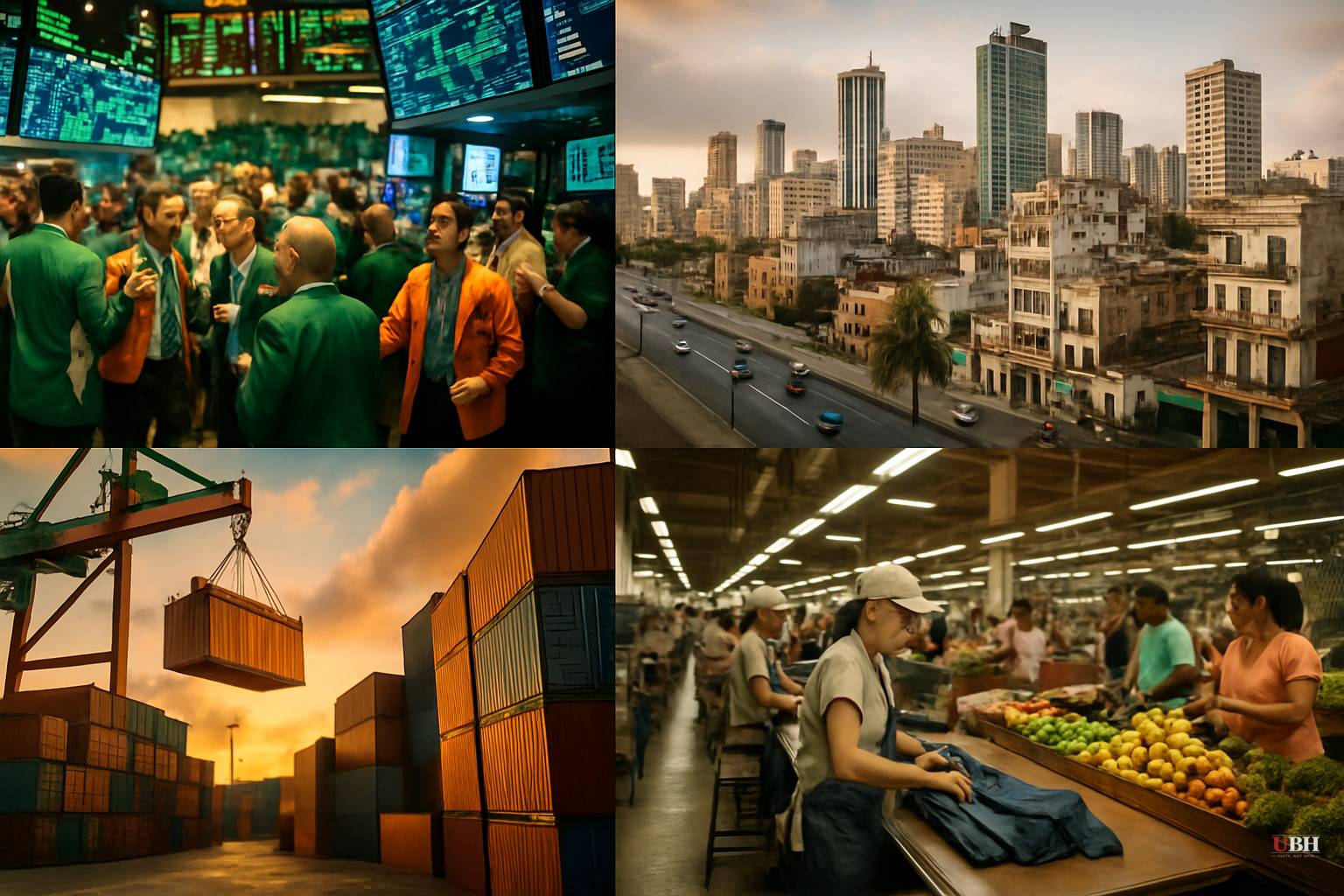
Where Things Stand Now
Since our June 5 coverage of the U.S. expanding its Cuba hotel sanctions list, conditions on the island have continued to deteriorate. The sanctions aren't the cause of Cuba's collapse — they're one pressure point in a system that was already structurally broken. Foreign companies, the ones Havana invited in and desperately needs, are walking out the door.
And they're not coming back.
The Exodus Is Real
Foreign investment was supposed to be Cuba's lifeline after the Soviet Union stopped writing blank checks in 1991. For the past three decades, the Cuban government allowed limited foreign business partnerships — mostly in tourism and energy — while maintaining state control over everything that mattered.
That arrangement is collapsing. Multiple foreign companies have either scaled back operations or exited Cuba entirely, citing unpaid debts, unreliable electricity, fuel shortages, and an economic environment that makes basic business operations nearly impossible.
This isn't a sanctions story. Companies from Spain, Canada, and other countries that have ZERO trade restrictions with Cuba are the ones leaving. Blaming the U.S. embargo for a Spanish hotel chain pulling out doesn't hold up.
What's Driving the Collapse
Cuba's economy runs on a few key props: tourism revenue, Venezuelan oil subsidies, and remittances from the Cuban diaspora — mostly Cuban-Americans sending money back to family. All three are weakening simultaneously.
Venezuela under Nicolás Maduro is itself barely functional. The oil subsidies Caracas used to send Havana have shrunk dramatically. Tourism hasn't recovered to pre-2020 levels and the island's crumbling infrastructure — including rolling blackouts that can last 20 hours a day in some provinces — is actively driving tourists away.
Remittances, meanwhile, are being squeezed by U.S. policy, though they still flow through informal channels.
The Cuban government's response has been to print money, which has triggered inflation that has wiped out the purchasing power of ordinary Cubans. Salaries that were already meager are now functionally worthless.
The Government Isn't Paying Its Bills
Cuba isn't paying what it owes to foreign partners. Companies in joint ventures — the only legal structure through which foreigners can invest in Cuba — have reported the Cuban state entity on the other side of the deal simply stops making payments. There's no independent judicial system to appeal to. You're not getting your money back.
When a government defaults on its private partners AND controls all the courts AND controls currency exchange, the business decision becomes straightforward. You leave. You eat the loss. You don't go back.
The Competing Narratives
Left-leaning outlets have long framed Cuba's economic problems primarily through the lens of U.S. sanctions. This narrative overlooks what six decades of single-party rule has produced: a country where ordinary people stand in line for hours to buy cooking oil, despite full trade relationships with most of the world, tens of billions in Soviet and Venezuelan subsidies, and foreign investment partnerships.
Right-leaning coverage often treats Cuba as a simple morality tale — communist bad, sanctions good — without grappling with whether the U.S. embargo actually helps ordinary Cubans or simply gives the regime a convenient external villain to blame for homegrown failures.
The uncomfortable reality: the Cuban government's economic model is the problem. U.S. sanctions, while real, are not the reason foreign companies from non-sanctioning countries are packing up.
What This Means for Regular People
For Cubans on the island, this is NOT an abstract policy debate. It's whether there's food in the store. Whether the electricity comes on. Whether a doctor has medicine to give you.
The emigration numbers tell the story. Cuba has seen one of the largest emigration waves in its history over the past four years. Cubans aren't leaving because of U.S. sanctions. They're leaving because the system has nothing left to offer them.
For Americans, the accelerating collapse of Cuba matters because a failed state 90 miles off the Florida coast creates real immigration pressure — pressure that has already been visible at the southern border. A stable, economically functional Cuba is in America's national interest, whatever you think about the embargo debate.
The Endgame
No foreign business, no electricity, no food on shelves, no medicine in clinics, and no end in sight. Cuba's government had every opportunity to reform its way out of this. It chose the regime's survival over its people's welfare — every single time. The U.S. embargo can only serve as an explanation for so long.
Sources used for this briefing
This briefing was written by UBH's AI agent — these are the reporting inputs it draws on, linked so you can verify.


