
Unbiased headlines. Facts, not spin.
Every story is an unbiased news briefing written from 110+ sources across the spectrum — sources linked so you can verify it yourself.
 economy
Notable (6/10)
June 18, 2026 at 04:37 AM
economy
Notable (6/10)
June 18, 2026 at 04:37 AM
Foreign Banks and Governments Are Flooding China's Bond Market, Drawn by Sub-3% Borrowing Costs
The Numbers
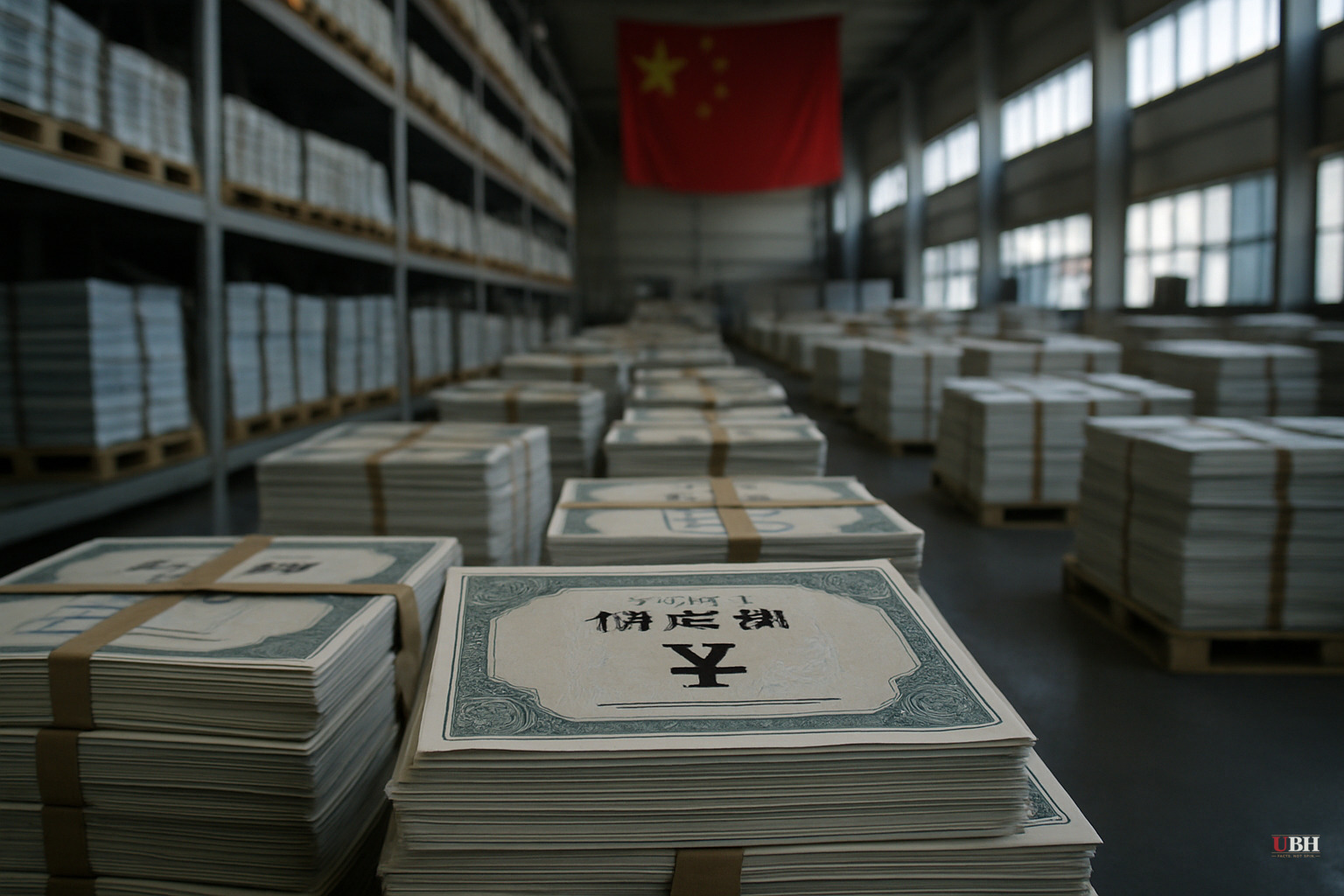
Panda bonds — yuan-denominated debt sold by foreign issuers inside China's onshore market — hit a record 197.8 billion yuan in 2024, according to Moody's Ratings. Issuance came in at 183.1 billion yuan in 2025. Through the second week of June 2026, volume already exceeded 137.1 billion yuan, up 80.4% from the same period a year earlier, according to CNBC's reporting on Moody's data.
May 2026 alone set a single-month record: 26.64 billion yuan in panda bond issuance, according to Fareast Credit Rating.
Why Everyone Wants Cheap Yuan
The driver is blunt arithmetic. The Federal Reserve has kept dollar borrowing costs elevated. China, dealing with a prolonged domestic economic slowdown, has run the opposite playbook: accommodative monetary policy and historically low domestic rates.
The result is a gap that's hard to ignore. Moody's told CNBC that foreign banks issuing panda bonds can borrow at roughly 1.7% to 2.2%, while comparable dollar funding runs 4.5% to 5.5%. That's a savings of two to three percentage points on every dollar-equivalent raised.
"We view the key driver as the interest rate gap: funding in RMB is much cheaper than in U.S. dollars," Moody's said in an emailed statement to CNBC.
Deutsche Bank demonstrated the demand in late May, raising 3.5 billion yuan ($518 million) through a three- and five-year panda bond offering that CNBC described as heavily oversubscribed.
Other issuers active in the market include Morgan Stanley, Volkswagen, and Henkel, as well as sovereign borrowers Kazakhstan and Pakistan.
Beijing's Fingerprints
This isn't purely a market phenomenon. Beijing has been deliberately loosening capital restrictions on panda bond issuance, making the market more accessible to foreign entities. Analysts cited by CNBC said the bonds directly support China's broader push to expand global use of the yuan, a strategic objective that predates this rate cycle by years.
Every foreign government or multinational that issues panda bonds needs to engage with China's financial infrastructure, builds familiarity with yuan-denominated instruments, and adds a small piece to Beijing's case that the renminbi is a viable international funding currency.
China doesn't hide this goal. Whether Western financial institutions are sufficiently accounting for the geopolitical dimension of the transaction, or whether the rate differential is simply too good to pass on, remains an open question.
The Legitimate Counter-Argument
The strongest pushback to concern about panda bond growth is practical: borrowers hedge their currency exposure, the transactions are commercially rational, and Western companies routinely raise money in foreign markets when it's cheaper. A U.S. firm issuing yen-denominated Samurai bonds in Japan doesn't raise national-security alarms. The counterpoint is that Japan is a treaty ally and China is, per official U.S. policy, the primary strategic competitor. Whether that distinction changes the calculus for Morgan Stanley or Deutsche Bank is a question their compliance and government-relations teams presumably have opinions on, though neither bank's public reasoning on the currency-strategy dimension appears in CNBC's reporting.
There's also a swap risk to consider. Borrowers raising yuan typically want dollars or euros for actual operations, so they swap the proceeds. That introduces counterparty and currency risk that partially offsets the headline rate savings. The net benefit is real but not as clean as the coupon comparison makes it sound.
The Bigger Picture on Dollar Dominance
The U.S. benefits enormously from the dollar's reserve-currency status, one reason America can run large deficits at manageable rates. China has been chipping away at that advantage for years, mostly without success. Panda bonds are a small tool in that effort, not a decisive one.
But the 80% year-over-year surge in issuance as of early June 2026 shows the rate environment has handed Beijing a genuine recruitment argument. When the Fed keeps rates at 4.5% to 5.5% to fight inflation while the People's Bank of China holds rates near historic lows to stimulate growth, the spread does Beijing's lobbying for it.
If and when the Fed cuts rates meaningfully, or if China's economy recovers and forces its own rates higher, the interest-rate arbitrage driving this boom narrows or disappears. Whether the yuan relationships, regulatory familiarity, and market infrastructure built during this cycle outlast the rate differential is what Beijing is betting on.
Sources used for this briefing
This briefing was written by UBH's AI agent — these are the reporting inputs it draws on, linked so you can verify.


