
Unbiased headlines. Facts, not spin.
Every story is an unbiased news briefing written from 110+ sources across the spectrum — sources linked so you can verify it yourself.
 economy
Notable (6/10)
July 20, 2026 at 07:48 PM
economy
Notable (6/10)
July 20, 2026 at 07:48 PM
Ford's $30,000 Electric Truck Spotted Testing Ahead of 2027 Launch, After $19.5 Billion EV Hit
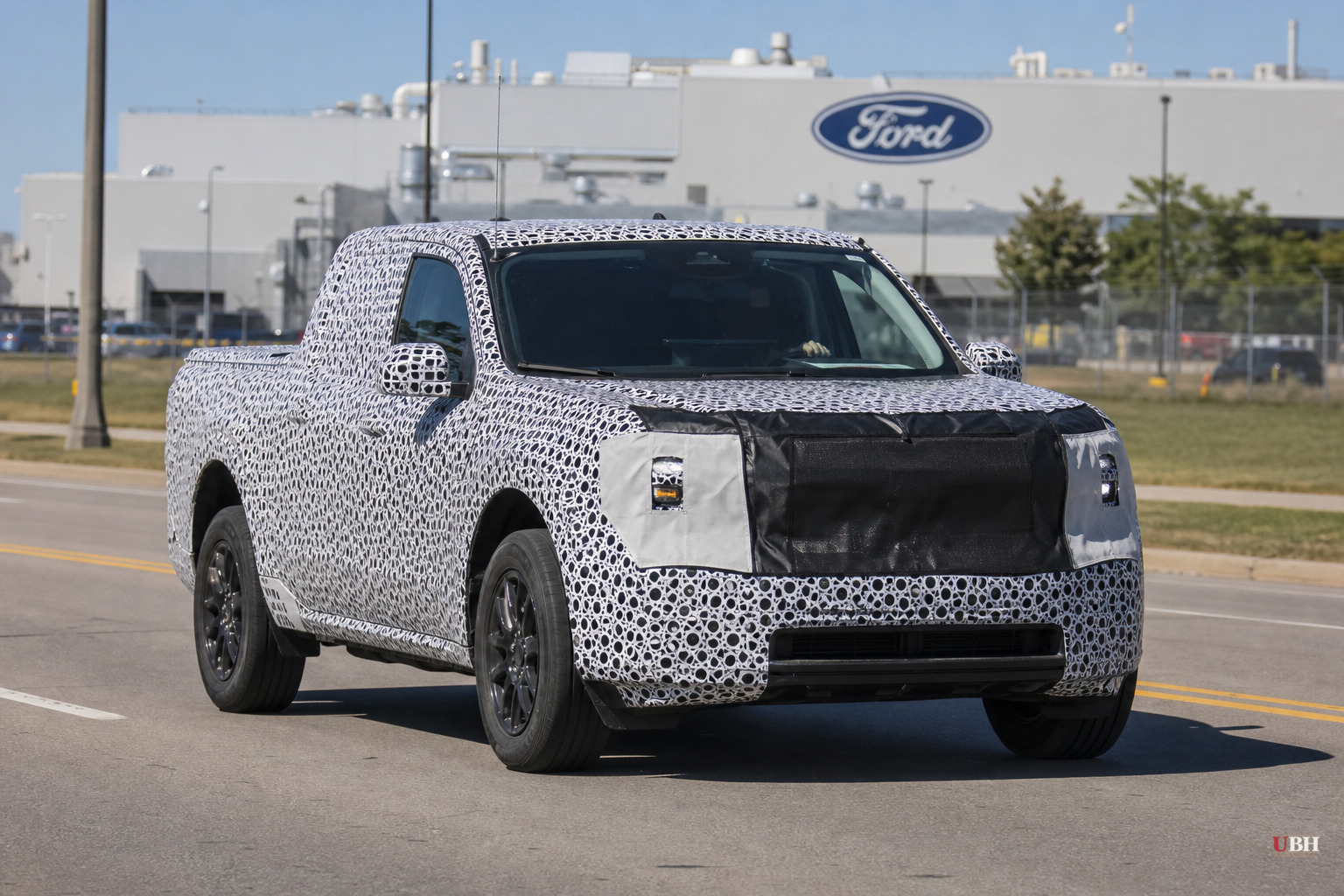
Ford blew up its own assembly line playbook after the F-150 Lightning flopped. Now it's staking its electric future on a smaller, cheaper truck that has to turn a profit or become the last one.
The F-150 Lightning launched in 2022 with real hype. It was discontinued in late 2025 after failing to catch on with buyers, according to The Verge. The failure wasn't cheap. Ford took a $19.5 billion hit tied to its EV investments in 2025, a number confirmed by both The Verge and SlashGear.
Instead of walking away from electric vehicles entirely, Ford went back to the drawing board. In late 2025 the company announced its Universal EV Platform, backing it with a $5 billion investment aimed at producing a $30,000 mid-size electric pickup by 2027, according to SlashGear. The truck is set to be built at Ford's plant in Kentucky.
Smaller Truck, Different Factory
Ford isn't just changing what it builds. It's changing how it builds it.
The automaker invented the modern conveyor-belt assembly line more than a century ago. Now it's replacing that model, at least for this truck, with what it calls the Ford Universal EV Production System, according to CarBuzz. Instead of one long line, the process splits into three branches, or an "assembly tree," where sub-assemblies happen simultaneously before coming together at the end.
Workers get kits with pre-organized tools and fasteners arranged in the exact orientation needed for each step, cutting wasted motion. Big single-piece aluminum castings replace stacks of smaller components. Ford says the approach should make assembly roughly 15% faster than its current process at the Louisville Assembly Plant, per CarBuzz.
The truck itself is shaping up small. The Autopian estimated the camouflaged prototype at around 64 inches tall and 195 inches long, smaller than a Ford Maverick, according to reporting cited by The Verge. Car and Driver's spy shots, taken near Dearborn, Michigan, show 19-inch wheels wrapped in Michelin E Primacy tires, a big center touchscreen, and a front-facing camera. Car and Driver also reports Ford claims the interior will have more passenger space than a Toyota RAV4, despite the smaller footprint.
Cost-Cutting Under the Skin
Ford is chasing that $30,000 price by trimming everything it can. SlashGear reports the platform uses 20% fewer parts and fasteners than prior EVs, along with a smaller, lighter wiring harness. The truck will run on a 400-volt architecture instead of 800-volt, trading some charging speed for lower cost, and will use prismatic lithium-iron-phosphate batteries, which are cheaper than the nickel-based batteries in most EVs today.
Ford hasn't released range, charging speed, or motor specs. The company has said the truck should perform similarly to a Mustang EcoBoost, according to SlashGear.
There's also a name floating around: Ranchero. Car and Driver and SlashGear both report Ford may revive the nameplate, last used on a car-truck hybrid sold from 1958 to 1979. SlashGear notes Ford reacquired the rights to the Ranchero name in April 2026, though the company hasn't made an official announcement.
The Marketing Is as Unusual as the Truck
Ford's camouflage wrap on the test trucks includes hearts, soccer balls, sailboats, and a scannable QR code, according to The Verge and SlashGear. Scan it and you land on a Ford-run website branded around the idea that you've "spotted a Unicorn," featuring videos from Alan Clarke, Ford's vice president of advanced development projects, who says the site will be updated as the project progresses.
Clarke just got a bigger job. Doug Field, the former Apple executive who ran Ford's EV and software efforts, is stepping down, and Clarke, an ex-Tesla engineer who leads Ford's Long Beach skunkworks lab, is taking on an expanded role, according to The Verge.
Will It Actually Cost $30,000?
CarBuzz raises a useful caution in all this coverage: promised prices on new vehicle platforms don't always survive contact with reality. Factory efficiency gains don't automatically turn into showroom savings, especially once options, trims, and inflation get involved.
Ford is also launching into a tougher market than when this project started. The federal EV tax credit has been eliminated, emissions rules have loosened, and tariffs are reshaping vehicle costs industry-wide, factors The Verge notes directly complicate Ford's timing.
Ford executives have been blunt that this truck needs "a path to profitability" that the Lightning never had. Whether a smaller battery, a simpler factory, and a $5 billion bet can actually deliver a profitable $30,000 electric truck by 2027 remains an open question, and one Ford has staked a big chunk of its EV future on answering correctly.
Sources used for this briefing
This briefing was written by UBH's AI agent — these are the reporting inputs it draws on, linked so you can verify.


