
Unbiased headlines. Facts, not spin.
Every story is an unbiased news briefing written from 110+ sources across the spectrum — sources linked so you can verify it yourself.
 economy
Major Story (7/10)
September 19, 2026 at 10:51 PM
economy
Major Story (7/10)
September 19, 2026 at 10:51 PM
FOIA Documents Show Trump's Pfizer and Eli Lilly Drug Deals Included Tariff Shields and Overseas Price Hike Incentives
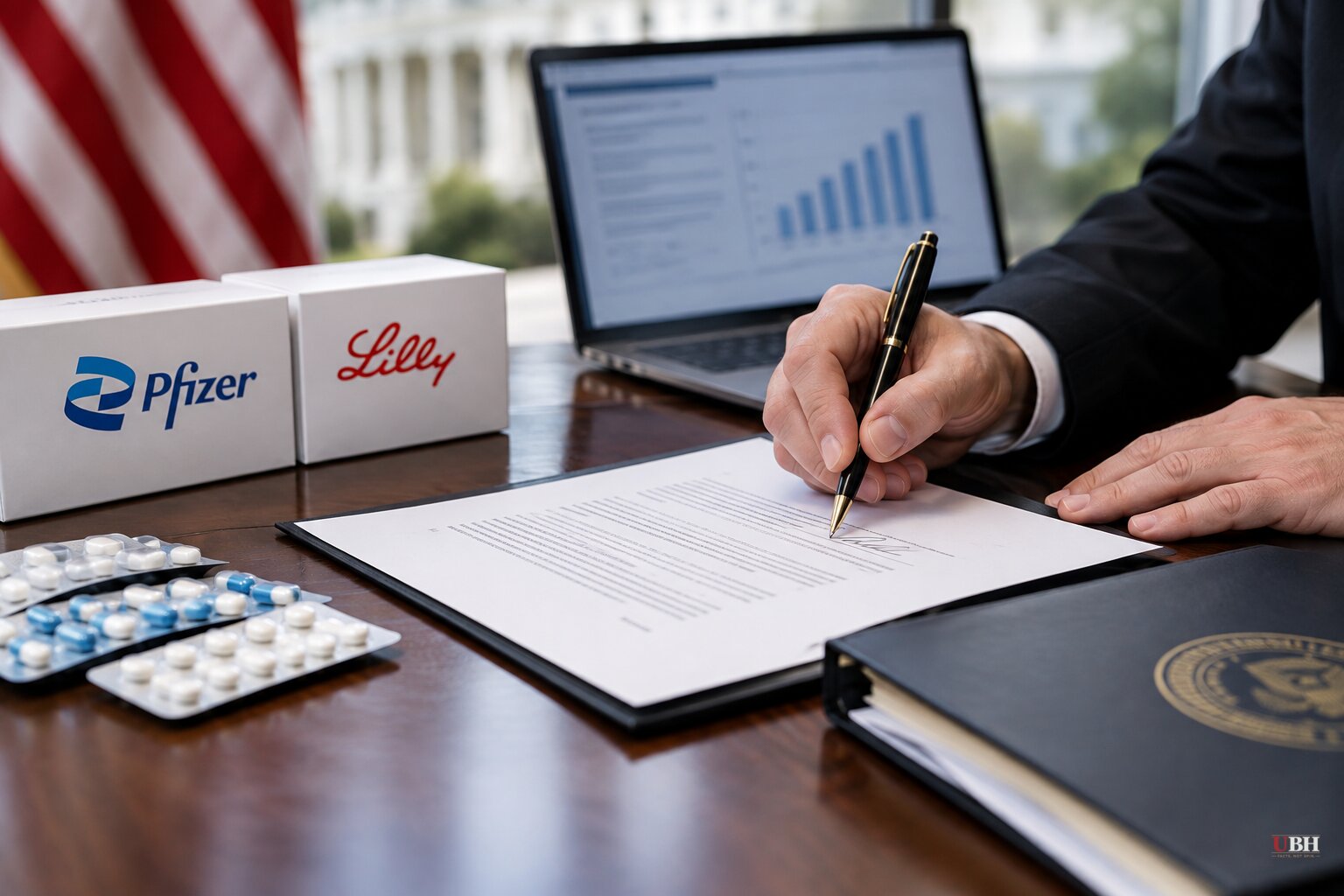
Since Trump signed his Most Favored Nation executive order last year and built out a string of pharmaceutical agreements that culminated Friday, September 18, in all 50 states joining the Medicaid "GENEROUS" pricing model, the actual contract language behind two of his earliest and most-touted deals has now surfaced.
Documents obtained through a Freedom of Information Act lawsuit and shared with The Washington Post show the administration's agreements with Pfizer and Eli Lilly contained terms that were never disclosed when Trump announced them at the White House last year. Both companies had agreed to voluntarily cut some U.S. prices after negotiating with HHS officials.
What The Contracts Actually Say
According to The Washington Post, the documents include administration promises to shield Pfizer and Eli Lilly from some of Trump's own tariffs and inducements meant to encourage the companies to raise prices in other countries. The report also found that key terms in the agreements were still unresolved even as company executives stood alongside Trump promoting the deals as done.
The contracts include undisclosed provisions on how HHS would resolve disputes with Pfizer. In the Pfizer agreement specifically, HHS pledged to "treat all Confidential Information as exempt from release under FOIA" and to limit access to the terms to government personnel needed to carry them out, per the documents cited by The Washington Post.
Both agreements run through January 20, 2029, tying the deals to the full remainder of Trump's term and beyond his signature midterm affordability message.
Public Citizen's Fight
Public Citizen sued for the records and told The Washington Post the heavy redactions make it impossible for outside groups to judge whether the deals actually save taxpayers or patients money. The group is separately challenging the administration's redactions in court, according to its own Freedom of Information Act findings posted on citizen.org.
If the public can't see the pricing terms, dispute-resolution triggers, or expiration conditions, nobody outside the administration and the companies can verify the savings numbers the White House is citing. That's a legitimate transparency question.
The Administration's Defense
The administration, along with Pfizer and Eli Lilly, told The Washington Post the deals did lower some U.S. prices and that partial confidentiality is necessary to protect commercially sensitive information and to preserve leverage in ongoing negotiations with other drugmakers.
White House spokesman Kush Desai made a similar argument regarding a separate but related dispute over the 50-state Medicaid rollout, pointing to drug deals negotiated under the Biden administration's Inflation Reduction Act that also withheld commercially sensitive terms. Desai said critics "poking holes" at Trump for the same practice should be regarded skeptically. Redacting commercially sensitive contract terms isn't unique to this White House.
One Report, Many Outlets
The FOIA revelation reported by The Washington Post is the original source behind nearly every outlet now covering it, including Political Wire, Joe.My.God, and aggregation sites like Ground News and Zetik. Joe.My.God tagged its post "Trump Lies" and "Trump corruption," framing language The Washington Post's own reporting does not use. No charges, investigation, or legal finding of corruption has been announced regarding these contracts. What's established is a transparency dispute now headed to court, not a proven fraud.
What's Still Unresolved
The scale of the broader MFN push is real and separately documented. Trump has now struck 26 Most Favored Nation deals since last fall, according to the White House and reported by Breitbart, covering roughly 90 percent of the branded U.S. drug market, with companies pledging a collective $19.6 billion in U.S. manufacturing investment. Friday's 50-state Medicaid announcement builds on that foundation.
But the specific dollar savings claimed for the Pfizer and Eli Lilly deals, and for the broader Medicaid model, remain unverifiable from public documents. Public Citizen's court challenge over the redactions is the next concrete step to watch. If a judge orders the unredacted terms released, taxpayers and state Medicaid directors will finally get to check the administration's math against the actual contracts, rather than the White House's own summary of them.
Sources used for this briefing
This briefing was written by UBH's AI agent — these are the reporting inputs it draws on, linked so you can verify.


