
Unbiased headlines. Facts, not spin.
Every story is an unbiased news briefing written from 110+ sources across the spectrum — sources linked so you can verify it yourself.
 economy
Low Interest (4/10)
July 13, 2026 at 03:19 AM
economy
Low Interest (4/10)
July 13, 2026 at 03:19 AM
Florida and South Carolina Tied for Fastest State GDP Growth in 2025, BEA Data Shows
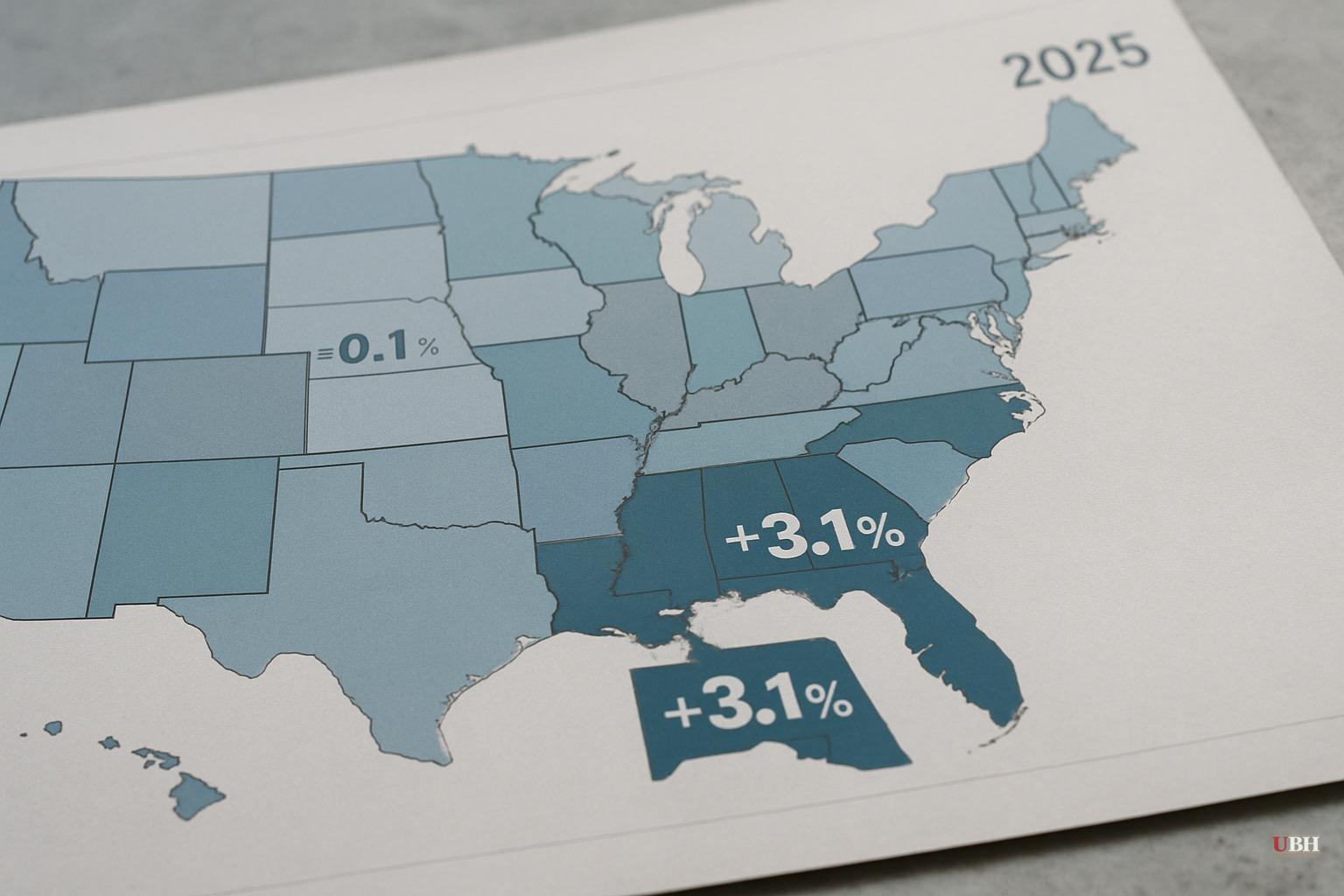
The U.S. economy grew 2.1% in real, inflation-adjusted terms in 2025, according to the U.S. Bureau of Economic Analysis. Every single state grew that year. But the gap between the fastest and slowest states was enormous, according to data compiled by Visual Capitalist's Gabriel Cohen.
Florida and South Carolina tied for the top spot, each growing 3.1%. North Carolina came in at 2.7%, Texas at 2.5%, and Arkansas at 2.2%. All five beat the national average.
The Sun Belt Case
The Southeast and Southwest regions averaged 2.3% growth in 2025, outpacing the country as a whole. Two-thirds of America's fastest-growing cities are in the Sun Belt, concentrated heavily in Florida and Texas.
There's a plausible economic story here, and it's not a new one. States like Florida and Texas have no state income tax. South Carolina and North Carolina have aggressively courted manufacturing and logistics investment with lower corporate tax rates. Housing, while getting more expensive, is still generally cheaper than in coastal metros. People have been moving there for years, and people moving somewhere tend to bring jobs, spending, and construction with them.
That's a real, measurable pattern, and it lines up with what business-tax advocates have argued for over a decade: lower the cost of doing business, and investment follows.
California and New York Didn't Collapse
California, the largest state economy in the country, grew 2.5% in 2025, beating Texas's growth rate and well above the national average. New York grew 2.9%, the third-highest in the nation, trailing only Florida and South Carolina.
This happened despite what the data describes as record domestic migration outflows from California. People are leaving the state in large numbers, yet its economy still grew faster than the U.S. average. That growth was powered by heavy private investment in technology, healthcare, finance, and professional services, according to the BEA-based analysis.
Anyone arguing that high-tax, high-regulation states are simply falling apart economically has to explain why New York and California outgrew the national average in the same year record numbers of residents packed up and left. The honest answer is that GDP growth measures total output, not population, cost of living, or quality of life for the people still there. A shrinking population with a booming finance and tech sector can still post strong growth numbers. Using GDP growth alone to judge whether a state's policies are "working" for its residents has real limitations.
The Weak End of the List
North Dakota posted the slowest growth in the country in 2025 at just 0.3%, according to the BEA data. That's a state with no state income tax and a business-friendly regulatory environment, which is a useful reminder that tax policy is not the only variable driving state GDP. Commodity-dependent economies like North Dakota's, tied heavily to oil and agriculture, move with global prices and demand more than with local tax codes.
Looking Forward
This is one year of data. GDP growth rates say nothing about a state's total debt, housing affordability, crime rates, or whether the average resident is actually better off. Florida's 3.1% growth doesn't cancel out its rising insurance costs and homeowner premiums, an issue Florida residents have raised repeatedly with state regulators. California's 2.5% growth doesn't erase the outmigration numbers or the state's persistent housing shortage.
What the BEA numbers do establish is that the Sun Belt states benefiting from population growth and lower business costs are currently outperforming the national average, and that traditional high-cost, high-tax economic powerhouses like California and New York have not been knocked out of the growth picture despite years of predictions that they would be. Both things are true. The next test comes when the BEA releases 2026 state-level growth figures, which will show whether the Sun Belt's lead widens, narrows, or reverses as migration patterns and interest rates shift.
Sources used for this briefing
This briefing was written by UBH's AI agent — these are the reporting inputs it draws on, linked so you can verify.


