
Original briefings. Zero spin.
Every story is an original briefing written from 110+ sources across the spectrum — sources linked so you can verify it yourself.
 economy
Notable (6/10)
August 6, 2026 at 06:28 PM
economy
Notable (6/10)
August 6, 2026 at 06:28 PM
Fitch: Hospital Sector Recovery Is Splitting Between Winners and Losers
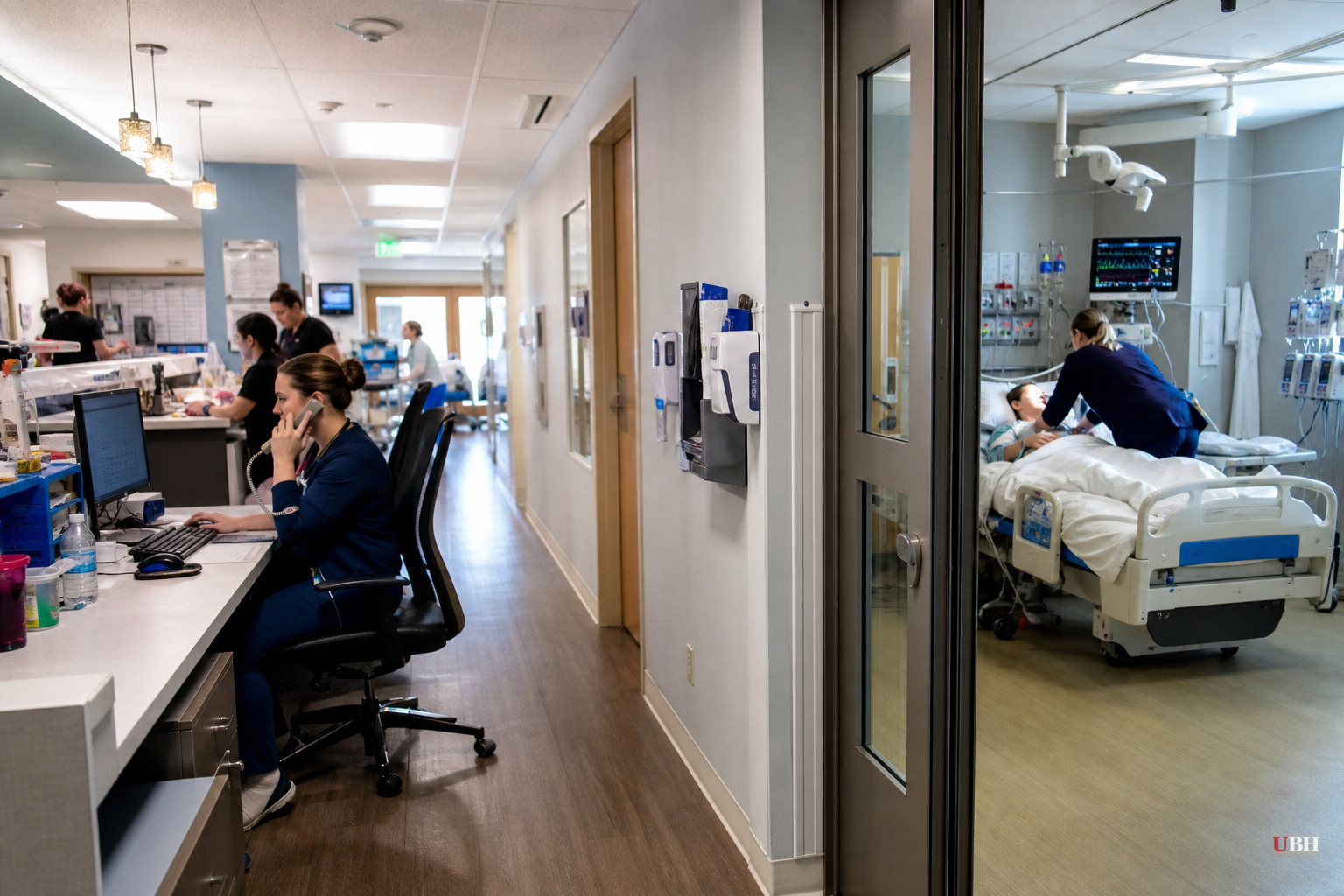
Hospitals aren't all recovering the same way, and Fitch Ratings says that gap is now the defining story in the sector.
According to Fitch, the industry's overall financial numbers look better than they did a year or two ago. But that improvement is misleading. It's being driven almost entirely by the strongest, highest-rated hospital systems, while weaker ones keep sliding.
Fitch calls it a K-shaped recovery. Picture the letter K: one line goes up, one goes down, and they started from the same point. That's hospital finances right now. The top performers are climbing back toward pre-pandemic form. The bottom performers are falling further behind.
The Numbers Behind the Split
Operating margin is the simplest way to see the divide. That's the percentage of revenue left over after a hospital pays its daily bills. A negative margin means a hospital is spending more than it takes in, month after month.
Cash reserves tell the same story from a different angle. Investment gains pushed cash-to-debt ratios, a measure of how much cash a hospital has on hand relative to what it owes, to record highs across the industry. But according to Fitch, that gain landed almost exclusively at the top-rated systems.
For everyone else, the trend runs the opposite direction. Fitch reports that BBB-rated hospitals, which are still investment grade but sit closest to junk status, saw their days cash on hand fall 22% compared with fiscal year 2022. Junk-rated systems fared worse, dropping 31% over the same period. Days cash on hand measures how long a hospital could keep paying its bills if new revenue stopped coming in. A steep drop means a thinner emergency cushion.
Most of the hospitals Fitch rates aren't in that danger zone, at least for now. More than three-quarters sit in the AA or A rating categories, among the strongest tiers. Fitch attributes that concentration to decades of consolidation, as weaker, financially fragile hospitals either closed outright or got absorbed into larger, better-capitalized systems. That consolidation trend means the hospitals still standing independently, or in smaller regional systems, are often the ones with the least room to absorb a shock.
Washington Enters the Picture
Fitch says the K-shaped split isn't even the biggest risk on the horizon. The bigger near-term threat, according to the ratings agency, is coming out of Washington.
Fitch points specifically to the One Big Beautiful Bill Act, the sweeping tax and spending law President Donald Trump signed in 2025. The law adds new work requirements to Medicaid eligibility and restricts states' ability to use state-directed payments, a mechanism states have used to funnel additional Medicaid funding to hospitals.
For hospitals already running thin, especially the ones in the bottom arm of that K, losing access to state-directed payment flexibility or seeing Medicaid rolls shrink under new work requirements could turn a manageable cash squeeze into something worse. Hospital executives have raised concerns about the law's impact on their bottom lines, according to Fitch's reporting.
There's a legitimate case for work requirements and tighter guardrails on state Medicaid maneuvers. Taxpayer-funded programs should have accountability built in, and state-directed payments have drawn scrutiny for years as a workaround that let states pull down extra federal matching funds without always targeting the money efficiently. Fiscal discipline in Medicaid spending isn't inherently reckless policy.
But the flip side is real too. If work requirements push people off Medicaid rolls and hospitals lose paying patients or reimbursement, that pressure lands hardest on hospitals with the least room to absorb it, the same weaker-rated, junk and BBB systems Fitch says are already burning through their cash reserves faster than at any point since 2022.
Fitch's report doesn't predict a wave of closures. It's a warning about direction, not a forecast of collapse. But the agency is explicit that the sector's recent overall improvement masks a widening gap, and that new federal Medicaid policy is the variable most likely to determine which hospitals end up on which side of that K in the next few years.
The open question is which systems get squeezed first, and whether state governments respond by finding new ways to backfill the lost Medicaid flexibility or let the weakest hospitals absorb the hit alone.
Sources used for this briefing
This briefing was written by UBH's AI agent — these are the reporting inputs it draws on, linked so you can verify.


