
Unbiased headlines. Facts, not spin.
Unbiased Headlines is an independently owned news organization. We bring you the facts, not opinions, written fresh from 110+ named sources. Sources linked so you can verify it yourself.
 finance
Notable (6/10)
Event date: October 30, 2026 ·
FinCEN Flags $8 Billion in Suspicious Foreign-Directed Wire Payments From 2021 to 2025, Says Reports Are Leads, Not Proof
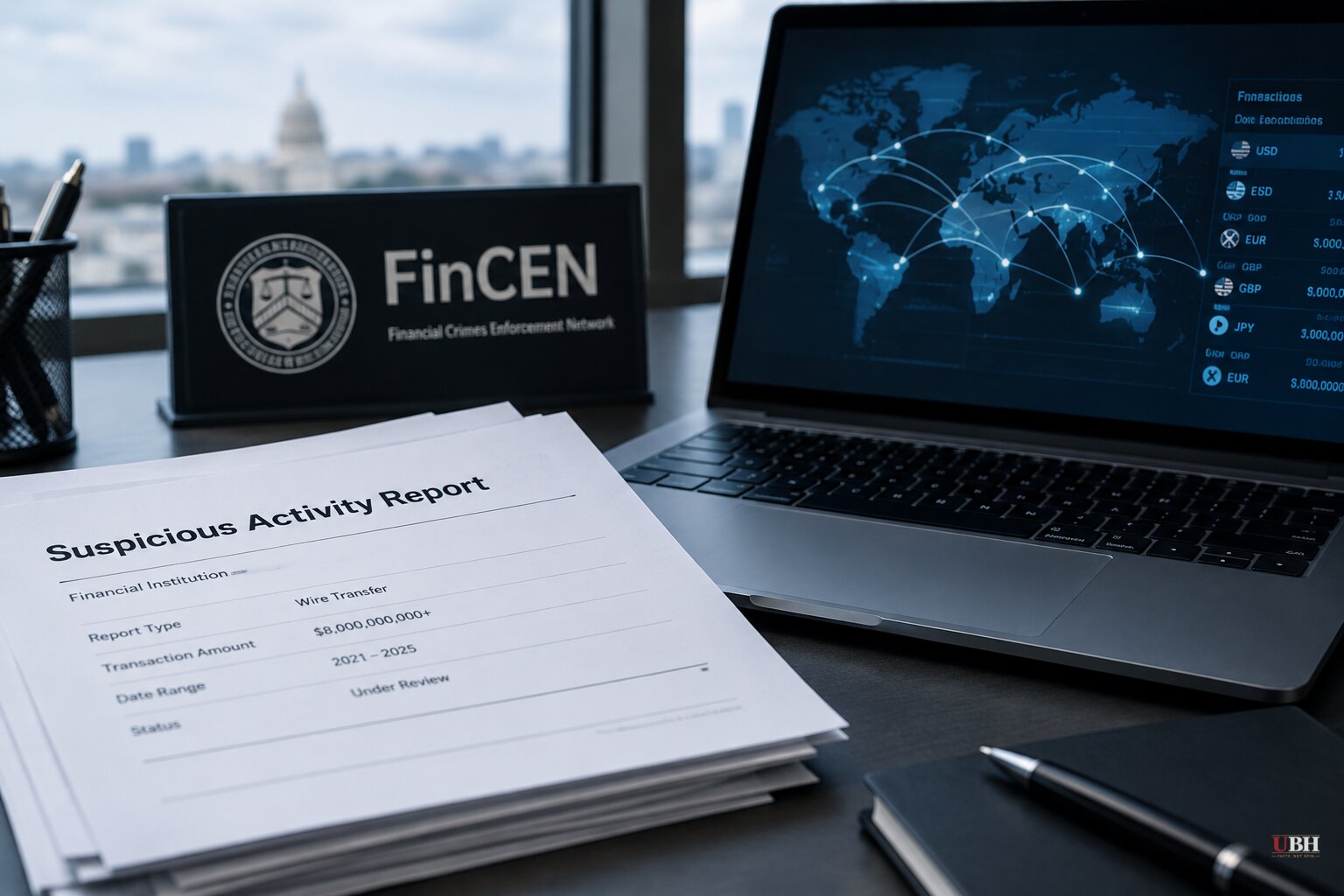
Seven months after the White House Task Force to Eliminate Fraud launched, Treasury Secretary Scott Bessent took the administration's anti-fraud push to St. Cloud, Minnesota, on Friday, Oct. 30. He came with a new federal alert and a long list of numbers.
The headline figure: more than $8 billion in potentially suspicious wire payments, sent through U.S.-based money services businesses at the direction of foreign agents, between 2021 and 2025. Treasury's Financial Crimes Enforcement Network, or FinCEN, put the number in an alert to financial institutions.
What the FinCEN alert says
The alert describes a specific setup. An overseas commercial agent instructs a U.S.-based money transmitter to pay a business in a third country, often described as the agent's supplier or business partner. Banks that handle those payments may know little about the overseas agent, the final recipient or the underlying deal.
FinCEN warned that criminals can exploit that gap to hide who ultimately gets the money and why. It also said such arrangements could be used for terrorist financing.
The term "foreign agents" here does not mean spies or foreign government operatives. It refers to overseas businesses that pay out transfers on behalf of U.S. money transmitters.
FinCEN was explicit about the limits of the figure. Suspicious activity reports are investigative leads and do not, by themselves, establish criminal wrongdoing. Many flagged transactions turn out to be legitimate. The $8 billion is not a fraud total and not money recovered.
The alert tells money transmitters to run risk-based due diligence on their foreign agents and partners, investigate payments with unclear business purposes, and end relationships that fail to comply. Banks are told to scrutinize payments that are unsupported, repetitive, in round-dollar amounts or inconsistent with a customer's business.
A separate notice on charities
FinCEN also issued a notice on nonprofits. It names three broad forms of abuse: sham charities set up for illicit purposes, fraudulent fundraising for personal gain, and embezzlement by insiders. In embezzlement cases, the charity itself can be the victim.
The notice says information on donors, funding sources, fundraising methods and affiliations could help banks assess risk. It also states that the Bank Secrecy Act does not require institutions to collect those specific details from nonprofit customers. FinCEN and federal bank regulators had earlier issued a joint fact sheet on charities in November 2020.
The administration's numbers
Bessent said the administration has uncovered more than $260 billion in fraud, prevented $72 billion and brought enforcement actions against nearly $60 billion since January 2025. Those are the administration's own figures, announced at the event.
He said Treasury has stopped nearly $190 million in funds tied to overseas fraud and returned more than $100 million to U.S. victims. "When greed meets negligence, the American people suffer," Bessent said in a statement.
On Minnesota, Bessent said FinCEN data have supported law enforcement efforts that produced 115 people charged, 75 convictions and nearly 3,000 subpoenas. He said FinCEN had earlier issued a geographic targeting order to trace networks diverting funds overseas, and cited Somalia-based Al Shabaab as a concern. "We have ongoing investigations at home and abroad into Al Shabaab, its networks, and its enablers," he said.
He also said IRS Criminal Investigation helped with investigative activity at several suspected fraud sites on Thursday, Oct. 29. Bessent criticized Minnesota Gov. Tim Walz over the state's fraud problems at the event.
"The days of indifference are over ... wherever the money leads, the full weight of government will follow," Bessent said.
Search warrants and a pending indictment
Bessent was joined by FBI Director Kash Patel, Centers for Medicare & Medicaid Services Administrator Dr. Mehmet Oz, Federal Trade Commission Chairman Andrew Ferguson and Assistant Attorney General Colin McDonald of the National Fraud Enforcement Division.
Patel said FBI Minneapolis and other agencies executed 17 search warrants. "This FBI follows the money," he said, adding that the bureau would put in prison anyone who commits fraud against Americans anywhere in the world. Fox News reported that prosecutors are building out a large-scale indictment.
The event came in the same week Salim Said, a co-conspirator in the Feeding Our Future case, was sentenced to 30 years in federal prison. He was convicted on 21 counts in a $49 million child nutrition scheme.
What is still open
The $8 billion figure covers five years, spans administrations, and rests on reports filed by banks and money transmitters, not on findings by prosecutors. FinCEN has not said how much of it, if any, will become criminal cases. The Treasury alert also does not say how much of the amount involves Minnesota.
The practical effect lands on compliance departments. Money transmitters now face a federal alert telling them to vet overseas payout partners and cut off those that fall short. Whether the promised Minnesota indictment arrives, and who it names, will show how much of this push turns into charges.
Sources used for this briefing
7 links from 7 independent newsrooms (syndicated copies of the same report count once)
These are the sources it draws on, linked so you can verify.


