
Unbiased headlines. Facts, not spin.
Unbiased Headlines is an independently owned news organization. We bring you the facts, not opinions, written fresh from 110+ named sources. Sources linked so you can verify it yourself.
 finance
Major Story (8/10)
Treasury Set to Update Debt-Sale Guidance Wednesday, With Long-Bond Cuts Expected by Some Dealers
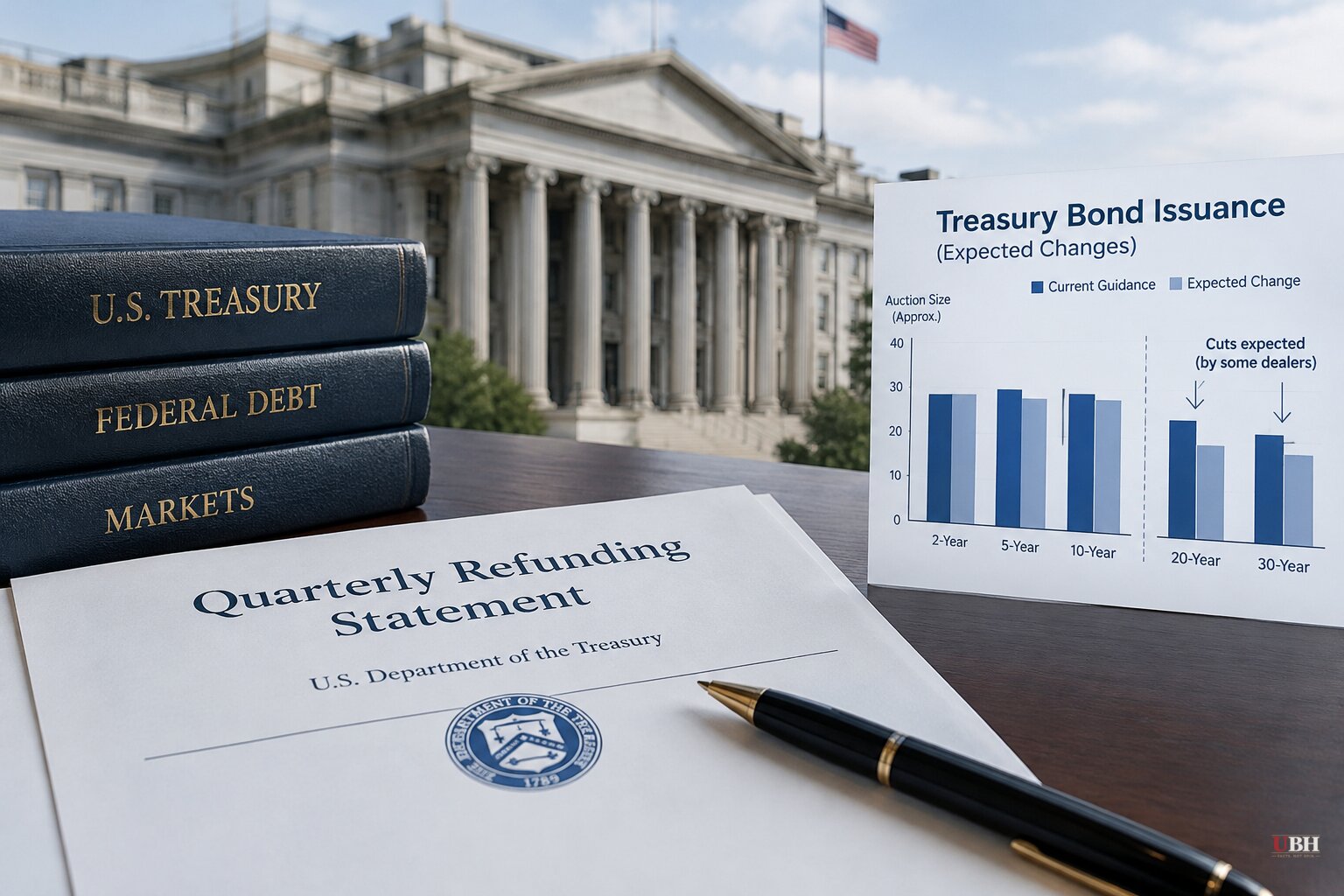
The Treasury Department is scheduled to release its quarterly refunding statement on Wednesday, Nov. 4. Wall Street is bracing for the biggest change in issuance guidance since early 2024.
For more than two years, the statement has said note and bond auction sizes would stay steady. Many dealers now expect that language to change. A shift could open the door to cuts in 2027 to sales of the longest-dated debt, offset by larger auctions of bills and shorter-term notes.
The backdrop is Treasury Secretary Scott Bessent's willingness, in recent months, to intervene in the bond market to bring yields down. In mid-August, a week after the previous refunding plan came out, he expanded Treasury buybacks. Markets read that as a response to surging yields.
Where yields stand
The benchmark 10-year note hit 5.31% in early October, a 24-year high. It had fallen back to 5.14% by Oct. 19 and briefly traded as low as 5.04% the week before, on jitters over the artificial-intelligence trade. The 30-year yield was still above 5.30% on Friday, close to its mid-August levels.
Demand for long-dated Treasurys has been spotty, according to MarketWatch's reporting on the market. Higher yields on those bonds push up borrowing costs for the government, households and families across a $32 trillion market.
What dealers expect
Forecasts are split, and that disagreement is what traders will be watching going into Wednesday.
Citigroup strategists led by Jason Williams expect the refunding to cut 20-year and 30-year auctions by $3 billion each. That would put the new auction sizes at $13 billion and $22 billion. In a Friday client note, Citi pointed to the "pronounced selloff in long-end yields since the last refunding announcement." The bank expects the reductions to begin this month, which would run against the guidance in the last statement.
JPMorgan and Barclays disagree on whether the guidance language will change at all. UBS expects actual issuance sizes to stay unchanged until May next year.
Gennadiy Goldberg, head of U.S. rates strategy at TD Securities, said, "We do think cuts are the way to go." He also warned that any reduction to long-dated supply might not arrive for a quarter or two.
Ed Al-Hussainy, a portfolio manager at Columbia Threadneedle Investments, said, "I think the Treasury is cooking up something for the November refunding, whether it's something with respect to auction sizes or, more likely, some kind of guidance for these auction sizes next year."
A primary dealer questionnaire last month left room for interpretation. Yields rose afterward as hopes for a clear signal faded, according to MarketWatch.
The bill problem
Leaning harder on short-term debt has a cost. Treasury bills already make up about 22% of outstanding debt, above the 20% long-term average the Treasury Borrowing Advisory Committee recommends. Bills must be refinanced far more often than bonds, so more of them means more exposure to whatever rates are at the time of each rollover.
Another sign of how much the government is turning over: this week's auctions totaled a record $839 billion across 11 sales of bills, floating-rate notes, and two-, five- and seven-year notes. That edged past the $834 billion mark from the same week last year. Only $106 billion was new cash. Most of the rest retired maturing bills.
Tony Farren, a managing director at Mischler Financial Group, said, "Nothing good is coming from Treasury gross weekly issuance at a record high." He added, "The No. 1 risk is that people are going to demand higher yields."
Skepticism about the tools
Not everyone thinks the tools on the table will move the market. April LaRusse, head of the investment specialists team at Insight Investment, said the buyback sizes are too small to change direction. "If you're running the U.S. Treasury and your primary tool is issuance, then when you don't like where yields are, you adjust issuance," she said.
The Treasury also faces questions on buybacks. Markets are watching for new guidance on the program. Citi's call for cuts to begin this month would amount to a reversal of the prior statement.
The refunding statement covers Treasury's issuance plans from November through the end of 2027. The Treasury has not said what it will announce. Wednesday's document will show whether guidance changes now, as Citi expects, or whether the debate shifts to the next refunding in 2027, as UBS's May timeline implies.
Sources used for this briefing
6 links from 5 independent newsrooms (syndicated copies of the same report count once)
These are the sources it draws on, linked so you can verify.


