
Unbiased headlines. Facts, not spin.
Unbiased Headlines is an independently owned news organization. We bring you the facts, not opinions, written fresh from 110+ named sources. Sources linked so you can verify it yourself.
 finance
Major Story (7/10)
Event date: July 26, 2026 ·
Nvidia's Supply Commitments Hit $279 Billion, Up From $119 Billion in One Quarter, Ahead of November Earnings
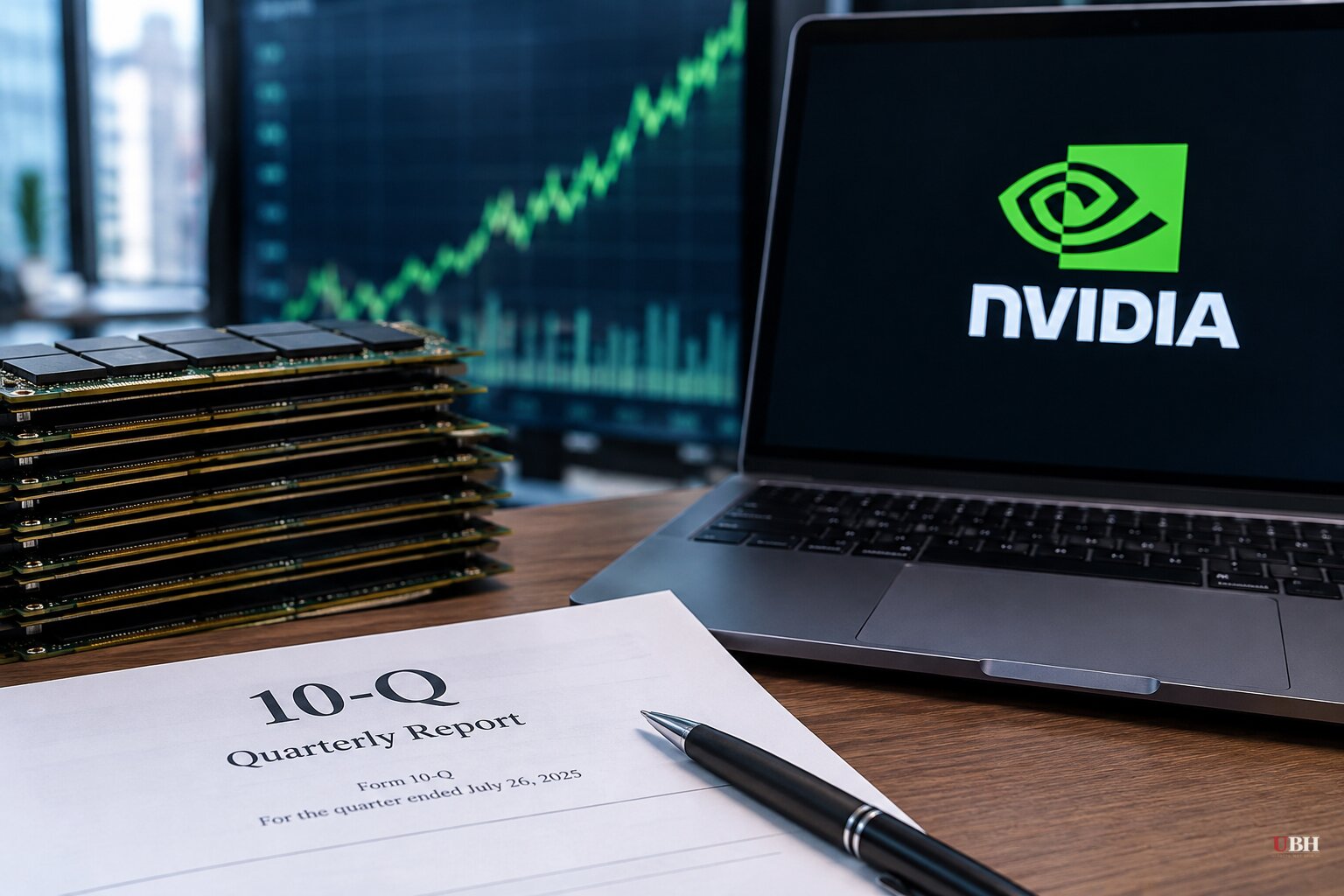
Nvidia has never owned a factory. It now has $279 billion in signed obligations to the companies that run them.
The chipmaker's quarterly filing for the period ended July 26, 2026 says its supply and capacity commitments rose "from $119 billion last quarter to $279 billion as of July 26, 2026 to meet future demand." That is a $160 billion jump in three months. The filing describes the commitments as primarily memory and manufacturing facilities.
For scale, Nvidia guided to $108 billion in revenue for its entire fiscal third quarter. The commitments are more than two and a half times that figure.
What the filing says about flexibility
Not all of the $279 billion is locked in. The filing says some agreements can be cancelled, rescheduled or changed before firm orders are placed, sometimes at extra cost.
The same document carries a warning. If demand differs from Nvidia's plans, "we may be unable to reduce these commitments."
On Oct. 21, several suppliers announced expansion tied to Nvidia. Nvidia is advancing $1.1 billion to chip-testing firm KYEC. Board maker IBIDEN is getting a "multibillion-dollar" advance under an agreement it announced earlier this year, with no exact figure given. SPIL said it is aiming for 15 times its optical engine capacity. The filing does not say whether those advances sit inside the $279 billion.
The numbers going into the print
Nvidia has not posted a date for its fiscal Q3 2027 report on its investor events page as of Oct. 22. Third-party calendars, including Wall Street Horizon, list Nov. 17-18. The results have not been released.
Nvidia's guidance, issued Aug. 26, calls for revenue of $108 billion, plus or minus 2%, and a gross margin of 74%, plus or minus 50 basis points. The guidance assumes zero data-center compute revenue from China. Against Q2 revenue of $96.2 billion, the midpoint implies roughly 12% sequential growth.
Q2 itself was strong. Revenue rose 106% from a year earlier, and Data Center revenue hit about $89 billion, up 117%. Nvidia said hyperscale revenue more than doubled and its AI clouds, industrial and enterprise segment grew 138%. China Hopper shipments were under 1% of data-center revenue.
Some estimates circulating ahead of the report run higher, between $113 billion and $114 billion. Those are projections, not results.
Other balance-sheet items
The commitments are not the only line that grew.
- Inventory rose to $31.6 billion from $25.8 billion, which Nvidia attributed to preparation for the Vera Rubin launch in the third quarter.
- Accounts receivable reached $63.1 billion. Days sales outstanding rose to 60 from 45, which Nvidia ties to extended payment terms on large multi-quarter deals.
- Nvidia disclosed guarantees tied to SB Energy's PORTS-Pike campus in Ohio, about 4.25 gigawatts leased to OpenAI. They are capped at $105 billion and phase in from fiscal 2029. Another $3.5 billion in guarantees covers AI-cloud partners, for a maximum gross exposure of $108.5 billion.
Starting in fiscal 2027, Nvidia's non-GAAP figures no longer exclude stock-based compensation, so year-over-year comparisons need care.
Two readings of the same number
The optimistic reading is that a company does not commit $279 billion unless it expects to need the parts. Analyst Forward Analytics, a Seeking Alpha contributor who discloses a long position in Nvidia, rates the stock a Buy with a $255 base-case target. He expects revenue near $113 billion, a gross margin around 74.5% and EPS of $2.60. He argues supply, not demand, is the limiting factor.
The same analyst flags the other side. Supply commitments, rising receivables days and the inventory build "signal a shift from asset-light to capital-intensive dynamics." His listed risks include a hyperscaler capex pullback and in-house chip competition. Obligations do not shrink just because demand does.
Hyperscaler spending is still climbing. Amazon spent $77.3 billion on equipment in a single quarter. Alphabet has said its AI spending will keep rising.
The market is already jumpy. Nvidia shares fell more than 4% on Friday, Oct. 30, according to Invezz, and Barron's has flagged October as the stock's worst month in a year. U.S. markets are closed today, Nov. 1, so the next price signal comes Monday.
What to watch
The date, once Nvidia confirms it, is expected to land around Nov. 17-18. Three items will matter beyond the headline revenue number: next-quarter guidance, how fast Vera Rubin ramps and what it does to margins, and whether days sales outstanding keeps stretching past 60.
The $279 billion figure will also need an update. If it climbs again in the next filing, the question of how much of it Nvidia can walk away from becomes a bigger one.
Sources used for this briefing
7 links from 7 independent newsrooms (syndicated copies of the same report count once)
These are the sources it draws on, linked so you can verify.


