
Unbiased headlines. Facts, not spin.
Every story is an unbiased news briefing written from 110+ sources across the spectrum — sources linked so you can verify it yourself.
 economy
Notable (6/10)
June 14, 2026 at 03:37 PM
economy
Notable (6/10)
June 14, 2026 at 03:37 PM
FIFA World Cup 2026 Projected to Add $17.2 Billion to U.S. GDP. Here Is What the Numbers Actually Say.
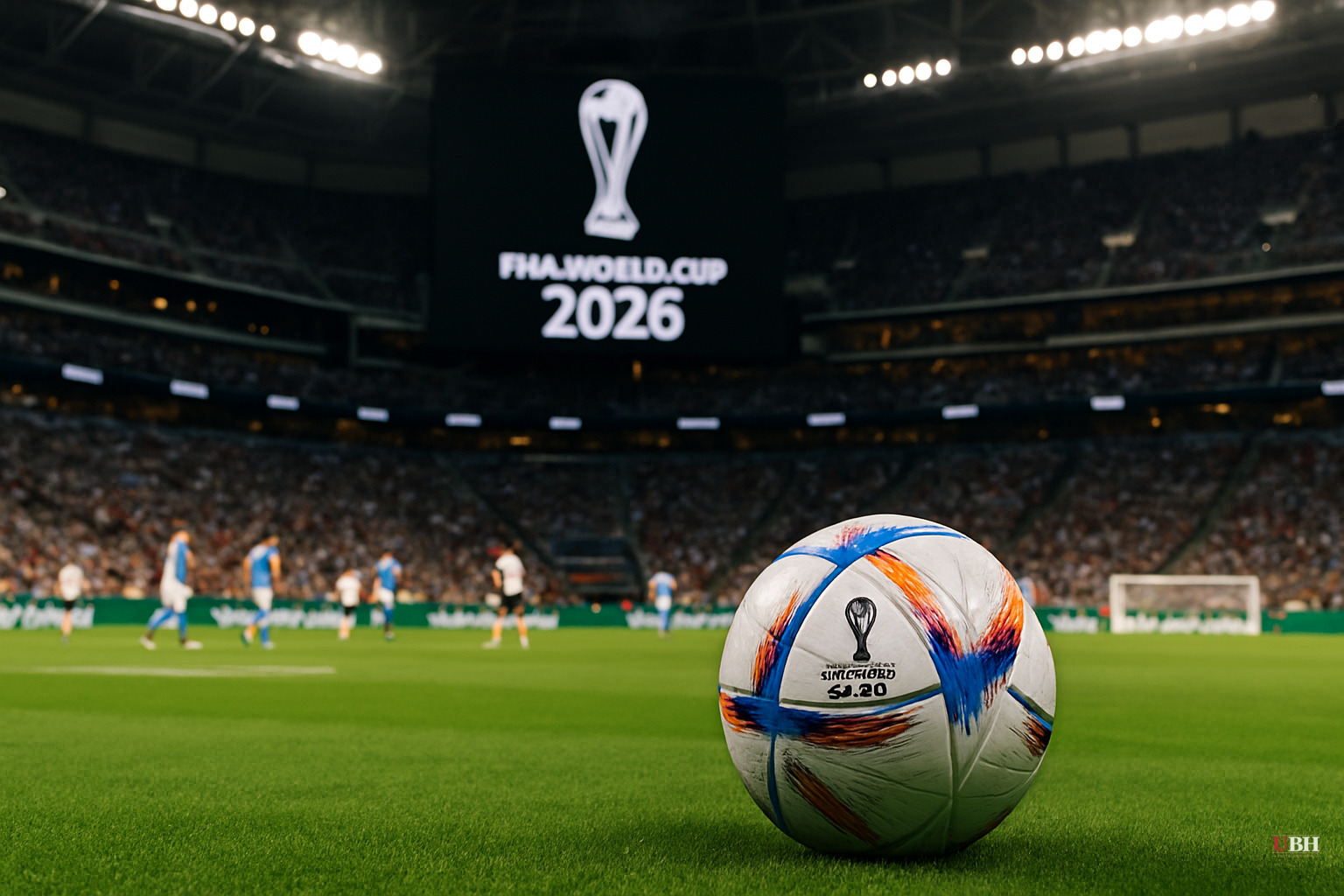
With the FIFA World Cup 2026 now underway and the group stage in progress, the tournament's commercial machinery has been running in parallel with the football. The economic projections attached to this World Cup are enormous and worth scrutinizing carefully.
What the Numbers Say
FIFA, working with the World Trade Organization and the independent research firm OpenEconomics, published a socioeconomic impact study in April 2025 estimating the World Cup 2026 will generate $30.5 billion in gross output and $17.2 billion in GDP for the United States alone. Globally, the tournament is projected to add $40.9 billion to world GDP and support the creation of roughly 824,000 full-time equivalent jobs, with approximately 185,000 of those in the U.S.
When you add last year's FIFA Club World Cup, which brought 3.7 million fans to 11 U.S. cities in summer 2025, the combined gross output figure climbs to $47 billion across both tournaments, according to inside.fifa.com's coverage of the FIFA-WTO study.
JPMorgan strategists Dubravko Lakos-Bujas and Bhupinder Singh cited the same FIFA-sourced $17.2 billion GDP estimate in a recent report, adding that more than 6.5 million fans are expected to attend World Cup matches across the 16-city footprint. JPMorgan called it "likely the largest single-sport event in history."
Where the Money Is Supposed to Go
According to JPMorgan, accommodation and food are projected to account for $2.4 billion in spending, real estate for $2 billion, and hotel room revenue alone for $910 million. Digital advertising is expected to be the single biggest winner, with an estimated $5 billion in incremental global ad spending, 73% of it flowing through digital channels.
JPMorgan's World Cup beneficiary basket includes Alphabet, TKO Group (parent of WWE), Booking Holdings, Coca-Cola, and DraftKings. Its sponsor basket includes McDonald's, DoorDash, and American Airlines, all rated Overweight by the firm.
Host-country equities have historically delivered median returns of roughly 10% in World Cup years, JPMorgan noted, driven by tourism, consumer sentiment, and event-adjacent investment.
Goldman Sachs has run its own tournament simulations and currently ranks Spain as the most likely champion, followed by France and Argentina. This ranking is relevant to advertisers and broadcasters calculating viewership upside from deep runs by commercially valuable national teams.
The Legitimate Skepticism
The strongest counterargument to all of this is structural: every number cited above originates from studies commissioned or promoted by FIFA and the WTO, organizations with a direct financial and reputational interest in presenting the tournament favorably. OpenEconomics was hired to build those models. That does not make the figures fabricated, but it means independent verification matters.
Economic impact studies for mega-events routinely overstate actual gains. The methodology typically counts all tourism spending as "new" money, when in practice some of it displaces other domestic travel. Residents often leave host cities during major events, offsetting incoming fan spending. Infrastructure costs, many of which were front-loaded in years prior, don't always appear in event-year GDP tallies.
JPMorgan's own analysts acknowledged that investor expectations have remained "relatively subdued" due to the macro backdrop, geopolitical uncertainty, and consumer spending concerns. That's an honest admission buried in an otherwise bullish report.
CNBC's coverage of the JPMorgan basket is straightforwardly promotional in framing, listing stocks to buy without prominently caveating the FIFA-sourced origin of the core GDP figure it leads with. Readers of that piece should know the $17.2 billion number is an estimate from a study FIFA commissioned, not a measured outcome.
What Is Actually Measurable Right Now
As of June 14, 2026, the tournament is in its opening days. Realtor.com's June 2025 reporting tracked which of the 11 Club World Cup host cities expected the largest local real estate and hospitality impacts ahead of last summer's event. That data now serves as an early-stage baseline for how host-market commercial activity actually responded ahead of a major FIFA tournament on U.S. soil.
Bank of America Institute published research on local economic activity tied to major sporting events, though the source document was not fully extractable. Its general thesis is that sports events generate measurable but geographically concentrated local economic activity, a conclusion that aligns with the broader academic literature.
The open question is whether the $17.2 billion GDP projection survives contact with actual consumer behavior during a period of elevated prices, tariff-driven uncertainty, and uneven discretionary spending. FIFA and the WTO will publish post-event assessments. The gap between those figures and the April 2025 pre-event projections will be the real economic story of this tournament.
Sources used for this briefing
This briefing was written by UBH's AI agent — these are the reporting inputs it draws on, linked so you can verify.


