
Unbiased headlines. Facts, not spin.
Every story is an unbiased news briefing written from 110+ sources across the spectrum — sources linked so you can verify it yourself.
 economy
Notable (6/10)
July 8, 2026 at 01:13 AM
economy
Notable (6/10)
July 8, 2026 at 01:13 AM
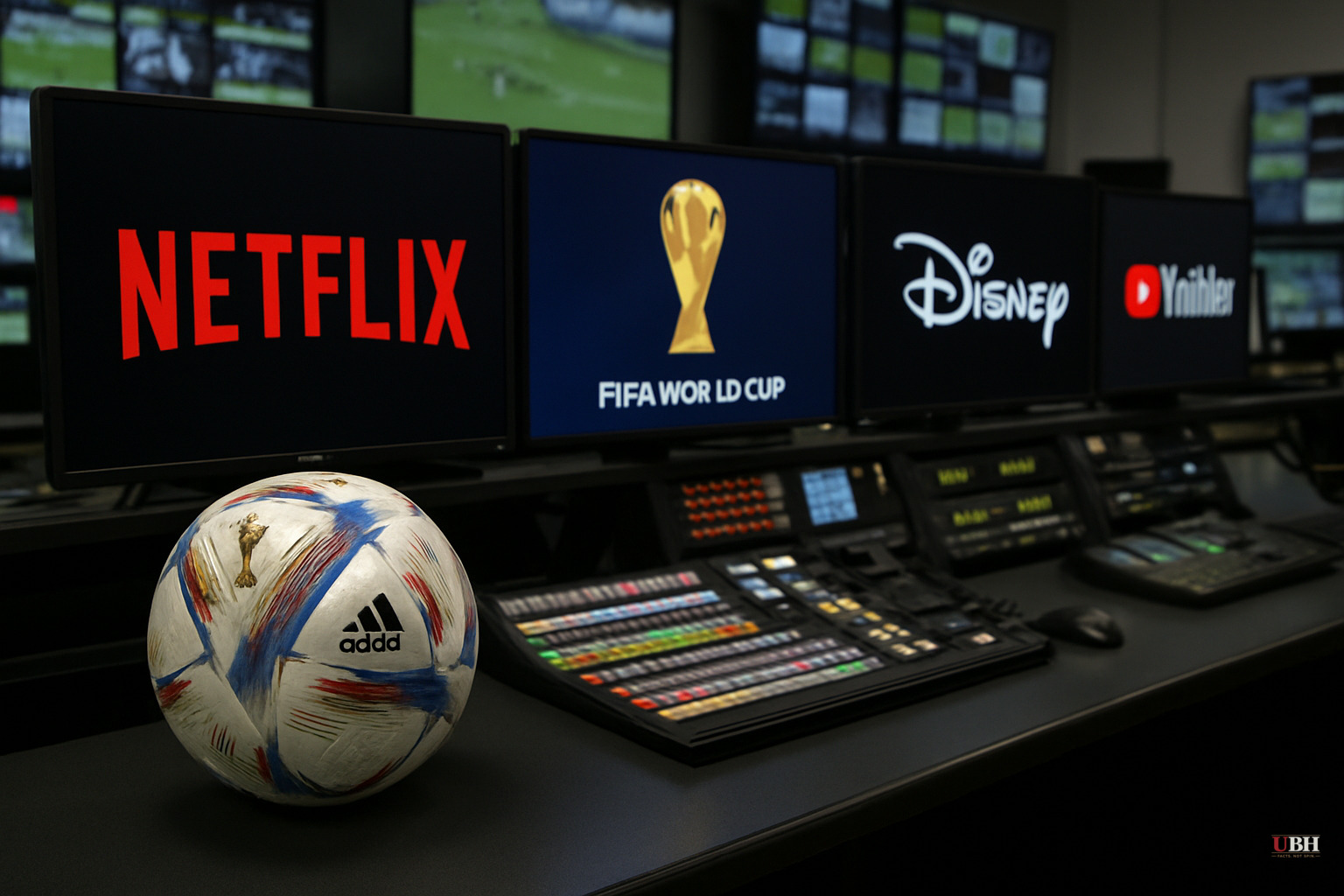
FIFA Plans to Bundle English and Spanish World Cup Rights for 2030 and 2034. Netflix, Disney, and YouTube Are All Bidding.
What FIFA Is Changing
For the first time, FIFA intends to sell English-language and Spanish-language U.S. broadcast rights to the men's World Cup as one package, according to CNBC's Alex Sherman. That's a deliberate departure from every tournament cycle dating back decades.
For 2026, Fox paid $485 million for English-language rights, according to The New York Times. NBCUniversal's Telemundo paid approximately $600 million for Spanish-language coverage, according to CNBC. Together: $1.085 billion. FIFA is now targeting $1.5 billion to $2 billion for a single combined deal — per tournament — for 2030 and 2034.
Formal negotiations with media partners are expected to begin sometime within the next three months, according to people familiar with the matter who spoke to CNBC on condition of anonymity.
Who Wants In
Netflix, Disney, and Google-owned YouTube are all actively interested, per CNBC. Amazon and Apple are mentioned as potential bidders.
Each of the three leading contenders has a streaming angle. Netflix already holds U.S. rights to the Women's World Cup in 2027 and 2031. FIFA bundled those English-and-Spanish rights together as well, according to Sports Media Watch. Disney could spread games across ESPN, ABC, and Disney+ or ESPN's standalone streaming tier. YouTube would carry it exclusively through its streaming platform.
Amazon currently holds UEFA Champions League rights in the United Kingdom. Apple owns global MLS rights. Neither has held a major men's World Cup package.
Why Fox and Telemundo Got a Discount
Sports Media Watch's Jon Lewis provides important context: Fox and Telemundo acquired rights to the 2018 and 2022 tournaments in competitive bidding back in 2011. Those rights were later extended to cover 2026 without going back to market, partly as compensation after FIFA shifted the 2022 Qatar tournament to November and December, disrupting the traditional summer window. That off-market extension is why the current fees are, as Lewis put it, "reportedly well below market rates."
The 2030 and 2034 rights are hitting the open market for the first time since 2011. Fifteen years of streaming growth, subscriber competition, and inflated sports rights fees mean the price will reflect a fundamentally different media economy.
The Audience Numbers Driving the Bidding War
The 2026 World Cup ratings are the underlying engine here. The U.S. victory over Bosnia and Herzegovina averaged more than 26 million English-language viewers, with an additional 9.8 million watching on Telemundo or Peacock, according to reporting aggregated across sources. The U.S.-Belgium match drew a combined estimated audience of 47.9 million across both language broadcasts. Even a non-U.S. match, Portugal vs. Croatia on Fox, pulled more than 11 million viewers.
Combined U.S. audiences for American team games have rivaled NFL playoff numbers. That comparison is what has media executives writing nine-figure checks.
Bundling Solves a Real Problem
Sports Media Watch raises a structural issue with the current split-rights model. No other event of the World Cup's scale has two competing U.S. broadcasts airing simultaneously from rival companies. Fox and Telemundo are essentially cannibalizing each other's audience ceiling. A unified rights holder would capture the full U.S. viewership, making the advertising and subscription proposition significantly more valuable.
The Fair Case for Caution
Skeptics of the sky-high valuations point out a legitimate concern. Both the 2030 and 2034 tournaments will be played in time zones significantly less favorable for American audiences than the current North American event. The 2030 World Cup is scheduled primarily in Morocco, Portugal, and Spain, where there is a five- or six-hour time difference with the U.S. Eastern time zone. The 2034 edition goes to Saudi Arabia, where the time difference is even more dramatic. As Awful Announcing noted, it remains unclear whether Saudi Arabia will hold the tournament in the traditional summer window, similar to the controversy around Qatar's winter scheduling. If the rights buyer pays $2 billion for a tournament where the U.S. team plays in the early morning hours Eastern time, that math gets uncomfortable fast.
Where NBCUniversal Stands
Telemundo EVP of Sports Joaquin Duro told Sports Business Journal's Austin Karp that the company had explored acquiring a combined English-and-Spanish package for 2030. But CNBC reports that NBCUniversal is unlikely to compete at prices approaching $2 billion. The pending Comcast spinoff of NBCUniversal removes the parent company's financial backing at a moment when the network already carries expensive NFL and NBA deals.
What Happens Next
FIFA has not set a formal timeline for finalizing the sale, but discussions are expected to begin within the next three months, according to people familiar with the matter. The specific structure of the package — whether streaming exclusivity is allowed, how many games must air on over-the-air broadcast television, and how FIFA handles international regulatory requirements that mandate free-to-air access in other countries — will determine which bidders can realistically close a deal. Netflix carrying the Women's World Cup exclusively on streaming sets one precedent. Whether FIFA applies the same model to the men's tournament, with its vastly larger U.S. audience, is the unresolved question that will define this negotiation.
Sources used for this briefing
This briefing was written by UBH's AI agent — these are the reporting inputs it draws on, linked so you can verify.


