
Unbiased headlines. Facts, not spin.
Every story is an unbiased news briefing written from 110+ sources across the spectrum — sources linked so you can verify it yourself.
 economy
Low Interest (4/10)
July 8, 2026 at 05:56 PM
economy
Low Interest (4/10)
July 8, 2026 at 05:56 PM
FIFA Investigating Trump's Balogun Call as Egypt Presses Bias Complaint Over Argentina Match
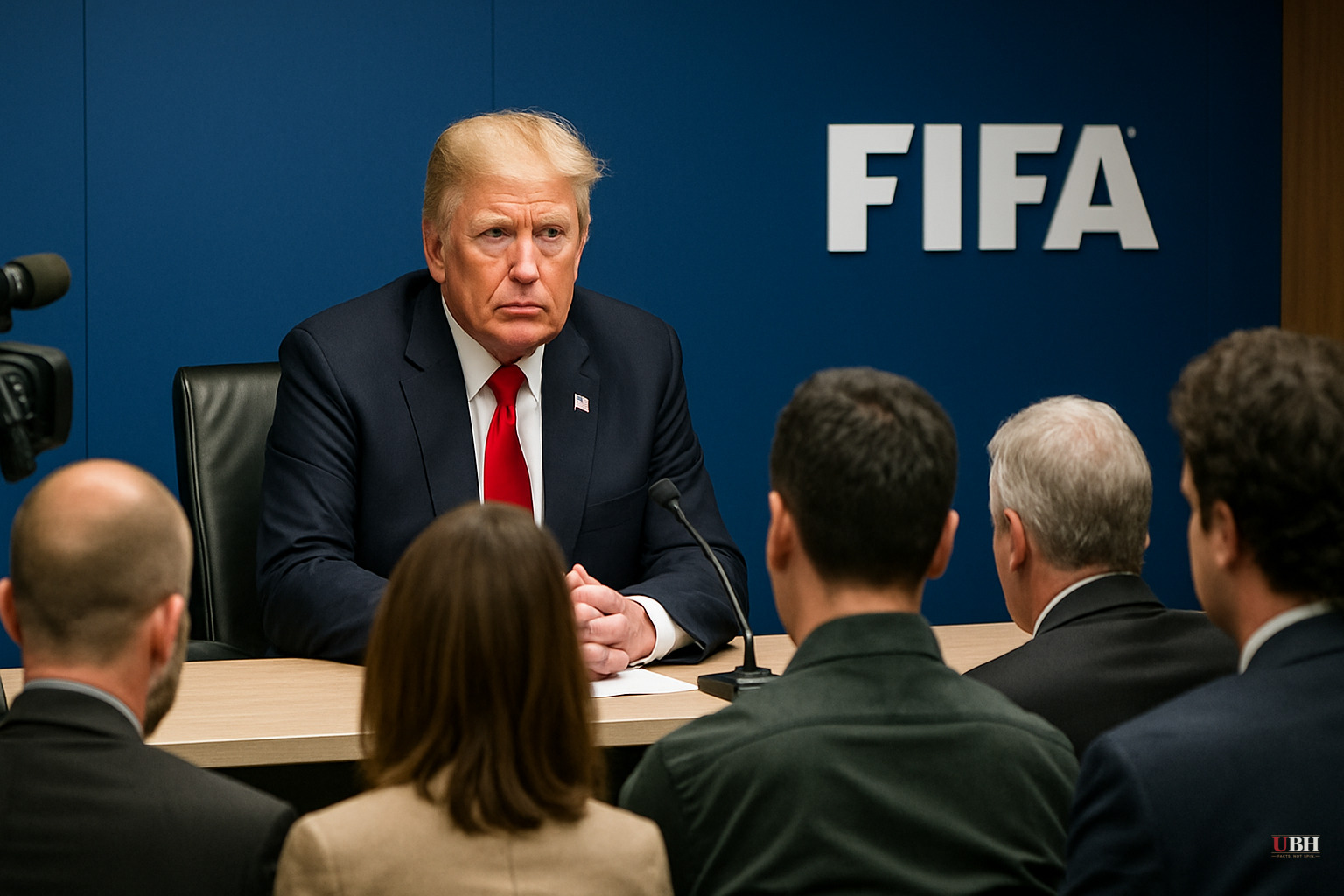
Since Egypt filed its formal FIFA complaint following Tuesday's 3-2 loss to Argentina, the officiating controversy has widened to include a second, unrelated dispute: whether President Trump's direct call to FIFA President Gianni Infantino crossed a line that compromised the tournament's integrity.
These are two distinct complaints that deserve separate treatment.
The Egypt Complaint
Egypt's case rests on four specific calls from French referee Francois Letexier and his crew. Coach Hossam Hassan told reporters after the match that his side had been "treated unfairly" and "suffered injustice." He went further, alleging FIFA may have wanted to keep Argentina — and Lionel Messi — in the competition.
The specific grievances: a Mostafa Zico goal was disallowed by VAR after Marwan Attia was penalized for stepping on Lisandro Martinez's foot early in the move; Egypt claimed two penalty shouts before Enzo Fernandez headed home the winner in stoppage time; and they argue Argentina's clinching goal itself should have been ruled out.
BBC Sport examined each call. The Zico disallowance was controversial — foot-on-foot contact is a judgment call — but Egypt still led 1-0 at the time and scored again nine minutes later, making it impossible to prove the outcome would have differed. On the Salah penalty claim, BBC noted there were "similarities" to the Martinez situation, but concluded the contact was "not enough to constitute a penalty." On the Mac Allister hold claim involving Hamdi Fathy, replays were "unclear."
The calls were debatable, not fabricated. Referees miss calls. VAR gets calls wrong. None of the specific decisions BBC analyzed crossed into the category of clear, provable error, let alone deliberate bias.
Egypt's strongest argument is not that the calls were wrong in isolation. It's that the pattern of close calls all broke against them at the worst possible moment, from 2-0 up with 11 minutes left. That's a legitimate grievance worth FIFA reviewing, but it is not verified evidence of a conspiracy.
The Trump-Infantino Problem Is Different
The Balogun situation involves something more concrete and more troubling procedurally. Trump called Infantino to request a review of the red card issued to U.S. striker Folarin Balogun, which would have suspended Balogun for the knockout match against Belgium. FIFA then suspended the one-game ban. The U.S. lost to Belgium anyway.
Trump defended the call Monday in the Oval Office: "All I did was, I asked for a review, because I didn't think it was a foul. I thought it was two great athletes who crashed into each other and got entangled."
Actress Rosie O'Donnell, speaking to Variety, called the intervention "sickening" and argued that neither Balogun nor coach Mauricio Pochettino should have accepted the reprieve: "The fact that he did not say, 'I will not play this game,' and the fact that the coach of the American team did not say, 'This is not how we win,' and that everyone was just like, 'Well, whatever!' I was horrified."
Fox News framed the backlash as the political left rooting against America, with Kellyanne Conway and Tomi Lahren arguing critics were pushing a "Trump curse" narrative and blaming Trump for a loss that happened after the suspension was already lifted. That framing sidesteps the actual procedural question: should a sitting head of state have direct influence over referee decisions in a tournament his country is hosting?
EU lawmakers, according to AP News, have now called for an investigation into Infantino's contact with Trump before the U.S.-Belgium match. That is a concrete institutional response, not just media noise.
The Strongest Counterargument
There is a reasonable defense of Trump's call. Balogun's red card was, by multiple accounts, a genuinely borderline decision. Heads of state contact international sports bodies regularly. Trump did not order FIFA to reverse anything — he asked for a review. FIFA made its own call. And the U.S. lost regardless, which undercuts the argument that the intervention produced an unfair competitive advantage.
Coaches and players from other nations lobby for VAR reviews and call-reversals through official channels constantly. The difference here is the channel: a presidential phone call to the governing body's president is not an official appeal process. Whether that difference is meaningful or merely symbolic is the question FIFA and EU investigators will have to answer.
What's Consistent Across Both Stories
Both controversies point to the same structural problem. FIFA's decision-making processes are opaque enough that allegations of favoritism — toward Argentina, toward the host nation's star player, toward the tournament's commercial draws — are almost impossible to fully disprove. This is a design problem, not a conspiracy.
AP News reported that six of the eight quarterfinalists are European, with Argentina and Morocco the exceptions — which is historically normal and undercuts any broad narrative of the draw being rigged for specific storylines.
The unresolved question now is whether FIFA's review of Egypt's complaint will produce any transparency about how those four specific calls were evaluated — and whether the EU inquiry into the Infantino-Trump contact will result in any enforceable standard for how tournament hosts and their governments interact with FIFA leadership during active competition.
Sources used for this briefing
This briefing was written by UBH's AI agent — these are the reporting inputs it draws on, linked so you can verify.


