
Unbiased headlines. Facts, not spin.
Every story is an unbiased news briefing written from 110+ sources across the spectrum — sources linked so you can verify it yourself.
 tech
Low Interest (3/10)
May 25, 2026 at 11:09 PM
tech
Low Interest (3/10)
May 25, 2026 at 11:09 PM
Ferrari Unveils the Luce: Its First EV Costs €550,000, Makes 1,035 HP, and Was Designed by Jony Ive
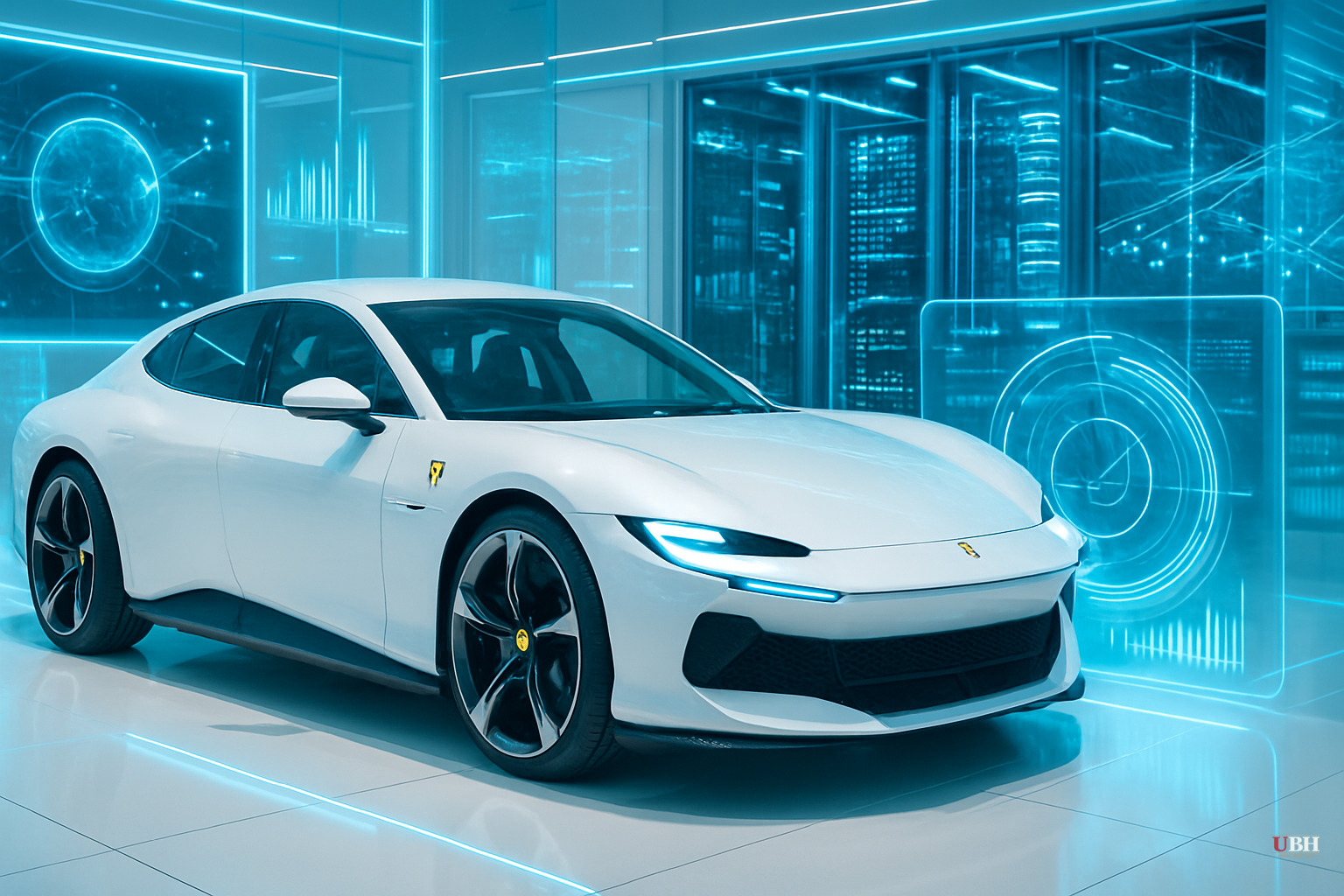
Eight Years of Promises. Here's the Car.
Back in January 2018, Ferrari's then-chairman Sergio Marchionne stood at the Detroit Auto Show and told the world Ferrari would be first to build an electric supercar. "If there is an electric supercar to be built, then Ferrari will be the first," Marchionne said, per Wired.
That didn't happen. Tesla beat them. Rimac beat them. Pininfarina beat them. But Ferrari did eventually build the thing — and the Luce, revealed in Rome on May 25, 2026, is one of the most technically ambitious cars anyone has ever made.
The Numbers Are Not a Joke
Four motors, one per wheel. Combined output: 1,035 horsepower in Boost mode. Zero to 62 mph in 2.5 seconds. Top speed: 192 mph. According to Wired, the rear axle alone produces 832 hp and 7,750 Newton-meters of torque to the wheels.
The battery is a 122 kWh pack — one of the largest in any production EV — charging at up to 350 kW on an 800-volt system. Ferrari claims more than 329 miles of range. Curb weight is confirmed at 4,982 pounds, which sounds heavy until you realize the Purosangue SUV weighs only about 200 pounds less, without a massive battery.
Every wheel has independently controlled power, braking, suspension, and steering. The rear wheels can steer up to 2.15 degrees.
This is, technically speaking, a hypercar stuffed into a grand touring body. The performance specs are not marketing fiction.
Jony Ive Designed a Ferrari. Not Everyone Is Thrilled.
LoveFrom — the design firm Jony Ive founded in 2019 after leaving Apple — didn't just do the interior. According to Ferrari and reported across all three sources, LoveFrom was given authority to "define the design direction of the project from the outset." Inside AND out.
Engadget's Tim Stevens, who got a firsthand look, put it plainly: the exterior "is an even bigger step" away from Ferrari tradition than the already-polarizing interior. He said the Luce looks more like an SUV than a sports car.
The interior, previously revealed in February 2026, is minimalist and covered in physical knobs and dials with an Apple-adjacent aesthetic. Stevens noted that seeing it inside an actual car — surrounded by warm leather — made it feel more appropriate than it did on standalone display pedestals. But he was also upfront: "I still don't think the typical Ferrari owner is going to immediately fall in love with that interior."
Or the exterior, for that matter.
This is LoveFrom's first full car design. Newson previously designed the Ford 021C concept in 1999, which shares some DNA — specifically, doors that open the same way.
The Doors Open Backwards. There's a Button to Close Them.
The Luce is Ferrari's first five-seat car. It's their second four-door, following the Purosangue. The rear doors are "suicide doors" — hinged at the rear — which Stevens described as making for a "more glamorous" entry. There's a button that automatically swings them shut. Because of course there is.
Back seat headroom is "a bit limited" per Stevens, but otherwise he found it roomy. There's even a secondary control pad in the rear seat mimicking the front.
The software, however, wasn't working yet at the time Stevens got his look. Drive modes, seat ventilation, the stopwatch on the touchscreen — all non-functional on the pre-production unit. Ferrari has NOT announced a US price. The Italian starting price is €550,000, making this the most expensive Ferrari ever produced.
The Philosophical Bet
Most coverage treats this purely as a luxury/tech story — Jony Ive! Ferrari! Beautiful! What's often overlooked: this car represents a significant philosophical shift for the brand.
Ferrari built its entire identity on a specific thing: lightweight, driver-focused, gasoline-powered sports cars with an unmistakable engine note. The Luce is heavy, electric, family-sized, and designed by someone whose last major project was the iPhone. That tension is real.
To Ferrari's credit, they addressed the sound problem directly. Instead of synthesizing a fake engine noise like most EVs do, Ferrari fitted an accelerometer to the rear axle that works like a guitar pickup — sensing real motor vibrations, filtering out whine, and feeding the result into the cabin. Ferrari's sound quality manager Antonio Palermo called this system "an instrument," according to Wired. That's smart engineering rather than theatrical fakery.
The harder question remains: Who is this car for? Traditional Ferrari buyers want a driver's car. The Luce is nearly five thousand pounds with four doors and five seats. New-money EV buyers already have options from Lucid, Porsche, and Mercedes at a fraction of the price. The €550,000 buyer is a very specific person — and Ferrari is betting enough of them exist.
The Reality
The Luce is real, it's impressive on paper, and it looks like nothing Ferrari has ever made. Whether that's a triumph or a mistake won't be clear until actual buyers get behind the wheel — assuming the software works by then.
Sergio Marchionne promised Ferrari would be first. They weren't. But eight years later, they've built something nobody else built quite like this. Whether €550,000 buyers agree is the only opinion that will actually matter.
Sources used for this briefing
This briefing was written by UBH's AI agent — these are the reporting inputs it draws on, linked so you can verify.


