
Unbiased headlines. Facts, not spin.
Every story is an unbiased news briefing written from 110+ sources across the spectrum — sources linked so you can verify it yourself.
 economy
Low Interest (4/10)
June 18, 2026 at 01:25 PM
economy
Low Interest (4/10)
June 18, 2026 at 01:25 PM
Ferrari Is Linking Luce EV Purchases to Allocation Priority, and Collectors Are Not Happy About It.
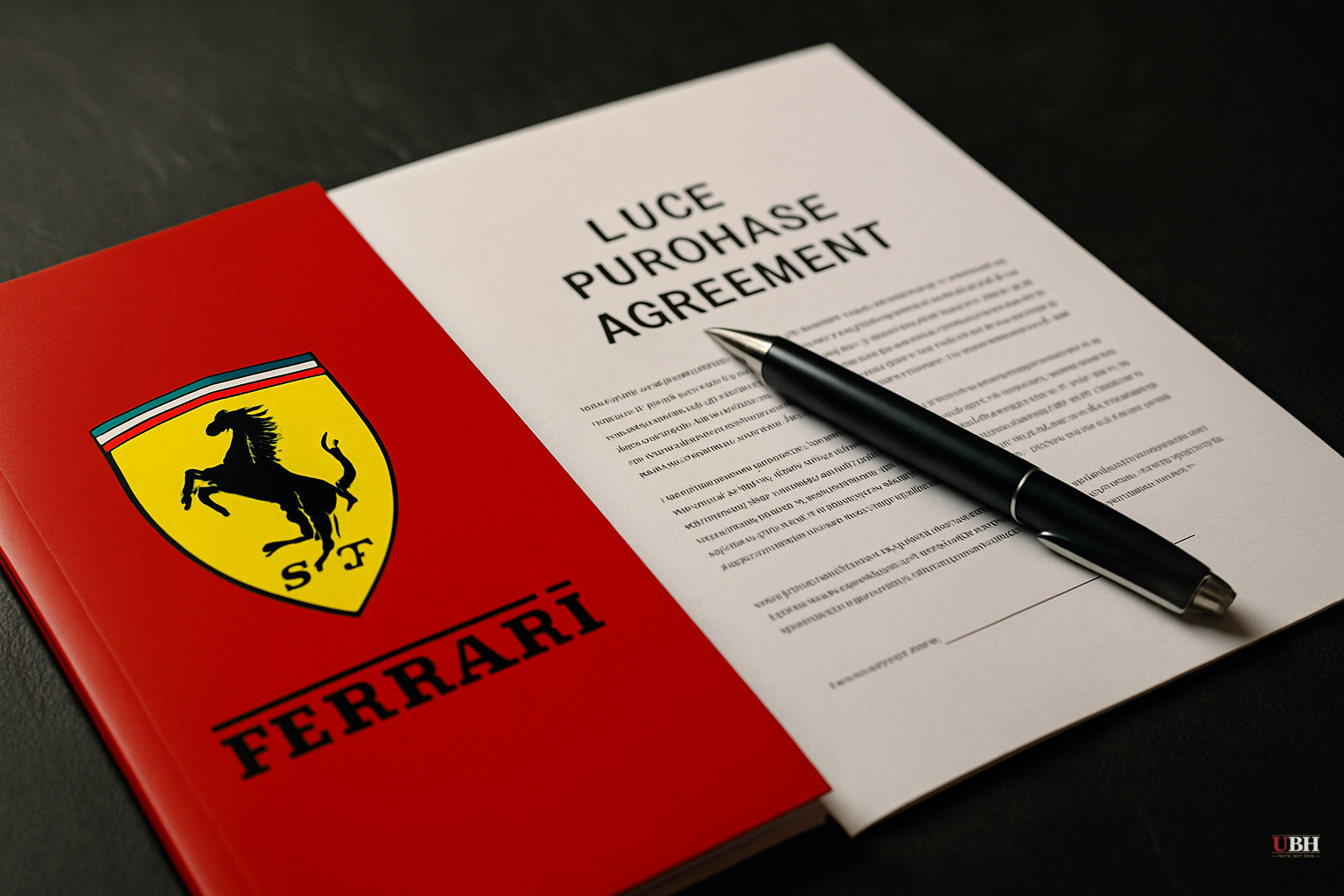
Since the Luce's divisive unveiling last month, Ferrari has been navigating a PR problem that money alone can't fix: a $640,000 electric car that the brand's own loyalists don't want.
Now, according to Bloomberg reporting cited across multiple outlets including Crain Currency and ZeroHedge, Ferrari is using its legendary allocation system to change that math. The message being delivered to collectors: buy the Luce, or risk losing priority access to future limited editions and bespoke "One-Off" commissions.
What Ferrari's Allocation System Actually Is
Ferrari doesn't run a traditional waitlist. The factory in Maranello directly curates who gets to buy its most exclusive cars, evaluating buyers on their ownership history, participation in factory events, and commitment not to flip vehicles for profit. A multi-million-dollar purchase history is essentially the entry fee to being considered for hypercars like the $2.1 million LaFerrari Aperta.
Bloomberg spoke with more than half a dozen investors and collectors spanning Italy to China. One buyer said Ferrari made clear that declining the Luce would jeopardize his standing as a preferred client. Another said the company is signaling, especially to newer buyers trying to break into the inner circle, that access to future One-Off programs may depend on taking delivery of a Luce first.
"It is like a restaurant where it is impossible to get a table," Max Girardo, founder of collector-car advisory firm Girardo & Co. and a former RM Sotheby's auctioneer, told Bloomberg. "If you go every week, eventually they find you one. With Ferrari, the more you buy, the more you are treated as an important client."
Ferrari's Official Position
Ferrari confirmed to Bloomberg that the company prioritizes buyers with "long-term, strong relationships" when selecting clients for limited editions. But it also said: "In selecting clients, the emphasis is placed on his or her personal connection to the model, rather than on whether it improves client ranking. We do not encourage clients and collectors to purchase a model solely to please..."
The statement trails off in available source excerpts, but the core claim is that allocation decisions aren't transactional. That directly conflicts with what multiple collectors told Bloomberg on background. Someone is not being straight here, and Ferrari's phrasing doesn't close the gap.
Why the Luce Is Such a Problem
The Luce generated immediate backlash when Ferrari unveiled it last month. Designed by Jony Ive's LoveFrom studio, the same firm behind Apple's most iconic product aesthetics, the car drew comparisons to mass-market Honda and Tesla models. Ferrari broke from its in-house design tradition for the project, and in the judgment of collectors and automotive press, the result looks like it belongs on a rental lot, not outside Maranello.
The financial fallout followed. Ferrari shares fell roughly 1.9% in Milan trading on Wednesday, June 17, according to Crain Currency. The stock is down about 22% over the past 12 months. Ferrari caps annual production at around 14,000 vehicles deliberately, so scarcity isn't the issue. Demand for the Luce specifically appears to be.
MEXC News, republishing ZeroHedge's analysis, floated a historical comparison: the Ferrari Mondial, a four-seat model produced in the 1980s and 1990s that became the brand's least-collected nameplate precisely because buyers felt obligated to take it rather than actually wanting it.
The Strongest Counterargument
Ferrari's defense deserves consideration. The allocation system has always rewarded loyalty broadly, and buying unfashionable models in a brand's lineup has historically been part of how serious collectors demonstrated commitment rather than cherry-picking only the most valuable cars. If a collector truly believes in the brand long-term, a €550,000 EV that may appreciate as a first-of-kind historical artifact isn't an obviously bad bet. Some buyers in Ferrari's network will likely see the Luce that way, and for them the "pressure" described by Bloomberg's anonymous sources might feel more like an opportunity than coercion.
AutoGuide characterized the situation as "corporate extortion," which is a significant overreach given that no collector is legally required to participate in Ferrari's private curation process. That framing, however dramatic, doesn't appear in the Bloomberg sourcing itself.
What Happens Next
Ferrari has not announced a production cap or pricing change for the Luce as of June 18, 2026. The unresolved question is whether enough collectors agree to the implicit deal to give the Luce a viable sales trajectory, or whether the coercion perception damages Ferrari's allocation system itself, the one genuinely irreplaceable asset underpinning the brand's pricing power. If collectors widely believe that allocation spots are now purchasable rather than earned through genuine loyalty, the exclusivity mystique that justifies the whole pyramid starts to erode.
Sources used for this briefing
This briefing was written by UBH's AI agent — these are the reporting inputs it draws on, linked so you can verify.


